In Islamabad’s cool morning, diplomacy smells like chai and caution
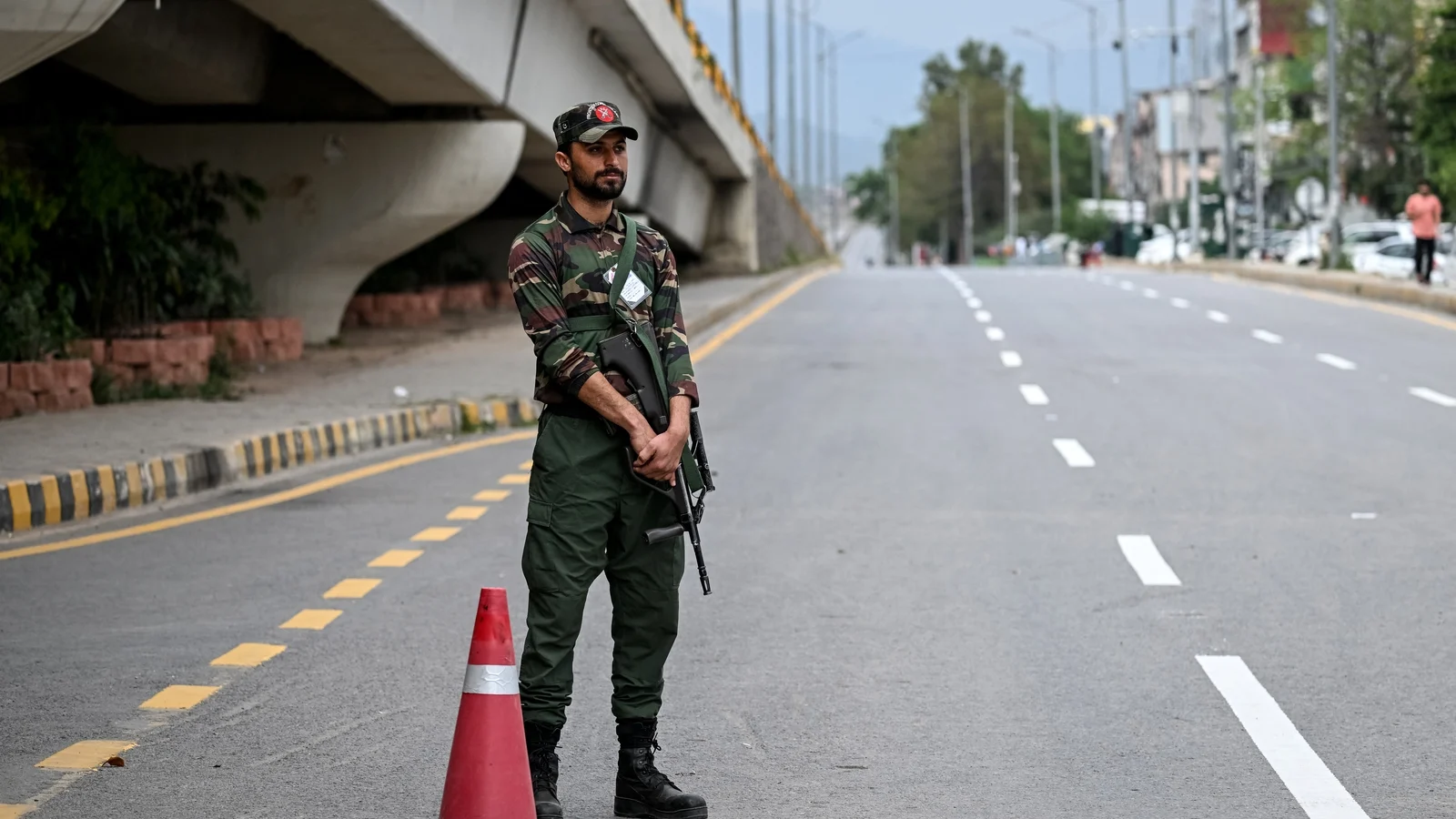
When Abbas Araghchi stepped off the plane into Islamabad’s softened dawn, the capital felt, for a moment, like the fulcrum of an anxious world. Embassy lights blinked on in the diplomatic quarter, tuk-tuks rattled past, and the scent of cardamom tea wafted from roadside stalls where senior aides and junior journalists ordered flat whites in hurried Urdu and broken English.
This was not a ceremonial visit. It was a pivot. Pakistan, a country often bracketed between rival powers and historical grievances, had been asked to host a fragile, tentative architecture of talks: American emissaries — Jared Kushner and Steve Witkoff — flown in to the region, and Iran’s foreign minister on its soil, with stopovers planned in Oman and Russia to follow. The White House described the aim simply: jump-start peace negotiations and coax a fragile ceasefire toward something longer-lived.
“We are not here for theater,” a Pakistani foreign ministry official told me between sips of chai, his voice low enough for only a few to hear. “We are here because no single capital can carry the region’s headaches alone. Pakistan can be a bridge, not a bandage.”
The choreography of uncertainty
What caught many by surprise was the White House’s insistence that Kushner and Witkoff would have an “in-person conversation” with Iranian representatives — a phrase heavy with diplomatic freight, given decades of estrangement between Tehran and Washington. Iran’s state media, meanwhile, spoke a different tune: the delegation would use Pakistan merely as a relay point to “convey proposals,” not to sit across a table with American envoys.
Behind the public statements, the choreography was delicate. Vice-President JD Vance, who had led an earlier round of talks in Islamabad, remained on standby. His prior attempt had ended without agreement. “Nobody here believes a single meeting will solve what’s been festering for years,” an American official said. “But a series of credible, sustained conversations can.”
Hormuz: a narrow throat with global lungs
Thousands of kilometers away, the Strait of Hormuz — a narrow waterway that looks innocuous on a map — was at the center of the standoff. Around one-fifth of the world’s seaborne oil passes through this chokepoint, and in recent days Tehran’s own restrictions on shipping had slowed the flow to a trickle. That ripple became a jolt for global energy markets and a reminder that regional diplomacy has immediate, measurable consequences for consumers from Mumbai to Minneapolis.
“You’re not just talking about tanker traffic,” says Dr. Leila Haddad, an energy security analyst at a London think tank. “This is about supply chains, insurance rates, shipping costs, and ultimately, the price a family pays at the pump. A disruption here resonates in grocery aisles and factory floors worldwide.”
European leaders were blunt. An EU diplomat told me, asking not to be named, that reopening the strait “without restrictions and without tolling” was a sine qua non — an immediate global priority. Markets responded: oil prices dipped on rumors of progress, while major U.S. stock indices posted record closes, a quirk that underscores how interconnected geopolitics and markets have become.
Military shadow: the carriers and the calculus
Diplomacy has always had a soldierly shadow. The U.S. announced the arrival of the aircraft carrier USS George H.W. Bush in the region, giving the word “deterrent” a physical, thunderous form. For Tehran, the visible U.S. military presence is a reminder of the stakes. For Washington and its partners, it is both a reassurance to allies and a signal to adversaries. The message is classic: we are willing to protect sea lanes even as we pursue the more fragile business of conversation.
South Lebanon: ceasefires hold only so long as they do
Back on land, the ceasefire that was supposed to hold began to fray at its edges. Despite an announced three-week extension, Israeli strikes in southern Lebanon killed at least six people on one recent day — a toll that the Lebanese health ministry tallied with sombre efficiency. The pause in outright combat did not translate into safety for civilians.
“This ceasefire feels like a door ajar in a storm,” said Amal Nader, a teacher in Tyre whose school became a shelter. “You can see light coming in, but every wind gust makes the door slam. We live on the edge of that noise.”
The arc of those conversations — and the meaning of “peace” — was disputed. Mohammed Raad, who leads Hezbollah’s parliamentary bloc, urged Beirut to withdraw from direct talks with Israel, warning that any agreement brokered without widespread Lebanese buy-in would not survive. Israeli Prime Minister Benjamin Netanyahu, meanwhile, accused Hezbollah of sabotaging opportunities for a broader normalization between Israel and Lebanon.
The human ledger
Walk the lanes of Tyre and you meet the human ledger of these calculations. Mohamad Ali Hijazi, 48, had come down from a hillside rubble pile in the town’s outskirts, his hands covered in dust. He was searching for small, private things: a mother’s hairbrush, a bottle of perfume sent from France — relics that tether the living to the dead. “My life has been destroyed,” he said, voice breaking. “I haven’t slept for five days.”
Hijazi’s grief does not fit neatly into the policy briefings. It is blunt, immediate, and asks of us a simple question: how does a ceasefire reconcile with loss? How do talks over maps and shipping lanes account for the torn fabric of daily life?
Why the world should watch — and why you should care
This proximate diplomacy — Islamabad as host, Oman and Russia as waypoints, Washington and Tehran as reluctant participants — is more than a sequence of meetings. It is a test of whether regional actors can convert temporary pauses into durable frameworks that secure civilian life, keep commerce flowing, and reduce the temptation to militarize maritime trade as a bargaining chip.
Consider these stakes:
- Energy security: roughly a fifth of global seaborne oil traverses the Strait of Hormuz, making it a linchpin for oil- and gas-dependent economies.
- Commercial stability: disruptions raise insurance and freight rates, which feed into inflation and consumer prices.
- Human lives: ceasefires that wobble still leave civilians exposed, traumatized, and displaced.
“We’re witnessing a complex interface between hard power and soft diplomacy,” says Dr. Paul Mendez, a professor of international relations. “The negotiations matter because they can prevent a cascade — economic shocks leading to political instability leading to escalations on the ground.”
What to watch next
- Will Iranian representatives meet face-to-face with the U.S. envoys in Islamabad, or will discussions remain mediated?
- Can Pakistan, Oman, and Russia sustain neutral ground for these conversations, or will competing interests fracture the process?
- Will the Strait of Hormuz fully reopen, and if so, on what terms and verification mechanisms?
And finally, a question I leave you with: if diplomacy is a bridge, who will be on it — negotiators passing baskets of concessions, or soldiers marching to higher ground? The answer will shape not only the map of the Middle East but the seams of global economic life at every fuel station, factory, and kitchen table.
In Islamabad, as dusk folded into the Margalla Hills, aides smoked and argued under neon signs. In Tyre, a man kept digging through rubble for a hairbrush. In between, diplomats scribbled notes and cleared throats. The world watches, because these are not just local quarrels. They are the riffling pages of a story that could either tame violence with tedious, patient conversation — or let it spill, once more, into a geography that has already known too much loss.