Justice on a Banner: Washington’s New Nighttime Sermon
They lit the Department of Justice like a church at midnight. Across the neoclassical stone, above the columns and the bronze seals, the simple words from John Adams — “A government of laws, not men” — shimmered in white light, a rebuke and a benediction all at once.
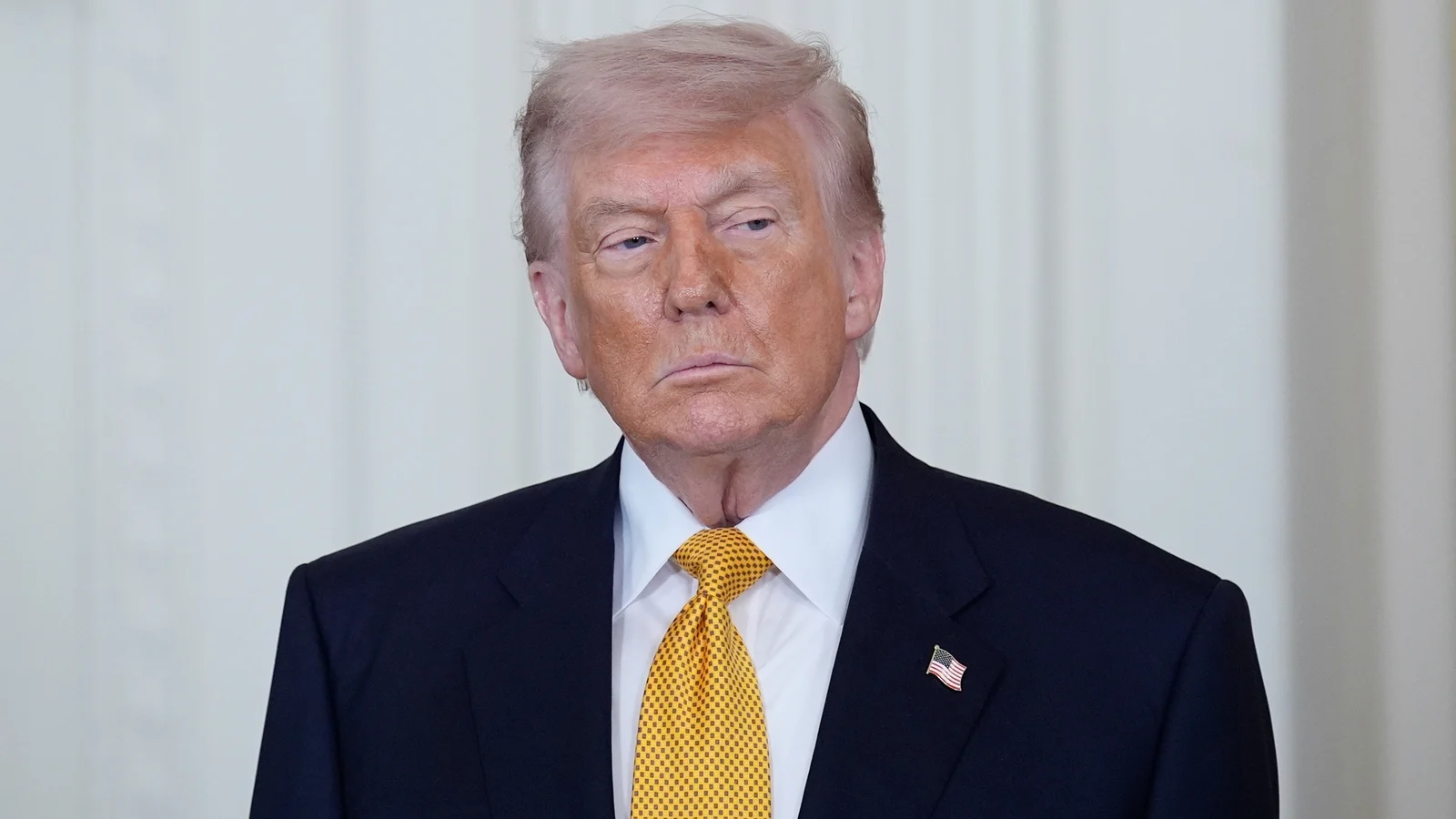
The projection arrived not as part of a civic ceremony but as a deliberate public nudge: a group of former Justice Department officials, calling themselves Justice Connection, wanted the capital to see the phrase and ask what it meant in 2026. The banner beneath the words — a portrait of President Trump that has hung there for months — made the message impossible to ignore.
If you stood on E Street that evening, you smelled the city: hot pretzel carts, car exhaust, the faint metallic tang of the metro. Tourists snapped photos. A security guard with a sleep-lined face glanced up and muttered, “They know how to get attention, I’ll give them that.” A woman who worked nearby, clutching a grocery bag, said, “I’m tired of slogans. I want to see the laws work.” Their voices threaded into the larger hum of a city that has been, for years, a theater for protest and spectacle.
What the Light Was About
At the heart of the drama is an extraordinary settlement announced this month: a $1.776 billion compensation fund, intended to address claims that the federal government unlawfully harmed people. Critics — particularly Democrats and a growing number of Republicans — have called it a “taxpayer-funded slush fund.” The optics, they say, are worse: it could be used to pay people tied to the 6 January Capitol attack, and the administration has not ruled out payouts to people convicted in violent confrontations with police.
Two Capitol police officers have already filed suit to stop the fund, arguing that it amounts to financing insurrectionists. Lawmakers, legal scholars and civic groups are asking how such a pot of money could be set up without clearer guardrails.
Voices on the Ground
“This isn’t about left or right for me,” said a former DOJ attorney who helped organize the projection and asked to be identified as Anna Morales. “It’s about the institution. When you put a number like that on the table without transparent procedures, you invite suspicion and erode trust.”
From another corner of the city, a cab driver shrugged as downtown traffic thickened: “People are hurting. They’re worried about rent, gas, groceries. Washington games feel far away.” His comment landed hard — it is a reminder that while Gilded Age sums are bandied about on the Mall, household budgets are tight. Economic anxiety is a political velocity that alters the angles of every debate.
Republicans in Unusual Agreement
What sets this moment apart is not just the left’s outrage but the unusual, increasingly vocal resistance within the Republican ranks. Senators who have long tolerated the president’s wider playbook suddenly found themselves balking — not only over the fund but over the optics of presidential endorsements that are reshaping Texas politics and inflaming intra-party rivalries.
One senior Republican senator, who asked not to be named, told me, “The White House cut Congress out. That’s the problem. Money? That’s ours to appropriate. This feels like a bypass, and that’s dangerous.”
There are concrete consequences. Senators delayed a package of additional funding for immigration enforcement amid fury over the settlement; lawmakers were reluctant to bundle other priorities with a controversy that could redefine their own political futures. Senate Majority Leader John Thune publicly said the administration should have talked to Congress beforehand — a display of irritation that matters in Washington’s small, precise ecosystem of power.
Lines in the Sand and the Politics of Loyalty
Beyond policy, something else is being tested: loyalty. For years, tribal allegiances have insulated politicians from the political cost of aligning with the president. Now, a familiar question rolls through both chambers — is steadfastness to the president still an advantage or has it become a liability?
“You can be loyal to a leader and still demand accountability,” said Leah Rosen, a political scientist at Georgetown. “But when institutions start getting carved away for political convenience, voters may not reward pure loyalty forever. There’s a threshold where institutional norms matter more than partisanship.”
The stakes are not only constitutional. The fund, and the “forever” promise that the Internal Revenue Service will not audit the president’s old tax returns, have provoked ethical alarms. Scott Greytak of Transparency International US called the package “entirely extraordinary” and warned that it places public officials in uncharted territory by creating privileges for one person not afforded to ordinary taxpayers.
Symbols and the Slow Erosion of Norms
Washington is a city of symbols, and the last few weeks have been heavy with them. Remember the golden toilet placed on the National Mall, a satirical nod to perceived excesses? Or the makeshift “Jeffrey Epstein walk of shame” that popped up as a raw, dark commentary on accountability? These are not mere pranks — they are a texture of civic rage and satire that reveals cracks in public confidence.
Protest art and legal filings are two sides of the same civic reaction: people are using whatever tools they have to push back. But the institutional response — committee hearings, lawsuits, delayed appropriations — suggests a republic wrestling in real time with what checks and balances should look like when political stakes feel existential.
What Comes Next?
Will Congress stand up and demand clarity? Will midterm voters reward rebels who resist presidential pressure, or will they punish them? And perhaps more urgently: will ordinary Americans, struggling with inflation and daily bills, notice or care enough to change the calculus at the ballot box?
These are not questions for lawyers alone. They are social questions — about faith in institutions, about the kinds of bargains a democracy will accept in moments of tension. They test whether civic language — phrases like “rule of law” — remain beyond poetry and into practice.
When I left the DOJ building that night, the projection still hummed. A late bus sighed to a stop. A couple argued in a foreign language, lovers in the distance. The city kept doing what cities do: holding many truths at once. But for a moment, high above the chancery of power, an old phrase glowed with new urgency, asking everyone — official and citizen alike — to remember what a government is supposed to be.