The European Central Bank held its nerve on interest rates on Thursday even as a fresh jolt in energy markets — including oil surging past $100 a barrel reignited the inflation debate inside the Governing Council.
The ECB kept rates unchanged, but the issue was not without tension: at the meeting, some governors questioned whether another hike was already warranted.
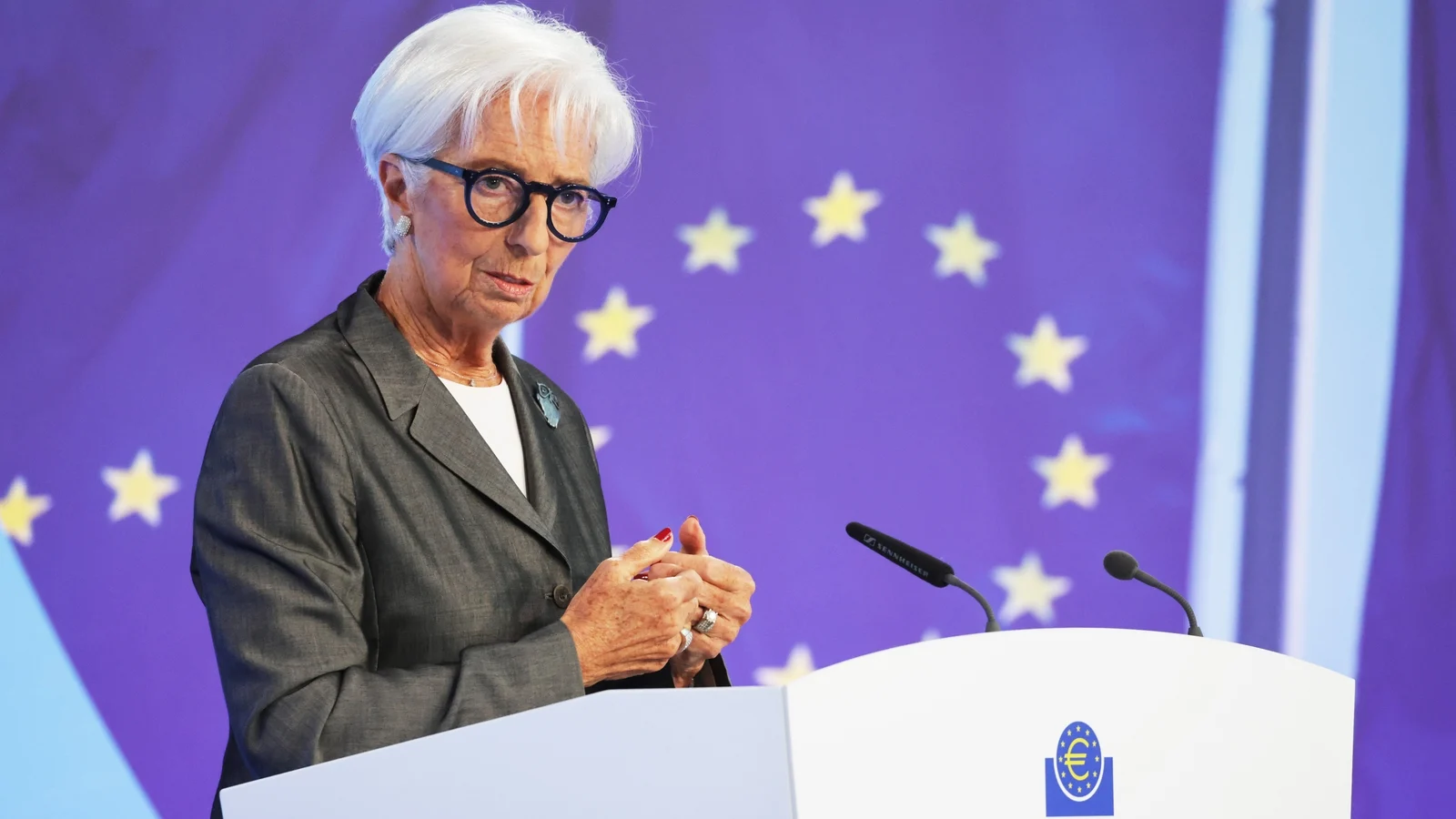
Speaking at an afternoon press conference, ECB President Christine Lagarde warned that the inflation outlook remains “well above target” into the first half of next year.
After deliberations, ECB governors ultimately agreed unanimously to keep rates where they are, at 2.25%.
As Ms Lagarde addressed reporters, oil pushed through the $100-a-barrel threshold after Yemen’s Houthi rebels struck oil tankers in the Red Sea, underscoring how quickly geopolitics can feed into the cost of living.
Against that backdrop, many analysts now expect the ECB could lift rates by a quarter of a percentage point in September.
Ms Lagarde said a ceasefire between the US and Iran had proved short-lived, contributing to what she called “serious developments on commodity markets”.
Natural gas — which had stayed comparatively lower in recent months has also jumped to its highest level in more than three years, adding another layer of price pressure across the economy.
“Uncertainty remains high and the full inflationary impact of the energy shock has yet to play out,” the ECB said in a statement.
“The Governing Council is therefore closely monitoring the intensity and duration of the shock, as well as its indirect and second-round effects,” the ECB said.
“The outlook for energy prices, while highly volatile, currently stands close to the baseline of the June Eurosystem staff projections and well above the levels recorded prior to the conflict in the Middle East,” the bank added.
The ECB raised rates in June and signalled it could do more, but a run of relatively benign readings on prices, wages, economic activity and inflation expectations in the weeks since has made an immediate follow-up less pressing.
Markets, however, continue to position for a more forceful path. Investors are betting on almost three additional rate increases over the next year, with the first move fully priced in by October and a second by next February.
Still, that market pricing reflects energy shocks more than underlying economic momentum. Most economists surveyed by Reuters argue the 21-country euro zone will need far less tightening to contain inflation, which could linger around 3% in the coming months — above the ECB’s 2% target.
ECB governors decided unanimously to leave rates at their current level of 2.25% today
No second-round effects yet
A central reason the ECB believes it can afford to wait is that the long-feared “second-round” effects from higher energy prices have not yet shown up in the data.
Typically, expensive energy filters through to a broad range of goods and services and eventually prompts workers to demand higher pay — a dynamic that can trigger an inflationary wage-price spiral.
For now, however, wage growth continues to cool. The labour market remains relatively soft — especially in Germany, the euro zone’s largest economy and companies surveyed by the ECB are bracing for even more subdued pay pressures.
Households, too, have tempered their inflation expectations. More granular indicators have offered little sign of second-round effects, and services inflation slowed last month.
At the same time, ongoing trade tensions, elevated energy costs and China’s push into some of Europe’s key export markets point to prolonged strain on the bloc’s industrial base, a trend that could weigh on labour demand for years.
Even so, policymakers maintain that second-round effects could still emerge later, even if weaker than once feared, and they insist the ECB must remain ready to respond.
They are also watching the weather. Scorching summer conditions across parts of Europe this month are seen as another potential risk.
Heat could harm crops and lift food prices, while low water levels on major rivers may create shipping bottlenecks.
‘Captain Lagarde’ says she will stay on ECB ship amid early exit talk
Ms Lagarde also used Thursday’s press conference to push back against talk of an early departure, saying she expects to still be leading the ECB next year because “the captain stays on the ship” when storm clouds gather.
But when pressed to commit explicitly to serving out her full term — due to end in October 2027 — Lagarde said she did not want to be “boxed in”.
“I did mention once: when there are clouds on the horizon, the captain stays on the ship, and this captain is staying on this ship,” Lagarde told today’s press conference.
“You are not going to see the back of me before 2027,” she added.
Earlier this month Lagarde had said it was still possible she could leave before her term ends to weigh in on French politics, but that running in next spring’s French presidential election was not “currently” on the agenda.