Gloria Steinem, a singular force in American feminism whose writing, organising and public advocacy helped reshape debates over gender equality and women’s civil and reproductive rights for more than 50 years, has died, her foundation said. She was 92.
The co-founder and consulting editor of Ms. Magazine became one of the movement’s most recognisable voices from the late 1960s onward, galvanising supporters and influencing generations of women.
Her foundation announced that she died yesterday, sharing the news in an Instagram post today.
“From reluctant spokesperson to a beacon of positive change, hers is a singular journey – an American leader who can speak to us all,” film and theatre director Julie Taymor said of Ms Steinem in a 2017 New York Times interview.
Taymor later directed the 2020 film ‘The Glorias’, which portrayed Ms Steinem at different stages of her life and drew from her 2015 best-selling autobiography ‘My Life on the Road’. Her life and work were also explored in the 2018 play, ‘Gloria: A Life’, and the 2011 HBO documentary ‘Gloria: In Her Own Words’.
Ms Steinem often described her role in distinctive terms, saying she considered herself “an entrepreneur of social change”.
“I want to do justice to the women I meet, to tell their stories,” she told the New Yorker magazine in 2015.
“It’s making connections, and using myself to listen, because we can’t empower women without listening to their stories.”
Gloria Steinem in Manhattan for a march on International Women’s Day in March 1975
Her organising extended well beyond journalism. In 1971, Ms Steinem helped establish the National Women’s Political Caucus alongside former US Representatives Bella Abzug and Shirley Chisholm and writer Betty Friedan, whose 1963 book ‘The Feminine Mystique’ helped propel the second wave of feminism.
She also helped create a roster of influential groups, including the Coalition of Labor Union Women, the Women’s Media Center, Voters for Choice, and the Ms. Foundation for Women.
Her impact was recognised at the highest levels of government in 2013, when then US president Barack Obama awarded her the Presidential Medal of Freedom, the nation’s highest civilian honour.
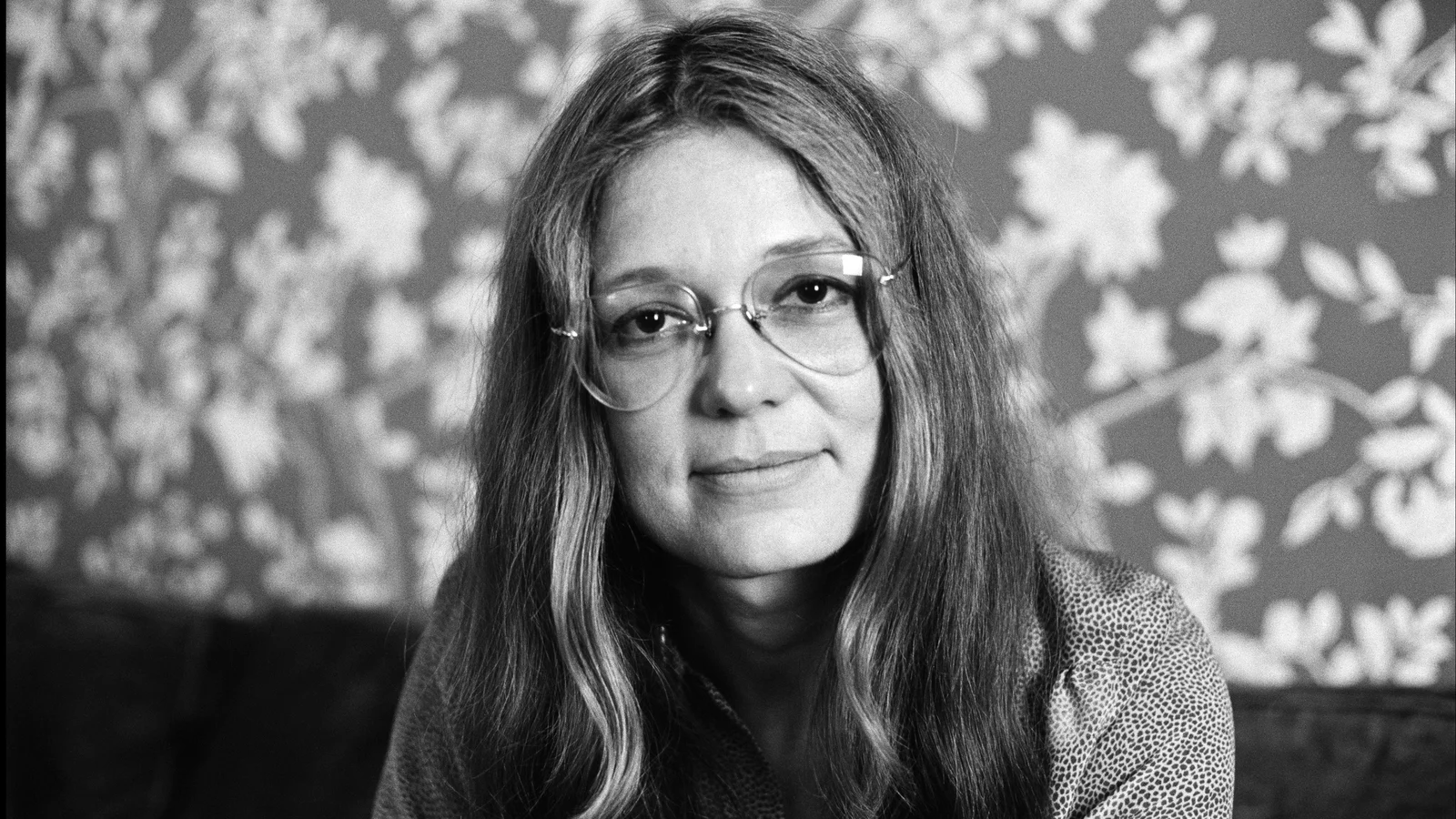
Known for her long, centre-parted hair and aviator glasses, Ms Steinem cut a glamorous, modern figure who insisted the feminist movement needed to include women of every race.
“If you’ve suffered discrimination, you’re sensitive to it on every level. I learned feminism largely from black women. Women of colour basically invented feminism,” she told the New Yorker.
Born 25 March 1934 in Toledo, Ohio, Ms Steinem was the younger of two daughters. Her father worked as a travelling antique dealer, and the family’s frequent moves meant she did not attend school regularly until about seventh grade.
After her parents separated when she was 11, she lived with her mother and became her caregiver after her mother experienced a mental breakdown and suffered from depression.
That period shaped Ms Steinem’s sense of social injustice and her view of marriage, which she argued stripped women of choices and curtailed many of their civil rights.
“I’d already been the very small parent of a very big child, my mother. I didn’t want to end up taking care of someone else,” she was quoted as saying.
After graduating from Smith College, Ms Steinem launched her career as a freelance journalist.
In 1963, she went undercover as a Playboy bunny for 11 days for a story in Show magazine. The resulting two-part expose, ‘A Bunny’s Tale’, became a landmark account of the low pay and sexist conditions faced by Playboy bunnies, who were initially hired as waiting staff. The story later became a 1985 TV movie starring Kirstie Alley.
Her byline soon intersected with a turbulent era of political and cultural change. In 1968, she helped found New York magazine, where her essay ‘After Black Power, Women’s Liberation’ helped establish her as a feminist leader.
Still, Ms Steinem said her activism truly took hold after she attended an abortion speak-out in a New York church the following year. The experience carried personal resonance: she had had an abortion in London when she was 22, at a time when it was illegal.
Gloria Steinem at a Ms. Foundation Women of Vision Awards ceremony in New York in 2023
Ms. Magazine, which she co-founded in 1971, took direct aim at subjects long pushed to the margins—abortion, sexism, equal pay and domestic violence—breaking sharply with women’s magazines that centred beauty, cookery and guidance on supporting a husband.
One early issue printed the names of 52 women, including Ms Steinem, who had abortions, and urged legalisation ahead of the landmark 1973 Roe v. Wade ruling that recognised women’s constitutional right to abortion in the US for nearly half a century.
Ms Steinem frequently returned to the constraints she believed marriage imposed. “Women are not going to be equal outside the home until men are equal in it,” she said.
She had no children and did not marry until age 66, when she wed South African businessman and environmentalist David Bale, the father of actor Christian Bale.
“I hope this proves what feminists have always said – that feminism is about the ability to choose what’s right at each time of our lives,” she said in a statement about the marriage. David Bale died of brain cancer in 2003.
Ms Steinem remained active well into her 80s, publishing widely and ranging across genres. Her books included 1986’s ‘Marilyn: Norma Jean’ about Marilyn Monroe, ‘Revolution from Within: A Book of Self-Esteem’ on personal development, and multiple collections of essays.
Her work in film and television also continued. In 1993 she conceived and narrated the idea for the Emmy Award-winning HBO documentary ‘Multiple Personalities: The Search for Deadly Memories’ about child abuse, and she produced the Lifetime film ‘Better Off Dead’. She later hosted ‘Woman’, a Viceland documentary series examining violence against women.