Iran has issued a fresh warning to Washington, threatening what it called “economic warfare” while claiming it fired an advanced missile at US warships — language that highlights how quickly the conflict can intensify just days after the two sides again exchanged strikes.
The six-month-old war has repeatedly swung between brief lulls and sharp flare-ups. The latest reported US action came on Saturday, when American forces struck three Iranian oil tankers.
Iranian state media said Iran fired the Qassem Basir missile yesterday.
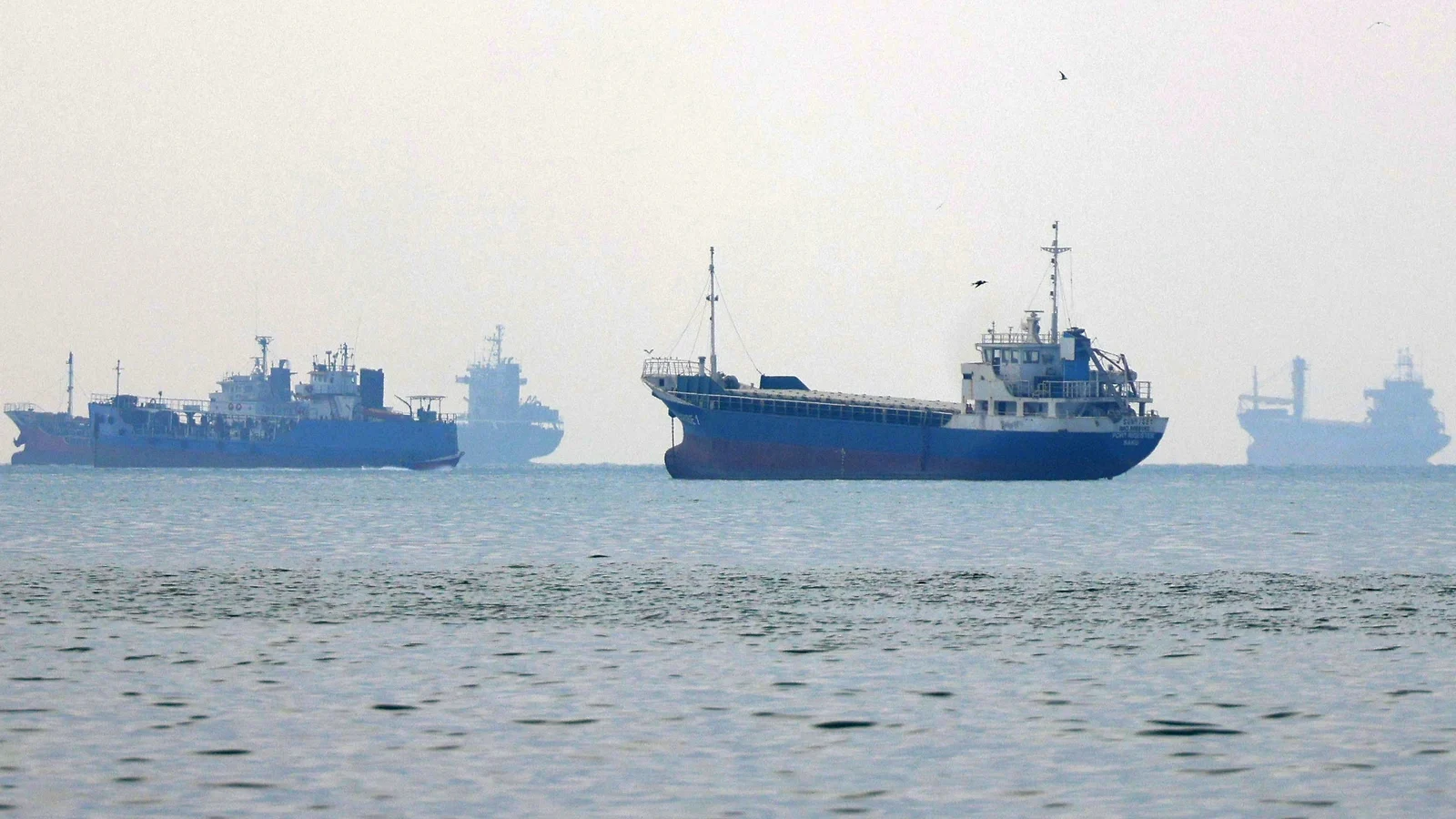
Even as the US has sought to open up the Strait of Hormuz, Iran has continued to disrupt shipping through the vital corridor for global oil and gas supplies. There has been no sign of momentum toward a diplomatic breakthrough to end the war, which began with US and Israeli strikes on 28 February.
Iran says it will soon unveil a new restricted zone in the Gulf, alongside maps for a new shipping corridor through the Strait of Hormuz. However, it remains unclear when the details will be released.
Iran has touted the Qassem Basir as an upgraded missile with improved manoeuvrability
Mohsen Rezaei, the secretary of Iran’s Supreme National Security Council, told state television yesterday that the planned restricted zone would start from the point where the US blockade of Iran begins and would stretch into parts of the Gulf.
He said any vessel that enters the area would be placed on an Iranian sanctions list.
Mr Rezaei also renewed a mix of economic and military threats in a post on X, writing: “In recent days, Washington has received a clear warning from Iran’s new missiles.
“Economic warfare will be met by a maritime exclusion zone across the Persian Gulf to the blockade perimetre.
“The operational posture toward US warships and bases has been fundamentally recalibrated.”
His remarks appeared to refer to the Qassem Basir ballistic missile, which Iranian media said was launched toward US warships near the Strait of Hormuz.
The US military said its warships evaded any missile attacks.
While US barrages have degraded Iran’s conventional forces and further strained an economy already under pressure, Iran has retained missile and drone capabilities that can threaten oil tankers transiting the Strait of Hormuz without its persmission and strike Gulf neighbours that host US military bases.
Iran has promoted the Qassem Basir as an upgraded missile with improved manoeuvrability designed to evade missile defence systems, and with a guidance system it says remains effective against electronic warfare.
The Fars news agency said its first combat use was in June 2025 against Israel.
US President Donald Trump said ‘Iran will never have a nuclear weapon’
Some analysts argue Iran’s ability to use the Strait of Hormuz as leverage may be slipping, even as punishing new US economic sanctions are becoming increasingly difficult for Iran to absorb.
Before the war, about one-fifth of global oil and liquefied natural gas shipments moved through the waterway. That made it a pressure point: Iran could threaten tankers from Gulf neighbours seeking to export oil and gas, pushing energy prices higher. The war — which opinion polls show is unpopular in the US — has also raised political risks for President Donald Trump’s Republican Party ahead of November congressional elections.
“Oil prices will drop precipitously, like everything else is dropping (but more!), when we win the war with Iran,” Mr Trump claimed on social media.
“Three dollars a gallon, but ultimately, below two dollars a gallon. It will all happen quickly, and Iran will never have a nuclear weapon,” he added.
Mr Trump has not yet delivered on the goals he set when he launched “Operation Epic Fury” in February: ending Iran’s nuclear programme, stopping its ability to attack neighbours and fostering conditions for Iranians to topple their leadership.
Iran’s clerical rulers remain in power and say they intend to emerge from the war stronger than before.
They continue to demand sanctions relief and hope eventually to collect fees from ships using the waterway.
Shipping data showed an average of just 10 commodity vessels per day transited the Strait of Hormuz over the past 10 days, the lowest level since May.
Israeli attacks on a town in southern Lebanon killed at least 12 people yesterday, according to Lebanon’s health ministry, in one of the deadliest days of Israeli bombardment in recent weeks.
The strikes have heightened fears of a renewed Israeli military campaign, despite a June ceasefire with the Iran-backed Hezbollah group.
They also further complicate efforts to end the wider conflict, as Iran insists any durable agreement with the US must also include an end to Israeli attacks in Lebanon.
Houthi strikes in Saudi Arabia wound 73: Riyadh-led coalition
Strikes on Saudi Arabia by Yemen’s Iran-backed Houthi rebels wounded 73 people, a Riyadh-led coalition said, pledging to respond to the attacks.
More than 300 people have been killed in days of fighting near the Red Sea coast, and hundreds of families have been displaced, as the Houthis seek to seize land bordering the strategic Bab al-Mandab Strait.
Houthi media Ansarollah said the rebels hit targets in Saudi Arabia, including Abha International Airport, King Khalid air base and facilities belonging to state-owned oil giant Aramco in Abha and Jizan.
“The terrorist Houthi militia’s senseless attacks, the latest of which targeted civilian and economic sites”, resulted in “injuries to (73) civilians,” the joint forces command of the coalition said in a statement.
“The command will also take all necessary measures and actions to respond to the sources of the threat and neutralise its danger,” it added.
The strikes followed Houthi accusations yesterday that Riyadh carried out strikes around Yemen, including what the group described as the deadly bombardment of a prison.