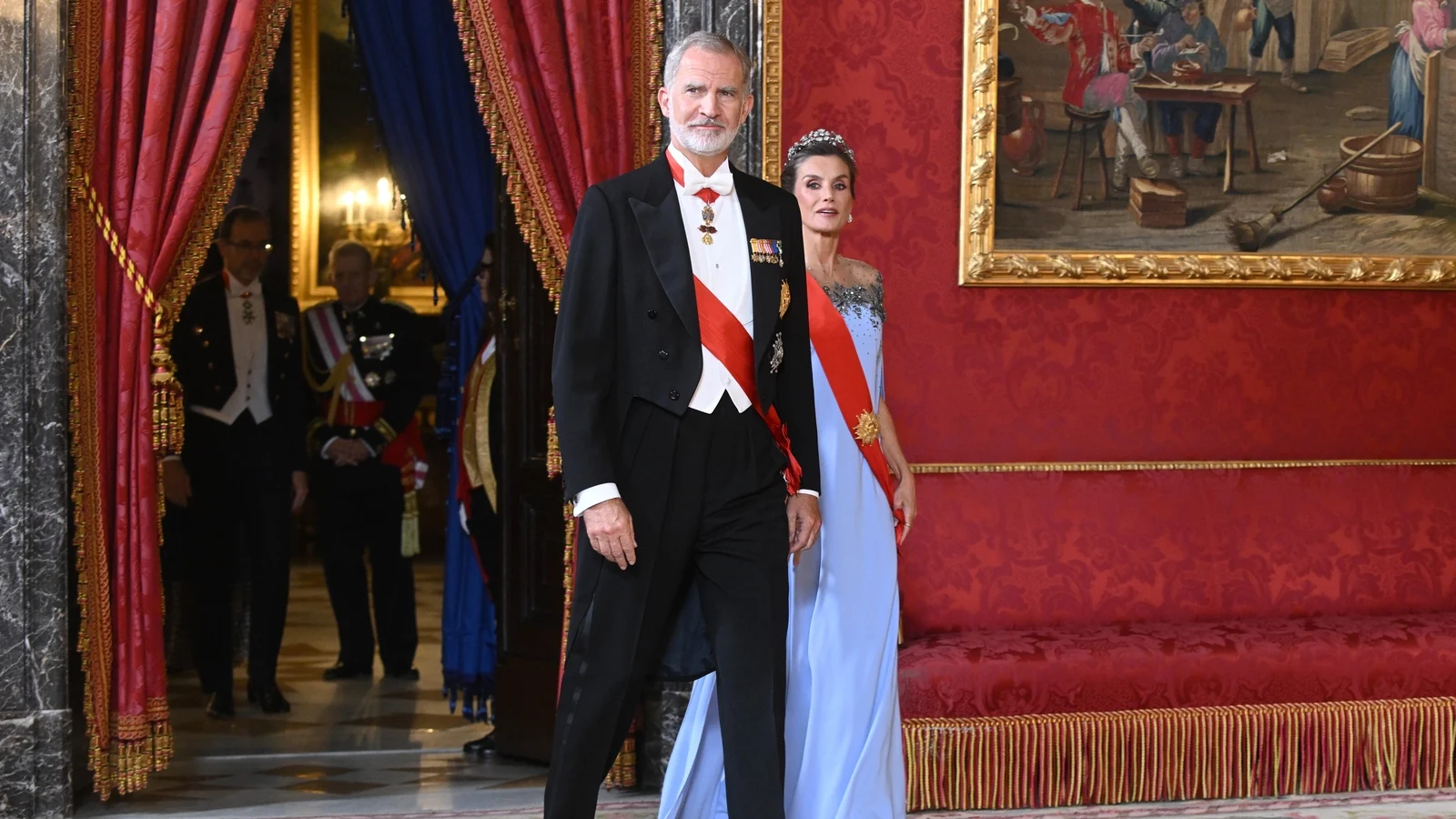
Spain’s migration shock in Ceuta should have triggered a louder chorus of European backing, King Felipe VI said in Madrid, arguing that countries on the EU’s front line cannot be left to manage such upheavals largely on their own.
Speaking at a gala dinner during French President Emmanuel Macron’s visit, the monarch delivered an unusually forthright assessment of the mass arrival in the North African enclave two months ago, calling what unfolded there “unacceptable” and warning it created a vast security, public order and humanitarian challenge.
“It’s a situation that ought to have as a consequence a reinforcement of collaboration between member states in resources and cooperation,” he said.
“The European countries that suffer the most pressure from being on the external borders of the European Union cannot alone bear a responsibility that also belongs to everyone.”
The remarks came at the Royal Palace dinner attended by Spain’s Socialist prime minister, Pedro Sanchez, a rare European proponent of the benefits of migration who launched a mass regularisation of irregular migrants that concluded in the summer.
Even so, Mr Sanchez has floated possible changes to asylum rules designed to return new arrivals more quickly — proposals that NGOs and lawyers say would breach human rights conventions.
The police evict Ceutan migrants from Benitez Beach
Questioned at a news conference about the idea, territorial policy minister Angel Victor Torres said the government was “analysing the possibility” of a legislative amendment, but stressed it was “not easy” given issues of international law.
After 72,000 migrants crossed into Ceuta on 30 July, European Commission President Ursula von der Leyen praised Spain’s rapid response in sending most arrivals back to Morocco.
Other European leaders took a tougher line. Italy, for its part, suspended the European Union’s border-free Schengen arrangements with Spain for one month.
European Migration Commissioner Magnus Brunner on Tuesday presented a plan to tighten EU border controls in the wake of Ceuta.
The proposal, which still needs backing from member states, would expand the mandate of Frontex, the EU’s border protection agency, and equip it with a standing corps able to deploy immediately.
Read more:
Spain PM says Morocco border control ‘failed’ in Ceuta