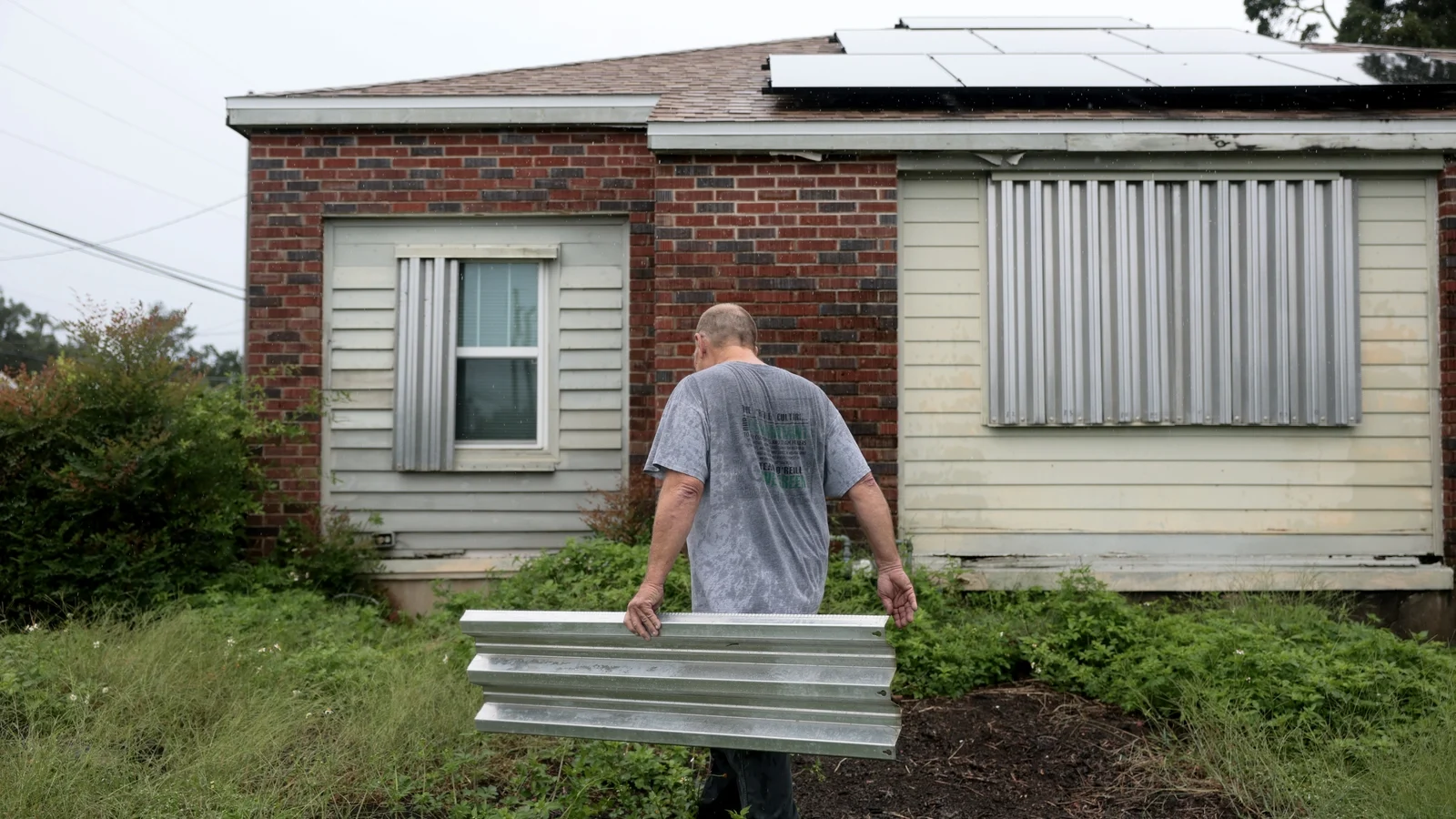
Hurricane Isaias exploded in strength and surged toward the US Gulf Coast as a major Category 3 storm, setting off mandatory evacuations and putting communities in its projected path on edge ahead of a landfall expected later tonight.
Isaias is the first hurricane of an Atlantic season largely suppressed by a historic El Niño, and it is poised to become the first hurricane to hit the US mainland since Milton in 2024.
Driven by record-warm Gulf waters linked to climate change, the system intensified quickly over the past day.
“Isaias is coming in right over us,” said Jane Drescoll, 63, a Pensacola resident, clutching her hat as she spoke on the beach.
Drescoll said she had stocked up on propane and water, and noted she has weathered eight hurricanes since moving to the area a decade ago.
Forecasters said the hurricane’s power could wobble through the afternoon, but they still expect Isaias to crash into the western Florida panhandle at or near major hurricane strength — Category 3 — before weakening after moving inland.
Jane Drescoll holds her hat as winds pick up while she collects seashells on Pensacola Beach, Florida.
The National Hurricane Center (NHC) reported maximum sustained winds of 195 km/h per, with Isaias positioned about 313km south of Pensacola.
Several Florida counties were under mandatory evacuation orders, while parts of Alabama, Florida and Georgia declared states of emergency.
“The resources have been flowing, the preparations have been extensive and we are taking this storm very, very seriously,” Florida Governor Ron DeSantis said at a press briefing.
“We know that this is going to be a major event in one way or another.”
Storm surge, amplified by the tide, is forecast to push water into areas that are typically dry, and the NHC warned floodwaters could climb to 2.7m around the Alabama-Florida border.
At least two airports in northwestern Florida were preparing to suspend operations.
Homeland Security Secretary Markwayne Mullin said federal officials were coordinating closely with state and local authorities.
People fill sandbags in Orange Beach, Alabama, as they prepare for the arrival of Hurricane Isaias
“To everyone in the storm’s path: ask that you also do your part to stand ready. Now is the time to prepare,” he wrote on X.
US President Donald Trump, who is scheduled to attend tomorrow’s college football matchup between the University of Georgia and the University of Alabama in Tuscaloosa, Alabama, said this week he would “let the hurricane determine” his travel plans.
Late arrival
Forecasters and scientists say Isaias arrived late in the Atlantic season largely because El Niño has been unusually strong.
El Niño, the warm phase of the El Niño -Southern Oscillation (ENSO), typically generates strong vertical wind shear over the Atlantic — a hostile setup that can rip storms apart.
Across the Pacific, the pattern tends to do the reverse, easing wind shear and allowing storms to organize and intensify.
This year the Pacific has already produced several hurricanes, including storms that briefly reached Category 5.
Even so, “there are some pockets where hurricanes are able to develop, and that’s exactly what happened with Isaias,” said Marc Alessi, a climate scientist with the Union of Concerned Scientists.
“Sea surface temperatures in the Gulf of Mexico are in record territory because of fossil fuel-driven climate change,” he added.
A man uses sandbags to protect his business ahead of the arrival of Hurricane Isaias
“Isaias was able to tap into all of that energy in the ocean to develop into a major hurricane.”
The hurricane has also jolted the Gulf of Mexico’s oil and gas industry, prompting evacuations from platforms and rigs.
As of yesterday, roughly 63% of the region’s oil production had been temporarily shut in — nearly 1.3 million barrels a day removed from the market — according to the Marine Minerals Administration. About 57% of gas output was also suspended.
Chevron and Shell have halted production at several Gulf sites.