New Zealand woke to the likelihood of weeks of political uncertainty after a razor-thin election delivered no decisive victor and propelled minor parties to historic highs.
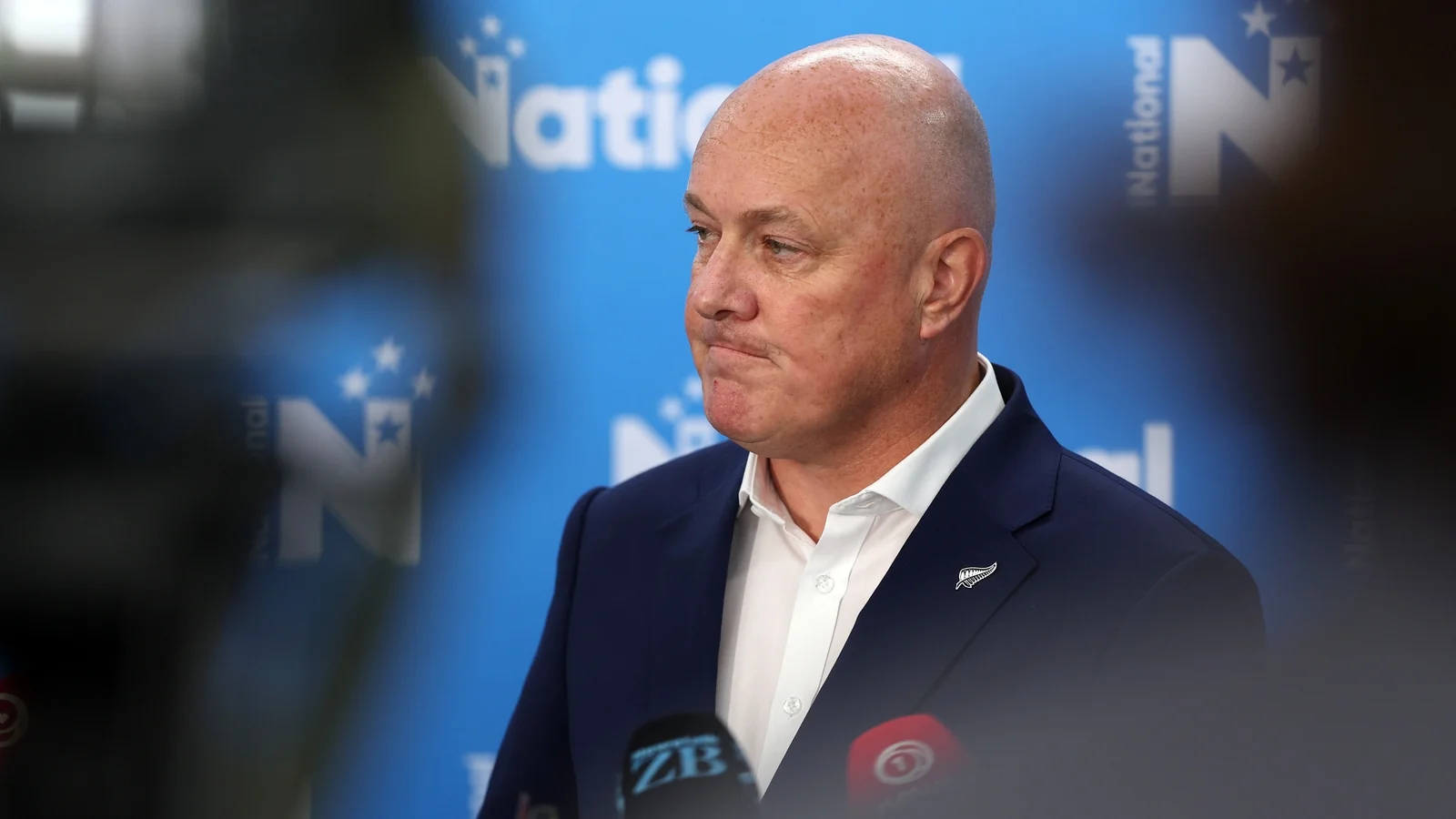
Prime Minister Christopher Luxon insisted his right-leaning bloc had earned the public’s backing to form the next government, even as he acknowledged the final picture remains too tight to call with certainty.
Early results show Luxon’s National Party on track to secure the largest share of seats, leaving the right with only the slimmest of margins — a projected majority of two when National is paired with coalition partners NZ First, a populist party, and the libertarian ACT.
“New Zealanders have given us the biggest seats in parliament, 42 seats as it stands today, and a pathway to form a government,” Mr Luxon told journalists.
“There’s no doubt about it. We’ve got a mandate.”
Luxon argued National’s showing was strong given international turbulence, pointing to the war in the Middle East and the resulting global fuel shock that has been widely cited as a driver of New Zealand’s economic strain.
“What we achieved, I think, was pretty good.”
Labour leader Chris Hipkins struck a wry note, quipping that while voters had delivered their message, “it may take us a little bit longer to figure out exactly what it is that you’ve said”.
Even so, the numbers indicate Hipkins faces only a slender route back to power for his centre-left grouping, which includes the Green Party and Te Pati Maori, a party that advocates for the interests of New Zealand’s Indigenous community.
‘Everyone’s over politics’
Luxon will remain at the helm of a caretaker government until the final count is confirmed on 27 November.
“I think everyone’s over politics, so let’s all just have a bit of a break for the next three weeks,” he said.
The outstanding count includes close to 400,000 “special votes” — such as around 100,000 ballots cast from overseas and votes from people who were in New Zealand but outside the electorate where they are enrolled.
In past elections, special votes have tended to favour the left, a pattern that could shift one or two seats toward Labour or the Greens and away from the right-leaning parties.
The cliffhanger result has intensified scrutiny of smaller players, particularly the emerging centrist Opportunity Party, which became one of the campaign’s focal points.
New Zealand’s mixed-member proportional system requires voters to make two choices: selecting a party list and choosing a local electorate representative.
On the preliminary figures, Opportunity is projected to win seven seats — positioning it as a potential kingmaker in coalition talks.
After 100% of the preliminary votes were counted, the electoral commission’s projections put National on 42 seats and Labour on 36.
The Greens sit third with 16 seats, while ACT is on 13 and NZ First on 12. Te Pati Maori is projected to hold five.
Cost of living concerns
Luxon said it was “unlikely” the Opportunity Party would be needed to assemble a governing majority, but he signalled openness to working with leader Qiulae Wong on areas of common ground.
“We can work with our current coalition partners to form the government,” he said.
“What I’ve also said, though, is that there is a need for us to go forward in cross-party collaboration in a lot deeper way.”
Behind the political arithmetic, voters are grappling with pressures at home: many Kiwis are struggling to cover everyday costs, basic prices remain stubbornly high, and unemployment is at its highest level in more than a decade.