Hong Kong in Ashes: The Long Night After a Tower Blaze
There is a hush in the lanes around Wang Fuk Court that wasn’t there last week. Where markets once buzzed and old men played chess beneath flickering neon, the air now holds a bitter tang of smoke and the quieter, heavier smell of grief. Flowers pile up at cordons. Candles gutter in the wind. People who have never met exchange looks that say the same thing: this should not have happened.
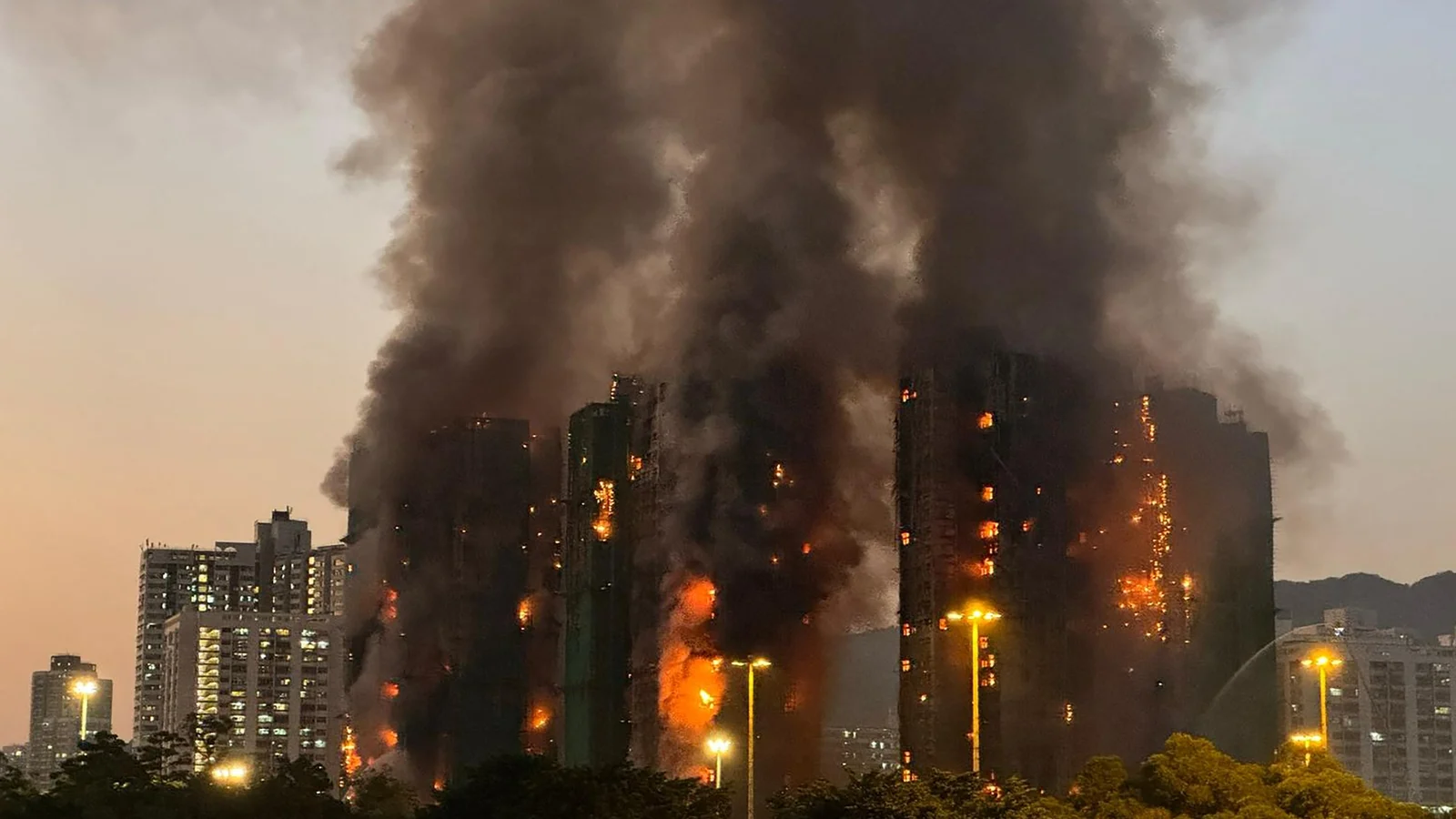
Hong Kong’s deadliest fire in decades has left at least 156 people dead, about 30 still missing, and thousands displaced from a cluster of seven high-rise towers that together housed more than 4,000 residents. The numbers are brutal and blunt; they don’t capture the small stories — the mother clutching a charred shoe, a neighbour who carried an elderly man down six flights of stairs, the domestic worker who disappeared during a night shift.
What Went Wrong: Materials, Maintenance, and Missed Warnings
Investigators are pointing to renovation work as the spark that turned one building into an inferno. Samples of a green plastic mesh wrapped around bamboo scaffolding failed to meet fire-retardant standards, officials said, and insulation foam used in pockets of the work fed the flames. Authorities found that alarms in the complex were not functioning correctly. Contractors, according to senior officials, had placed substandard materials in hard-to-reach areas — effectively hiding them from routine inspections.
“The fire behaved like a living thing — it found the weakest seams in the building and ran,” said Eric Chan, the city’s Chief Secretary, at a press briefing. “Where materials were not up to standard, the consequences were catastrophic.”
Residents had warned about hazards more than a year ago. The Labour Department confirmed complaints from September 2024 about the potential flammability of the mesh. Officials responded at the time that the buildings faced “relatively low fire risks.” That judgment will now face the most intense scrutiny.
Fault Lines: Renovation, Regulation, and Responsibility
In a city built vertically, with narrow apartments and communal stairwells, the margin for error is slim. Hong Kong remains one of the world’s most densely populated cities, with about 7.4 million people packed into an urban landscape of towers and alleyways. That density makes mitigation and enforcement both vitally important and technically challenging.
John Lee, the Chief Executive, announced the creation of a judge-led independent committee to examine why the blaze started and spread so quickly — and to scrutinise the broader systems that allowed lethal materials to be used. “In order to avoid similar tragedies again, we will set up a judge-led independent committee to examine the cause and rapid spread of the fire and related issues,” he told reporters, pledging a transparent and thorough inquiry.
Yet transparency has been a flashpoint. Police have arrested 15 people on suspicion of manslaughter and the anti-corruption commission has detained 12 more in a probe into possible graft related to the renovations. It is unclear whether some individuals have been arrested on both counts. Rights groups warn that investigations should not become a pretext for muzzling criticism.
“Now is the time for authorities to show their work — to open the files, to explain the inspections and exemptions,” said Mei Wong, a local activist and former building inspector. “Silencing people who are asking questions will only deepen the wound.”
A City in Mourning: Faces Behind the Figures
Walk past the cordon and you see the human mosaic that made Wang Fuk Court more than a collection of floors: students studying late at a night table, grandmother shrines barely visible in the soot, migrant domestic workers who lived with families in the towers and now carry the same grief as everyone else. Among the dead are at least nine Indonesian domestic helpers and one worker from the Philippines — a stark reminder of the vulnerabilities shared by migrant communities who often live within the same walls as the families they care for.
“She called me in the morning and said there was smoke. I told her to get downstairs. She didn’t make it,” said Sari, an Indonesian woman who came to lay flowers, her voice breaking. “We work for others, but we are still family. Now we have lost sisters.”
Vigils have started to ripple beyond Hong Kong: similar gatherings are planned or already held in Tokyo, Taipei, and London, where the city’s diaspora has set up small altars with incense, notes, and yellow ribbons.
Rescue, Recovery, and the Long Tail of Displacement
Rescue teams have combed five of the seven buildings and will spend weeks on the remaining two, officials said, because these are the worst damaged. Images from inside — husk-blackened rooms, scorched furniture, safety suits and helmets reflected in broken glass — read like a catalogue of loss.
Nearly 1,500 evacuees have been rehoused into temporary housing, and another 945 placed in hostels and hotels. The government has offered an emergency grant of HK$10,000 (about €1,105) per household and expedited replacement of identity cards, passports and certificates for those who fled without documents. But money does not neatly buy back a life: keepsakes, photos, the smell of a home — all are irreplaceable.
“My grandchildren asked if our flats would ever be the same,” said Mr. Leung, a retired teacher whose third-floor home survived but who now sleeps at a relative’s flat. “There is a hole. You don’t heal by fixing plaster.”
Politics, Protest, and the Fragility of Public Space
This tragedy unfolds against a tense political backdrop. Beijing’s national security office warned against using the disaster to “plunge Hong Kong back into the chaos” of 2019 protests, and authorities have warned that any attempts to politicise the event will be “strictly punished.” A student and others have reportedly been detained on suspicion of sedition, stirring criticism from Amnesty International and Human Rights Watch, which have urged authorities not to silence legitimate questions about the cause and aftermath of the fire.
“When grief is politicised — or when politics is weaponised against grief — trust collapses,” said Dr. Hannah Ortiz, a sociologist focusing on civic trusts in urban Asia. “People want explanations. They want accountability. And when institutions answer with force, it deepens trauma.”
What This Means for Cities Everywhere
As the smoke clears, Hong Kong’s catastrophe forces questions that echo far beyond its harbour: How do we regulate the safety of quick renovation booms that pop up across dense cities? How are migrant and low-income residents disproportionately exposed to risk? And how do governments balance the need for swift action with the equally important need for transparent investigations?
Across Asia, from Tokyo to Manila, cities are wrestling with aging building stock, the pressure to refurbish rather than rebuild, and a materials supply chain that sometimes favours cost over safety. The tragedy at Wang Fuk Court is thus at once local and global: a horror rooted in a particular place, and a warning to urban planners, regulators and residents worldwide.
Remembering, Reforming, Reckoning
In the days ahead, the judge-led committee will begin its work. Families will demand answers. Volunteers will continue to sort through donations and offer counselling. The displaced will count their losses and try to stitch together a future in temporary rooms.
Will the inquiry lead to real change? Will officials hold those who cut corners accountable? Or will the story slip into the archive of tragedies that led to speeches and not reform?
For now, Hong Kong is a city sitting in the same uneasy silence as many other places that have lost lives to preventable disaster. It is a place of flowers, of numbers, of smoke, and of small human acts of kindness: a neighbour with a blanket, a volunteer handing out tea, a stranger who carries an elderly aunt down a stairwell. If the rest of us watch, let’s ask not just what happened, but what we will do to make sure it never happens again.