A truth that arrived late — and accountability that never did
The damp spring light that used to fall over Sheffield’s Leppings Lane on April 15, 1989 still cuts into the city’s memory like a blade. For the families who lost sons, daughters, fathers, mothers and partners that day, the air has carried more than grief for three decades: it has carried questions. Today another file is closed on those questions, and once again the answers are bittersweet.
After a years‑long examination, the Independent Office for Police Conduct (IOPC) has concluded that 12 former officers would have faced gross misconduct hearings for “fundamental failures” during the Hillsborough disaster and for a subsequent campaign to shift blame onto Liverpool supporters. The report also upheld or found “cases to answer” in 92 separate complaints about police actions that day and in the weeks that followed.
But there is a dagger in the details: under the law as it stood during the decades of investigation, all of the officers named have since left active service. That technicality means none will now face formal disciplinary proceedings. For many in Liverpool and beyond, the report feels like truth without consequence—acknowledgement without accountability.
What the findings say — and what they leave behind
The raw facts remain stark. Ninety‑seven people died as a result of the crush at the FA Cup semi‑final at Hillsborough on 15 April 1989. The disaster began when police opened an exit gate to relieve overcrowding outside the turnstiles, then failed to manage the flow into the central pens. Fans were funnelled into confined spaces with nowhere to breathe. Decades later, inquests concluded in 2016 that those who died had been unlawfully killed.
IOPC investigators looked again at the actions of senior officers, commanders and operational staff, and at the narratives that were fed to the public in the aftermath. Their language is sharp. A senior IOPC official told me: “There was a systemic failure — in preparedness, in command and then, brutally, in the stories that were constructed to protect the force rather than the victims.”
Among the names flagged were high‑ranked figures who had decisively shaped the day’s policing: the match commander on duty, his second‑in‑command, and senior South Yorkshire officers. Several individuals were found to have evidence against them that would, if they were serving now, amount to gross misconduct. Others were noted for alleged attempts to mislead the public, or for failing to probe fully the catastrophe while it was still raw.
Yet the law forms an iron wall. Because the officers had retired before the IOPC and Operation Resolve investigations unfolded, disciplinary proceedings cannot be pursued. “This was the law when families were still fighting for answers,” said Anne Roberts, a solicitor who has worked with bereaved relatives. “The truth has been unearthed. But justice — in the sense of sanctions, of official penalties — remains out of reach.”
Key takeaways
- 97 people died at Hillsborough on 15 April 1989; inquests in 2016 ruled unlawful killing.
- The IOPC found that 12 former officers would have faced gross misconduct proceedings.
- There were 92 upheld or “cases to answer” for misconduct in other complaints.
- No disciplinary proceedings can proceed because the officers had retired before investigations began.
- Only one conviction has resulted from decades of probes: Graham Mackrell, the club secretary, fined £6,500 and ordered to pay £5,000 costs.
Voices from Liverpool — grief, anger and weary relief
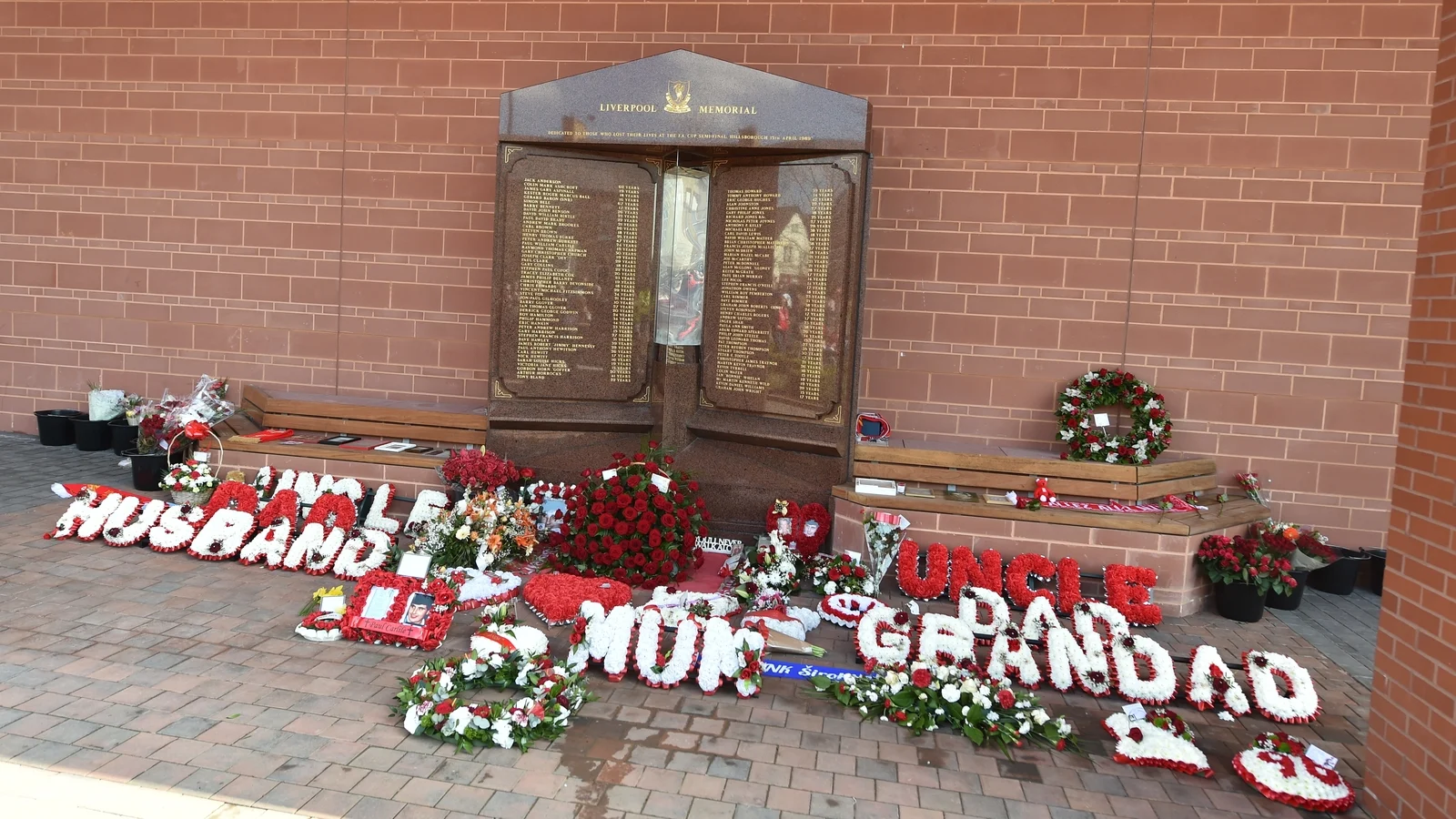
Walk the docks and terraces of Liverpool and you’ll find grief that has been braided into the city’s identity. On the wall outside Anfield, bouquets still gather on anniversaries. On matchdays the chorus of “You’ll Never Walk Alone” sounds different now — softer, older, threaded with a certain wary pride.
“We finally have the truth,” said Joan Hughes, mother of a son who died that day. “But they can retire and go to the golf course and the fishing and that’s it. It’s like being told your house burned down and then getting a letter saying sorry, we can’t punish the arsonist because he’s moved away.”
A younger fan, twenty‑six‑year‑old Omar, grew up with Hillsborough as a story of injustice. “My family taught me the dates and the names before they taught me team tactics,” he said. “It’s in our recipes, in the way we sing. You can’t wipe it away. The report matters. The lack of consequences hurts.”
Not everyone was in Liverpool that day, but the city’s civic memory holds the moment like a wound that has scarred but will not close. “It’s preparedness, it’s hierarchy, it’s how institutions protect themselves,” said Dr. Elaine Martin, a criminologist who has studied public inquiries. “Hillsborough shows how small procedural choices cascade into catastrophe, and how narratives — not just actions — can deepen the harm.”
Why this matters beyond one stadium
At first glance, Hillsborough can seem parochial: a tragedy at an English football ground. But its echoes are universal. How do institutions respond when they fail catastrophically? How do they choose between protecting reputation and being faithful to victims? How do laws and procedural technicalities stand between truth and sanction?
Across the world, from police misconduct inquiries in the United States to inquiries into crowd disasters in India and the Philippines, the themes repeat: command failures, rushed narratives, and the painful lag between revelation and reform. The Hillsborough story forces us to ask whether systems of accountability are robust enough to punish misconduct even when decades pass.
There have been reforms. Campaigners note changes to how police complaints are handled and to the legal frameworks that govern disciplinary action. But for those who stood in hospital corridors in 1989, or for the friends who have kept vigil for thirty years, systemic change is cold consolation unless it is paired with real consequences for wrongdoing.
Where do we go from here?
For families and survivors, the IOPC findings are an important chapter — not the last word. Many legal challenges and coroner findings have already rewritten official memory: an independent panel in 2012 opened the gates to fresh scrutiny; the 2016 juries declared unlawful killing; and the IOPC has now named those who would have faced gross misconduct charges had they still been in uniform.
But naming without sanction leaves a peculiar residue. “We need institutions that admit error and accept the price of that admission,” said Professor Samuel Adeyemi, a scholar of public ethics. “When retirement becomes an escape hatch, the public’s trust erodes. The remedy here is structural: transparency, independent oversight that survives personnel turnover, and legal frameworks that don’t reward disengagement.”
So I ask you, reader: what do you expect from institutions that fail catastrophically? Do you accept truth without penalty? Or do you demand that a democracy’s guardians be held accountable, regardless of the calendar?
The Hillsborough families have been teaching the world a painful lesson about memory, responsibility and the stubbornness of truth. The report lands as validation of decades of campaigning. It will not, for many, feel like justice. But it is a moment that asks all of us — and our institutions — how we will reckon with failure, and what we will do so it never happens again.