The Island, the Images, and the Questions That Won’t Stay Buried
Imagine turquoise water so clear you can read the ocean floor like a map. Imagine a private beach ringed with coconut palms and manicured lawn that tumbles toward that water in neat, improbable terraces. Then imagine, somewhere behind the walls of a whitewashed villa, a chalkboard with a single, unsettling list of words: “deception,” “power,” “truth,” “political.”
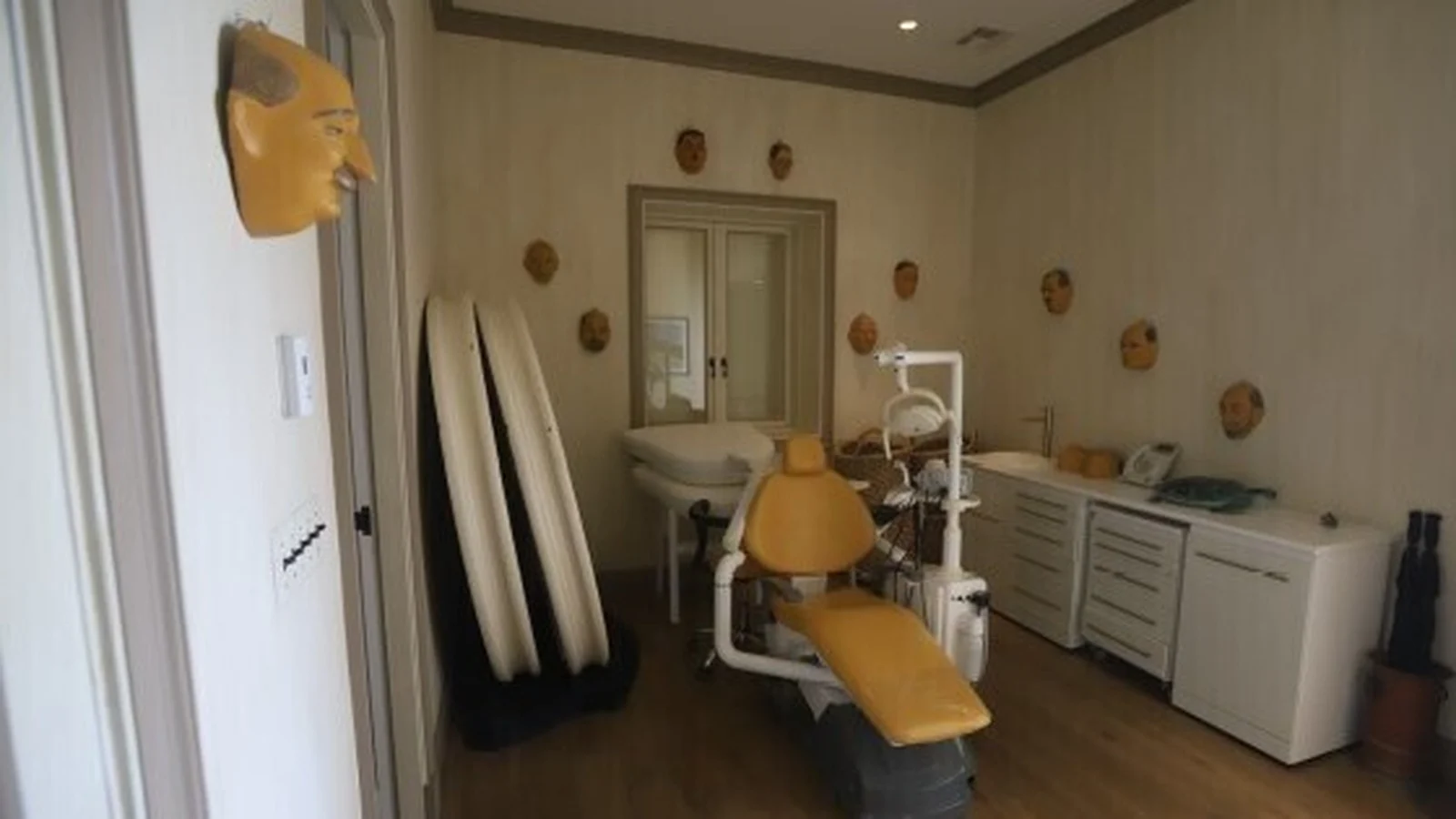
Those are the images that suddenly found their way into the public record: 14 short videos and photographs released by the House Oversight Committee showing the contours and comforts of Little Saint James, the tiny U.S. Virgin Islands island that became shorthand for a larger story about wealth, secrecy, and sexual exploitation.
What greets you in the frame is banal and baroque at once — an outdoor infinity pool, terraces descending to the sea, a helicopter pad that promises arrival and, perhaps, departure. Up close, details accumulate like breadcrumbs: a manicured garden, a fountain, the kinds of luxury accoutrements that mark a place designed to keep the world’s problems at bay. And yet, in these images, every flourish is an echo of more troubling reports, of people who say they were trafficked and groomed in that very setting.
Snapshots That Stir a Political Storm
The release of these visuals does not rewrite what we already know: Jeffrey Epstein, a financier with wealth and powerful acquaintances, was convicted in 2008 on sex-related charges and later died in pre-trial detention in 2019, a death ruled a suicide. Still, the photographs and clips are more than curiosity. They have become a tool — a slow, insistent lever — pushing for more transparency from authorities who have long been accused of treating elite criminals differently.
“Seeing the place brings the reality home in a way a filing cabinet never could,” says Maya Reed, a survivors’ advocate in New York. “It’s one thing to read about allegations. It’s another to watch the shorelines where people say they were brought like property.”
Within the churn of partisan debate, the images add pressure to a legal tug-of-war. For months the White House resisted full disclosure of investigative files held by the Department of Justice. In November, amid escalating congressional pressure, the administration signed a measure compelling the release of materials connected to the probes — a move heralded as a victory by some and decried as political theater by others.
How many pages will ultimately see the light of day is still uncertain. Officials say there are legitimate reasons to withhold parts of any trove — to protect ongoing investigations, shield privacy, or maintain national security. Advocates counter that secrecy effectively protects accomplices with power and money.
What the Photos Show — and What They Don’t
The released material is granular: rooms decorated for living and entertaining; landscapes that transition seamlessly to private beaches; architectural features that suggest the island functioned as both hideaway and stage. One interior shot includes that chalkboard, a fragmentary record whose redactions only sharpen its eerie intimacy.
“I walked that shore when I worked in the islands,” says Joseph “Jojo” Morales, a boatman who ferried guests between islands for two decades. “You don’t see that kind of polish on a private holding unless somebody’s paying to keep everything perfect. There’s a dissonance — the island is beautiful, but what people tell you about happened behind those hedges.”
Local Color: Life and Disquiet in the Caribbean
The U.S. Virgin Islands are not a fairy tale. They are communities shaped by colonial histories, tourism, and the uneven flow of money. On nearby St. Thomas, vendors sell fried fish and rum punch. Reggae and soca drift from open windows. Conversations about the island’s most infamous neighbor are pragmatic and often skeptical: tourism powers many local economies, but the shadow of exploitation stings.
“We sell our fruits and our time to visitors,” says Mariela Ortiz, who runs a roadside stand. “When something like this comes up, people ask: does that hurt the island? Does it help us notice the people who got hurt? We are small places, but we see big things.”
Voices from the Capital: Law, Politics, and the Quest for Files
On the mainland, the fight over documents is as much about politics as it is about justice. Legislators argued that releasing the files would allow victims and the public to scrutinize how the system handled allegations over decades. Opponents said premature disclosure could jeopardize prosecutions or be exploited for partisan gain.
“Transparency is not a partisan preference; it’s a civic requirement,” said a House Oversight Committee member upon releasing the images. “We owe survivors the clarity they have long been denied.”
Legal scholars note the release could have ripple effects: once material is public, civil suits can be reframed, investigative leads might expand, and political careers can be hobbled by new revelations.
“Documents alone don’t prove guilt,” says Professor Anita Shah, who studies human trafficking and institutional accountability. “But they do reconfigure power. They let us see networks where secrecy once hid behavior. For survivors, the disclosure can be validating; for institutions, it can be destabilizing.”
Beyond One Island: A Global Pattern
Why do images matter so much? Because they convert abstract outrage into a place you can imagine yourself standing in. They are, in a way, a map of a deeper phenomenon — how wealth and access can insulate wrongdoing, how the trappings of privilege shield people from scrutiny, and how institutions sometimes falter in protecting the vulnerable.
Across the globe, #MeToo-era revelations exposed patterns: powerful people leveraging influence; systems that penalize the powerless. The Epstein case intersects with those broader currents, reminding us that accountability is uneven and often delayed.
Questions for the Reader
When images and documents are released, what should the public expect to do with them? How do we weigh the privacy of alleged victims against the public’s right to know? And perhaps the most uncomfortable question: are we, as a society, willing to let compensation or celebrity shield wrongdoing?
“I don’t want my island known for pain,” Jojo Morales says softly. “But I also don’t want stories to be hidden because someone has money.”
What Might Come Next
The images are a starting point, not an endpoint. They are likely to prompt more requests, more subpoenas, more legal skirmishes. For survivors, the hope is that they lead to fuller narratives, to documents that explain what happened and why. For politicians, the images are ammunition in a broader fight about public records and secrecy.
And for the rest of us, they serve as a reminder that geography and power often overlap in ways that alter the course of lives. A private island, a chalkboard, a pool — these artifacts are now part of a public ledger. They ask us to look, to remember, and to reckon.
- 14 short videos and still photographs were released by the House Oversight Committee.
- Jeffrey Epstein was convicted in 2008 on sex-related charges and died in custody in 2019.
- The images include interior and exterior shots of Little Saint James, including a chalkboard with partially redacted words.
So the question returns to you, reader: when the shoreline clears and the tide erases the footprints we leave behind, what will we have learned — about accountability, about who we protect, and about the kinds of secrets we are willing to expose? The images are out. The files, perhaps, will follow. And in their wake, there will be choices to make about truth, power, and justice.