The Ping That Could Have Changed a Mission
It began, astonishingly, with a small blue dot on a phone screen: a Signal message, seconds ticking away, a chorus of taps and replies among some of the most powerful people in Washington. For a brief, dizzying moment, the mechanics of modern war and the intimacy of private messaging collided — and the Pentagon’s internal watchdog has now suggested that collision might have been dangerously misjudged.
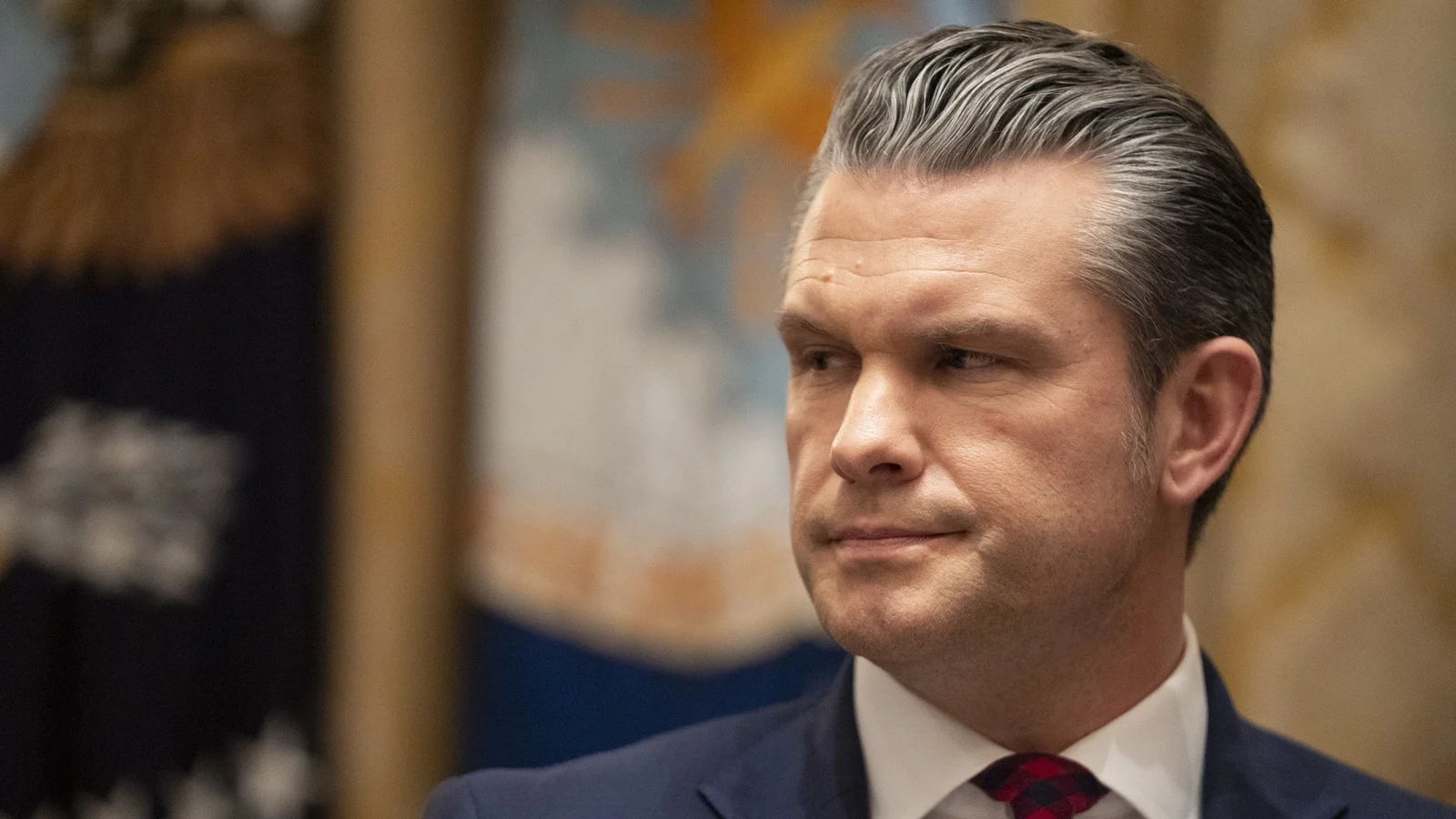
According to an Inspector General review obtained by reporters, U.S. Defense Secretary Pete Hegseth used the encrypted messaging app Signal on his personal device to send information about an imminent strike in Yemen. The IG faulted the practice as risky, saying that, if intercepted, the messages might have endangered service members and compromised the operation.
But the report stops short of a clean-cut verdict on classification. It acknowledges a thorny, constitutional-administrative fact: a cabinet secretary has substantial latitude to decide what information is formally classified. That gray area — at once procedural and profound — sits at the heart of the controversy and has everything to do with trust, norms, and how democracies manage the secrecy of violence.
When Signals Cross Wires
The instant messages in question were not part of a routine Pentagon cable. They were part of a small, private chat within a circle of President Donald Trump’s top national security aides — a group that accidentally, and consequentially, included Jeffrey Goldberg, the editor-in-chief of The Atlantic. Goldberg later published screenshots of the messages in an article that set the whole inquiry in motion.
In the screenshots, Hegseth appears to have messaged about the timing of a strike and even discussed targeting an individual aligned with Yemen’s Houthi movement, two hours before the operation unfolded. The IG report says the material had been deemed classified by the military at the time it was transmitted.
“If this kind of targeting information leaks before an operation, the practical effects are immediate,” said a retired intelligence officer who reviewed the IG findings. “Bad actors — or even the targets themselves — could change their movements, disperse to civilian areas, or otherwise make safe execution more difficult. That puts people at risk, and it imperils mission success.”
Signals, Screenshots and the Limits of Privacy
Signal, for many, has come to embody privacy: it uses the Signal Protocol, an open-source method of end-to-end encryption also used by other popular apps. Encryption makes surveillance and third-party eavesdropping difficult. But encryption is not an invulnerability cloak for sensitive government data. Beyond technical protection, there is process: where messages are stored, how access is controlled, and whether messages are part of an official record.
“Encryption protects the message in transit, but it doesn’t remove the responsibility of leaders to follow established information security protocols,” said a national security analyst in Washington. “Operational discipline isn’t optional when lives are at stake.”
Politics, Procedure and Public Perception
The political fallout has been swift. Representative Adam Smith, the top Democrat on the House Armed Services Committee, described the report in blunt terms. “This report is a damning review of an incompetent secretary of defense who is profoundly incapable of the job and clearly has no respect for or comprehension of what is required to safeguard our service members,” Smith said.
Senator Mark Warner, the top Democrat on the Senate Intelligence Committee, framed the revelation as part of a broader pattern. “The report underscores that this was not an isolated lapse,” Warner told reporters, adding that multiple Signal chats appear to have been used for official business.
Hegseth, for his part, has pushed back. On X he posted: “No classified information. Total exoneration. Case closed.” He also declined to be interviewed for the IG investigation, telling the investigators in a written submission that, as secretary, he reserved the right to declassify information where he saw fit and that he only shared what he judged posed no operational risk. He called the probe politically motivated — even as both Republican and Democratic lawmakers had asked the IG to look into the matter.
Beyond One Message: What This Means
To anyone outside the bubble of Washington, it might seem like a quarrel about etiquette. But the stakes are higher. The U.S. has a long history of carefully protecting details of targeting, timing, and tactics precisely because such details can determine whether an operation succeeds cleanly, and whether civilians are spared.
“Imagine you’re a mother in Sanaa or a small coastal community watching military aircraft overhead,” said Amal al-Hadidi, a Yemeni scholar who studies the conflict, speaking over a grainy phone connection. “The difference between a safe corridor and a wrong turn is half an hour. Information has consequences for people who are already living under unimaginable pressure.”
There’s also a global argument here about how public servants use private communications. Since the rise of private, encrypted apps, more officials have adopted them for convenience and perceived security. The IG’s findings suggest that convenience can metastasize into institutional risk.
- Operational secrecy matters because it protects both military personnel and civilians.
- Encryption does not absolve leaders of the duty to classify or handle information according to established rules.
- Private chats can become public artifacts — as this case shows — and then shape public trust.
Voices from the Ground and the Halls of Power
Not everyone sees the episode the same way. “We rely on judgment at the highest levels,” said a former defense official who asked not to be named. “Sometimes that judgment is right; sometimes it’s not. The office of the secretary isn’t an ordinary job. But it’s not an unchecked license either.”
In port cafés along the Caribbean, where the Pentagon has been criticized for its recent operations against suspected drug-smuggling vessels, local fishermen and activists are watching closely. “We saw the navy planes, then a patrol boat, then rumors — but nothing official,” said Carlos Mendoza, a fisherman in Puerto Plata. “People here want clarity. When governments act in secret, people suffer the consequences of uncertainty.”
And among former intelligence officers, there’s a mix of exasperation and worry. “This is a symptom of a larger erosion of norms,” said one ex-analyst. “When institutional controls slacken, you get improvisation. And improvisation with lethal force is terrifying.”
Questions to Ask — and to Answer
As readers, what should we make of this? Do we trust elected leaders to self-determine classification when stakes are life and death? Can privacy tools be reconciled with institutional safeguards? How do we balance transparency, oversight and the need to act swiftly in dangerous moments?
These questions are not academic. They ripple outward — into the lives of troops, into the justice of military campaigns, into the credibility of democratic institutions tasked with conducting war on behalf of citizens.
Where This Goes Next
The IG report has not been fully released to the public at the time of writing. What it contains beyond the findings already reported will matter: whether the IG recommends disciplinary action, changes in policy, or new training and safeguards. Lawmakers, activists and military families will all weigh in. The debate will test the ability of institutions to adapt to a digital age where the difference between public and private is often just one tap.
One final thought: technology changes fast; human judgment does not always keep pace. If a ping can unsettle a mission, it can also unsettle a nation’s faith in how its wars are waged. Maybe the most urgent task is not to demonize a device or a person, but to rebuild the norms and systems that make the use of force accountable — and to ask, again and again, what the rules should be when war and WhatsApp collide.