When Handshakes Meet Heavy Artillery: Washington’s Peace Ceremony and the War Still Burning in Eastern Congo
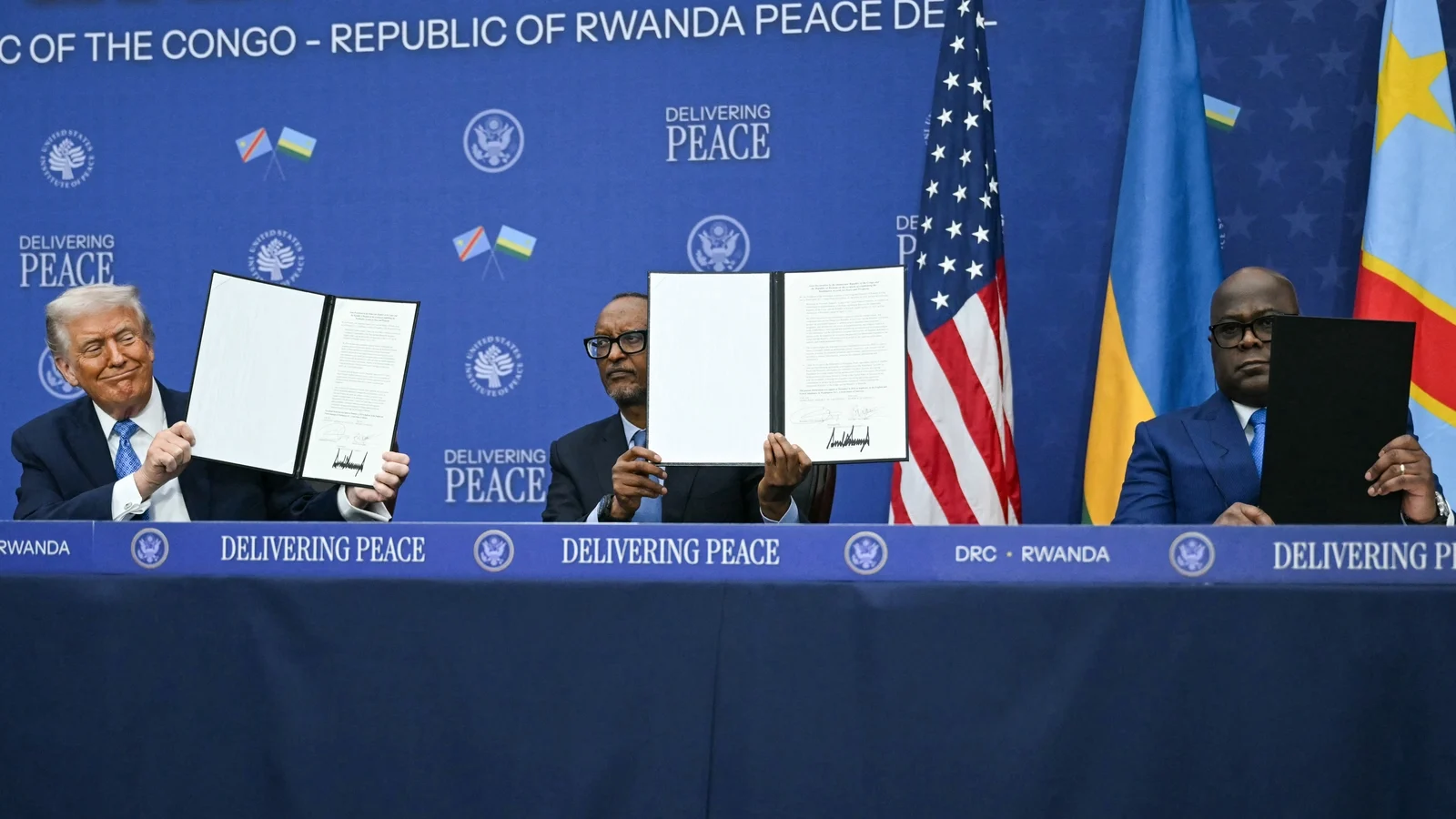
On a crisp Washington morning, beneath banners that read “Delivering Peace,” three presidents took their seats at a polished table and signed documents that, on paper, promised to chart a new course for the Great Lakes region of Africa.
It was a scene staged with all the theatre of modern diplomacy: cameras, prepared remarks, a building briefly stamped with a new name, and the sort of confident smiles that look good on television. But thousands of miles away, in the patchwork hills and wet markets of South Kivu, life continued under the thunder of artillery and the thin air of uncertainty.
The ceremony — optics vs. reality
Inside the room, the leaders of Rwanda and the Democratic Republic of Congo committed to an economic integration compact and a US-brokered peace framework. They signed an additional deal aimed at governing access to critical minerals — the raw materials that have turned eastern Congo into the prize at the center of a global scramble.
“This moment was framed as a turning point,” a senior White House official told me, speaking on background. “The message was: we’re resetting relations, we’re opening markets, and we’re stabilizing a volatile region.”
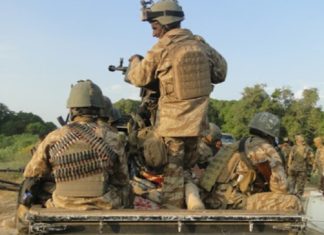
But the cameras could not show what many Congolese woke up to that same morning: reports of clashes between the Rwanda-backed M23 rebel group and Congolese government forces across several towns in South Kivu. A front-line farmer described the sound of shelling: “It was like thunder that didn’t stop. We hid the children among the yams,” she said, her voice flat with exhaustion.
On the ground: markets, mothers, and mortar fire
Visit a market in Bukavu or a roadside tea stall near the Rwandan border and you feel the region’s pulse: a mixture of resilience, suspicion, and quiet grief. Women still sell ripe avocados and crisp cassava chips from tarp-covered stalls. Children play under the shade of jacaranda trees. Yet beneath that ordinary life there is an economy strained by displacement, checkpoints and the invisible tax of fear.
“We are not on the same page as our leaders,” said Jean-Pierre, a taxi driver who ferries people to IDP camps. “They shake hands in the capital. We run from bullets in the bush.”
Humanitarian agencies estimate hundreds of thousands have been displaced in the past year in eastern DRC — a number that fluctuates with the ebb and flow of front lines. Clinics are overwhelmed. Survivors of sexual violence, for which eastern Congo has a tragic reputation, still face long waits for care. The Nobel laureate who works with survivors has called the accords “insufficient” and warned that mineral interests are overshadowing the human toll — a critique shared by many local activists.
Critical minerals: the invisible engine
To understand why the room in Washington mattered so much to distant capitals, look beneath the soil. Eastern Congo is threaded with the minerals that the 21st-century economy consumes: cobalt for batteries, copper for electrification, tantalum for electronics, and gold and tin that have financed both livelihoods and conflict.
DRC’s mining sector supplies a sizeable share of global cobalt production — estimates over recent years have often put the country’s share at well over half of world output — and it hosts some of the world’s most important copper reserves. Artisanal miners, often working by hand, number in the hundreds of thousands; mining towns buzz with an uneasy commerce where fortunes and tragedies are both made.
“This is geopolitics in a hole in the ground,” said Amina Komba, an African affairs analyst based in Nairobi. “For Washington, access to minerals is a strategic priority in the competition with China and other global players. That changes how agreements are negotiated and what is foregrounded: mineral governance and investment, sometimes before security and justice.”
- Tantalum, tin and tungsten — often called “3T” — are critical for electronics.
- Cobalt and copper underpin the green-energy transition, feeding batteries and power grids.
- Estimates suggest the DRC is a major global source of several of these minerals, making it a focal point for foreign investors and foreign policy alike.
Who is at the table — and who is left out?
One of the most striking features of the Washington ceremony was who did not attend. M23, the rebel group that has seized territory on and off in eastern Congo, was not a party to the signing. The group continues to press militarily in provinces that have seen some of the most intense violence in recent months.
A Congolese government spokesman in Washington insisted the agreement “recommits both parties to the peace process,” but on the ground, fighters do not take oaths written on embassy letterhead. The deal calls for Rwanda to withdraw forces and for the DRC to act against certain armed groups — but observers say little concrete progress has been visible since the accords were first discussed.
“You can sign all the instruments you like,” said Dr. Helena Mutesa, a regional security specialist. “But if the militia commanders are not bought in, and if livelihoods are not restored, the terms are paper thin. Real peace requires local buy-in, accountability, and reconstruction.”
What this means for the wider world
What transpires in the hills of eastern Congo ripples outward. Western manufacturing, electric-vehicle supply chains, and global diplomatic alignments all have a stake in whether minerals are sourced responsibly and whether violence is contained.
There is also a broader moral question for readers far from the conflict: can we, as consumers and citizens, tolerate supply chains that are built atop human suffering? The recent agreement promises economic integration and investment — potentially billions of dollars — but will that capital prioritize community needs, environmental protection, and transparent governance?
“Investment that doesn’t transform local economies into something stable and diverse will only deepen dependency,” said Komba. “If profits leave the region while people remain insecure, we’ve solved nothing.”
Closing: a fragile promise
Washington’s signing ceremony was, undeniably, a diplomatic moment. Presidents clasped pens; photographers clicked; a newly emblazoned sign outside a peace institute drew headlines. For policymakers in capitals around the world, a framework for economic cooperation and mineral governance is an appealing narrative.
But the real test will play out in muddy fields, in clinics and schools, in the conversations at market stalls and in the quiet rooms where mothers stitch mattresses for children who have slept in churches and under plastic sheeting. Peace that is resilient must be felt in the everyday — in the return of traders to their routes, in children walking safely to school, in survivors receiving care and in community leaders having a voice in how land and resources are managed.
So ask yourself: when you charge your phone or buy a car, whose labor and conflict might be hidden in that supply chain? And when leaders sign treaties in capital cities, are the people who live under the shadow of those decisions being listened to?
Diplomacy has opened a door. Whether it becomes a doorway out of conflict or just another corridor to mine wealth depends on tough follow-through, local participation, and — most of all — the willingness of the international community to put people before profit.