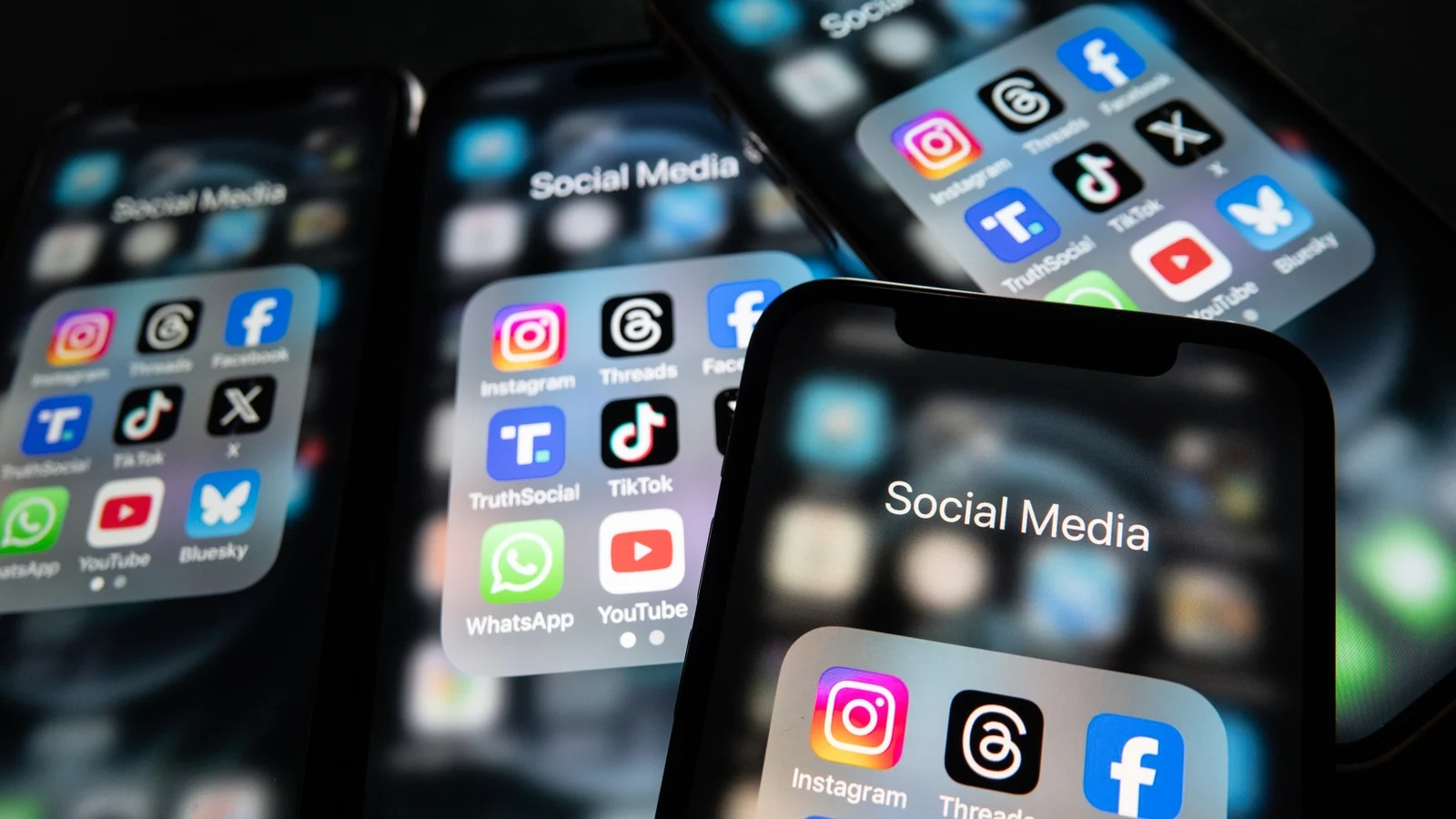
A Quiet Morning in December: When TikTok Turns Off for a Generation
On a bright December morning in suburban Melbourne, the hum of scooters and the smell of toast mingled with the brittle silence of an app going dark.
“I woke up, opened TikTok like every day, and it was gone,” said Jordan Ellis, a 15-year-old who lives near the Yarra River. “At first I thought it was a glitch. Then my friends started messaging: ‘They blocked us.’ It felt like someone took a piece of our social life.”
Jordan’s confusion captures the intimate disorientation millions of teenagers across Australia may feel on 10 December, the day a world-first law comes into force that will bar anyone under 16 from opening new social media accounts. Platforms — from global giants to smaller sites — are required to make “reasonable steps” to enforce the restriction or face fines of up to €27 million (roughly AUD 45 million, depending on exchange rates).
What Will Change — And What Won’t
The practicalities are stark. Where previously a child could download an app and sign up in minutes, companies will now block account creation for people who declare they are under 16 in Australia. Existing accounts owned by under-16s will be made inactive. Platforms say they will give users choices: confirm age, delete an account, download data, or request a reminder to reactivate once they turn 16.
TikTok, which hosts billions of videos and has become a cultural heartbeat for many young people, announced it will comply on day one. The company has said that blocked users can appeal by proving their age using documents such as ID, credit card authorisation, or, controversially, facial images.
“We understand this will be upsetting for some families, but we intend to follow Australian law,” a spokesperson for TikTok said in a brief statement. “We encourage parents to speak with their children about honesty online and to plan together for safe digital lives.”
Options for Young Users
- Confirm age with official documents or other verification methods.
- Download personal data before the account is deactivated.
- Delete the account voluntarily.
- Request a reminder to reactivate the account when the user reaches 16.
Between Protection and Privacy
The law is animated by real anxieties. Communications Minister Anika Wells has been blunt in stating that some young Australians have taken their own lives after being drawn into algorithmic loops that amplified content feeding low self-esteem and self-harm. “This law won’t fix everything,” she told reporters in recent weeks, “but it will give kids a chance to grow without those relentless nudges.”
That plea sits next to a chorus of sharp questions. How do you stop harm without stripping agency? How do you police age without turning teenagers’ faces into biometric keys?
“You can’t treat children as if they’re naïve consumers and then ask them to hand over their faces to prove otherwise,” said Dr. Maya Rahman, a child psychologist who has worked with adolescents in Sydney for two decades. “Biometric verification creates a new set of risks — privacy erosion, potential misuse of data, and discrimination when systems misread diverse faces.”
Parents here are split. Tara Nguyen, a mother of two in Brisbane, welcomed the change. “My younger one is 12 and comes home upset after scrolling. If this law gives us breathing space to teach empathy and resilience before they’re exposed to everything, I’m for it,” she said.
Others fret about equity. “Not every family can provide alternate activities or adult supervision,” said Lee O’Connell, a youth worker in remote New South Wales. “If digital life is closed off, we need to ensure kids still have constructive ways to connect. Otherwise we disproportionately isolate children already living with fewer opportunities.”
Legal Battles and Global Ripples
Not everyone supports the ban. The Digital Freedom Project has launched a High Court challenge, describing the law as an “unfair assault on freedom of expression.” The group argues the measure overreaches and risks upending civil liberties online.
“We’re not against protecting kids,” said a representative for the group, speaking on background. “But sweeping blocks and invasive verification demands can do as much harm as good if they’re not calibrated and transparent.”
Internationally, Melbourne’s experiment has become a case study. New Zealand has signalled similar moves, Malaysia hinted at a ban for under-16s, and regulators in Ireland have signed a memorandum of understanding with Australia’s eSafety Commissioner to share best practices and technical expertise. In a world where digital harms and the tools to regulate them move faster than lawmaking, Australia’s law will be watched closely — and critiqued loudly.
Numbers That Frame the Debate
Some data help explain why this is so contentious. Surveys suggest that large majorities of teens are active on social platforms — daily and often for hours. In many high-income countries, more than 80% of teenagers report using social media regularly, and a significant share say they encounter bullying, body-image pressures, or other distressing content there. Mental health services report rising demand from young people struggling with anxiety and depression, trends experts often link, at least in part, to screen time and online social pressures.
At the same time, platforms are hubs for creativity, community, and civic engagement. For many adolescents, the first taste of identity and activism comes via a viral clip or a supportive comment thread. Barring them entirely risks cutting off pathways that can be, for some, lifelines.
On the Ground: Stories That Don’t Fit a Headline
Walk past a surf shop in Bondi and you’ll hear a different refrain than in a Melbourne laneway café. The kids in coastal towns share tips about skateboards and beach cleanups; those in inner-city suburbs remix politics and fashion into short films. Social media is where they rehearse adulthood — awkwardly, loudly, colorfully.
“We made a fundraiser for a mate who needed surgery,” said Aisha, 17, a student in Perth. “TikTok helped us raise money and get people together. I worry about losing that tool.”
Her fear is a reminder: laws that move in pursuit of safety can also trim back the shared public square. The trick, if there is one, will be designing protections that are specific, evidence-based, and attuned to the diversity of young lives.
Questions to Sit With
Which matters more — shielding all children from a platform’s risks or trusting families to decide what’s best? How do we weigh privacy against protection when the technology of proof is invasive? And who gets to define childhood in the digital age?
As Australia turns this page, the rest of the world will read it closely. Regulators, tech companies, parents, young people, and privacy advocates will all bring their own margins of error. There will be messy implementation, courtrooms, late-night conversations at kitchen tables, and maybe, eventually, better tools that respect both safety and autonomy.
Jordan closed his laptop the day the block appeared and went for a walk along the river. “It felt weird,” he said, watching a pelican dive. “Without the constant scroll, I noticed things — the light on the water, people laughing. Maybe that’s the point, for a while.”
For policymakers and parents, the task now is to make that “while” as generative and just as possible. For readers around the globe: what would you want for the digital childhoods in your life? How would you balance protection with possibility? The answer will shape not only a law that starts on a single day in December, but the stories we let our children write about themselves online for years to come.