The Man Who Made Cities Bend: Remembering Frank Gehry
Frank Gehry’s buildings did something rare in an era of glass boxes and corporate sameness: they surprised us. They tilted, fluttered, buckled like paper, and somehow invited people to circle, to stare, to argue. On the day news came that Gehry had died aged 96 at his home in Santa Monica after a brief respiratory illness, the world felt a little more rectangular — and, for a moment, quieter.
“He loved the unexpected,” Meaghan Lloyd, chief of staff at Gehry Partners, said when announcing his passing. “He lived and worked with a sense of wonder that never dimmed.” That sense of wonder is what turned titanium plates into a new language for cities, what made a concert hall into a shimmering instrument, and what convinced mayors and museum directors to gamble millions on a single daring vision.
A Life Curved Around Curiosity
Gehry’s path didn’t follow blueprints. Born into modest circumstances, by the time he was a global name he had earned the architecture world’s highest accolades. The Pritzker Prize — architecture’s Nobel — recognized him as “refreshingly original,” a phrase that stuck because it captured his appetite for risk. He also received honors from institutions that span the globe, acknowledging a career that blurred the lines between building and sculpture.
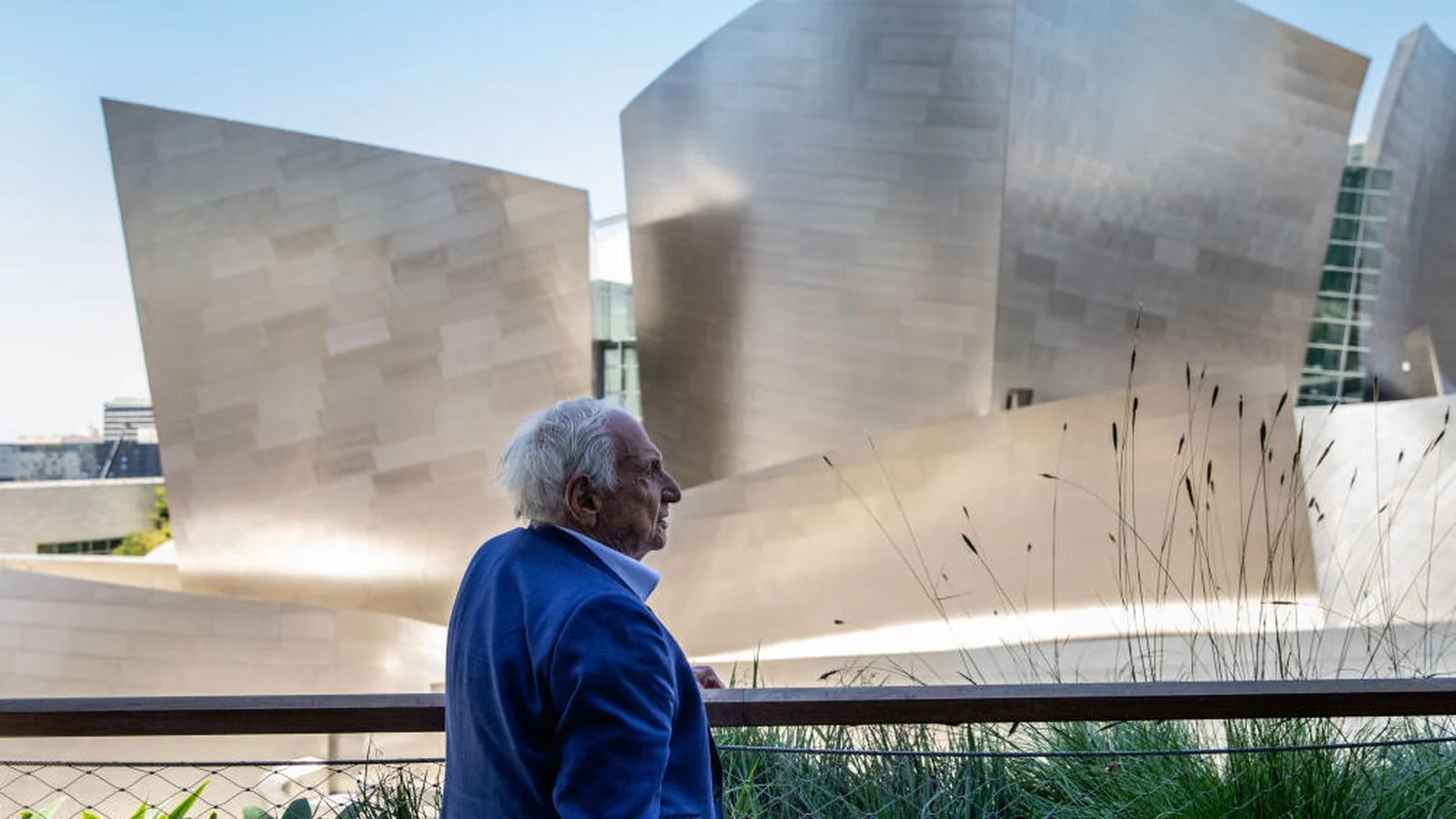
Walk through any of Gehry’s great works and you see the elements that defined him: reclaimed materials, playful assemblages, façades that behave like costumes for the city. The Walt Disney Concert Hall in Los Angeles folds like a sheet of metal lifted by wind; the Guggenheim Museum in Bilbao turned an industrial port into a pilgrimage site for art lovers and tourists alike. In Paris, the Fondation Louis Vuitton nestles like a fleet of translucent sails, while in New York his residential tower reshaped the skyline into rippled stainless steel and glass.
Local Voices, Global Echoes
“When the Guggenheim opened, we could feel Bilbao breathing again,” said Ana Marquez, a café owner two blocks from the museum. “People came, and stayed. My niece found a job; my neighborhood got a roof over the market. It changed everything for us.” Her sentiment is shorthand for the so-called “Bilbao effect” — the phenomenon in which a single striking cultural investment triggered economic and social ripple effects across a city.
In Los Angeles, orchestra members often talk about Disney Hall as if it were another instrument. “The sound here alive,” a violinist for the Los Angeles Philharmonic told me. “The building doesn’t just hold music; it helps make it.” That marriage of acoustic science and sculptural bravado became a template for how architecture could serve both function and spectacle.
Triumphs, Tension, and the Cost of Being Iconic
Gehry’s work was not a universal love affair. Some critics dismissed select later pieces as ego-driven attractions, designed more to fill postcards than to age with dignity. “They’re built for the tourist eye,” one art critic wrote, arguing that flourishes sometimes outpaced human scale. Others took aim at practicalities: maintenance of curved metal, complexities of construction, and the way dramatic forms could overshadow the urban fabric around them.
Not all projects moved forward smoothly. Gehry’s proposal for a memorial to President Dwight D. Eisenhower met resistance from the Eisenhower family, who preferred restraint to bravado. Gehry held to his artistic convictions; the clash illustrated a perennial tension between an architect’s imagination and the public’s desire for familiar reverence.
Even when projects were courted by tech giants, negotiations could change designs. A planned expansion at a northern California campus was softened at the request of the company’s leadership, a rare moment where the architect relented to anonymity over spectacle. “Sometimes you have to give a little to get the bigger piece,” an associate at his firm once explained.
How Gehry Changed the Conversation About Cities
Gehry’s buildings did more than win prizes — they changed expectations. They asked the public to accept curvature in a world that defaults to right angles. They let architecture be theatrical without losing seriousness. And they taught clients and cities that a bold cultural investment can be a form of civic underwriting: a single building can lift tourism numbers, spawn new development, and alter a city’s self-image.
There is a practical lesson in his legacy, too. Complex forms demanded new engineering, new materials, and novel construction processes. Gehry’s offices collaborated deeply with fabricators, software designers, and engineers to turn sketches into structures. In doing so, he pushed the building industry into new territories of digital design and precision fabrication — changes that now ripple through architecture schools and studios worldwide.
Teaching, Mentoring, and the Next Generation
Gehry’s influence extended into classrooms. He taught at Yale, Columbia, and later returned to his alma mater, the University of Southern California, helping to shape young minds who now helm firms around the globe. “He taught permission,” a former student recalled. “Permission to try, to fail, to build something that felt alive.”
Through mentorship and example, he moved architecture away from strict orthodoxy and toward a pluralistic practice where individual expression could coexist with civic responsibility.
What Remains After the Applause
When the scaffolding comes down and the headlines fade, Gehry’s buildings will remain stubborn, useful, beloved, and controversial. They will still challenge us at street level — to walk around, to gather, to decide whether beauty is merely spectacle or an integral part of how we live together.
As we look at the cities he reshaped, questions linger: What does it mean to invest in culture? Who gets to decide the face of a city? And how do we weigh daring form against everyday life? Gehry’s work forces those questions into the open.
“Frank made people look up,” said Lucille Ramos, an urban planner who has worked on waterfront redevelopment projects in multiple countries. “That gaze is important. Architecture should make you imagine the possible. He did that more boldly than most.”
Final Measures: A Career in Numbers and Memory
By most measures, Gehry’s career was extraordinary: dozens of major public commissions across Europe and the Americas, top international awards, and a cultural imprint that produced both devoted fans and vocal skeptics. More tangibly, his buildings drew millions of visitors, catalyzed redevelopment, and inspired a generation of architects to embrace risk.
Today, as cities and citizens debate the right balance between utility and drama, Gehry’s work will be cited on both sides. For some, his curves are daring proofs that architecture can be art. For others, they’re reminders of the fragility of public taste. Either way, his legacy is unmistakable: he dared to bend skylines and public expectation in the same breath.
Walking past a Gehry building, you feel the world tilt just slightly. You ask yourself: What would happen if more of our public spaces were built to surprise? If architecture was less about comfort and more about prompting conversation? Gehry’s answer was literal and loud — build it different, and people will come.
As we mark his passing, the question left to us is not only how we remember Frank Gehry, but how we continue the conversation he started about daring, delight, and the architecture of possibility.