At Dawn’s Edge: A Small Township, a Shebeen, and a Massacre That Left a Community Shaken
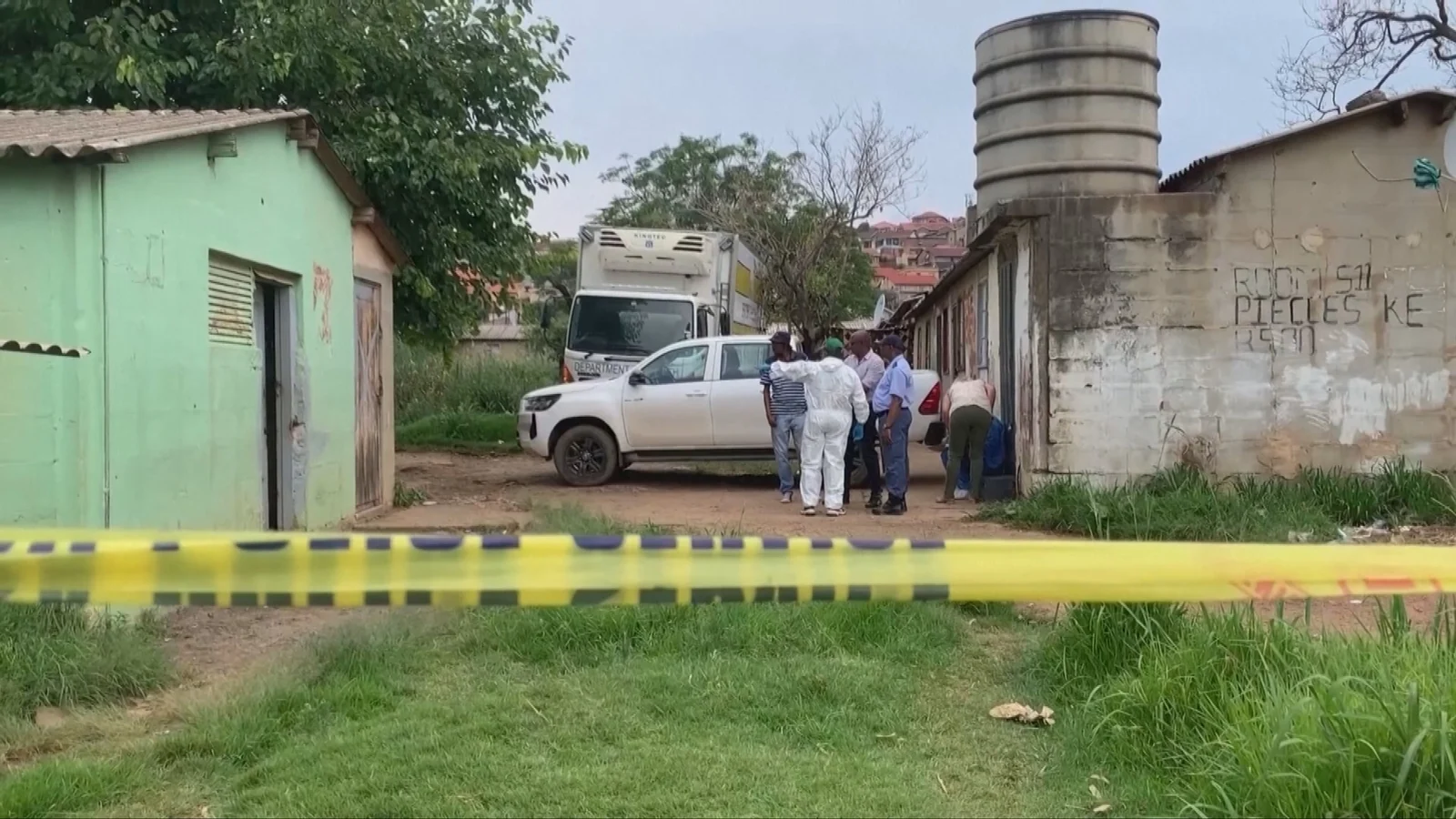
When the sun had barely found the rooftops of Saulsville, the township west of Pretoria, the air still hung with the last traces of night—cooked maize, diesel from the taxis, the faint hum of distant radio. And beneath it all, a silence that felt wrong. Plastic chairs lay overturned. Beer bottles glinted like glassy teeth in the dust. Blood had already been swept into rainwater drains where it would go, for now, unnoticed.
By the time police and ambulances arrived, the numbers made the silence a headline: 25 people shot, 12 dead. Among them, three children—the youngest only three years old—were pulled from the chaos. Ten people died at the scene in Saulsville; two more succumbed later in hospital. Fourteen others survived but were wounded, some critically. The assault, authorities say, involved three gunmen who stormed the illegal liquor outlet—locally called a shebeen—at about 4:30am and opened fire on a group of people drinking inside and around the premises.
Scenes from the Aftermath
“I saw men running, others trying to pick up children while bullets kept coming,” said Miriam, 34, who lives two streets away from the shebeen. “We run to help—what else can we do? But there were babies and blood and crying, and when the police came, they started sealing everything like it was something that belonged to someone else.”
Residents described a surreal early morning: neighbours spill out in nightshirts, cigarettes dangling, faces streaked with tears and dust. A local pastor set up blankets in a taxi rank and began offering comfort and water. Shopkeepers were late to open, staring at the cordon tape. “This place is where people come to forget, even if only for a little while,” said Sipho, a 27-year-old mechanic. “Now people are asking: forget what?”
Shebeens, Shadow Economies, and Social Fault Lines
Shebeens are a fixture in South African townships—informal, often unlicensed bars that serve as social hubs, safety valves, and sometimes economic necessities. For many, they are more than places to drink: they are living rooms, community noticeboards, stages for local music. For law enforcement, however, illegal liquor outlets present a recurring hotspot for violence, an observation police have repeatedly made.
“We are having a serious challenge when it comes to these illegal and unlicensed liquor premises,” police told local media after the attack, noting that many mass shootings occur at such locations and that innocent bystanders frequently become collateral victims. Authorities launched a manhunt for three suspects, but as of the latest reports no arrests had been made and the motive remained unclear.
Why the Violence Keeps Coming
This massacre is the latest in a string of mass shootings that have left South Africa reeling. The country of roughly 63 million people is grappling with entrenched violent crime that experts link to a complex mixture of poverty, deeply unequal opportunity, entrenched organized-crime networks, and a proliferation of illegal firearms. Police data released for a recent six-month period showed that some 63 people were killed each day between April and September—an alarm bell for a society still wrestling with the legacy of apartheid’s spatial and economic injustices.
“When communities lack formal economic opportunities, informal economies thrive,” explained a criminologist at a South African university who asked to remain anonymous. “Those spaces—like shebeens—become nodes where social life and criminal opportunity intersect. Add illegal firearms into the mix, and the potential for mass harm escalates.”
South Africans are permitted to own licensed firearms for personal protection—many do—but the number of illegal guns on the streets is widely believed to be far larger, fed by past smuggling networks, raids, and illicit trade. In townships where poverty bites hardest and policing is often uneven, this creates a powder keg: conflicts that might have been contained in other settings erupt into deadly violence because of the easy availability of high-powered weapons.
Voices from Saulsville: Anger, Grief, and Resilience
Grief here is public and raw. Neighbours gathered, speaking in low tones, some in Zulu, some in English, some switching mid-sentence. “We bury one another too soon,” said Thandi, a 58-year-old grandmother. “I have lost cousins to this kind of shooting. You think your child is safe in his small yard, but the bullets don’t read addresses.”
Others called for practical steps. “Shutting down shebeens might seem like a quick fix,” said Morena, a young community organizer, “but you must remember people work there, small traders sell food nearby, and sometimes it’s the only heated room in winter. We need policing that is smarter, not just tougher. We need outreach, youth programs, real economic investment.”
In the wake of the killings, community leaders demanded more presence from police—not just sirens and statements, but sustained engagement, patrols, and resources for trauma counseling. Local volunteers started making lists of the wounded and offering transport to distant hospitals, because the nearest clinics in the township are small and already overburdened.
What This Means for South Africa—and the World
When a country’s streets are punctuated by shootings like this, the consequences ripple outward. Families left with the sudden absence of breadwinners, children who now absorb another layer of trauma, businesses that lose customers and employees—these are slow-moving impacts that deepen inequality and undermine trust in institutions.
But there is also a political dimension. South Africa’s struggle with crime plays into debates around policing, gun control, corruption, and social policy. It forces policymakers to reckon with the uncomfortable truth that legal restrictions on firearms will only go so far if illegal markets remain unchecked and social grievances unaddressed.
Globally, the story speaks to a pattern seen in many unequal societies: when economic marginalization coincides with weak state capacity and entrenched networks of illicit trade, ordinary life becomes more dangerous. It is a reminder that development isn’t only about GDP growth; it is also about safe public spaces and accessible social services.
After the Screams: Questions We Have to Ask
How do you dismantle a network of illegal arms without first cutting the demand? How do you regulate informal economies without destroying livelihoods? How do you offer justice when the motive is unknown and suspects remain at large?
These are the hard questions policymakers, police, and communities must answer together. For residents of Saulsville the questions are immediate: who will watch the children now, how will funerals be paid for, who will clean the stains from the chairs and floors and carry on as if nothing happened? For the nation, the urgency is different but no less pressing: reduce the daily toll of violence, rebuild trust, and create alternatives so that late-night conversations and laughter in shebeens do not end in tragedy.
“We are not asking for miracles, only for safety and dignity,” Miriam said, wiping her face with the back of her hand. “If we can’t sit somewhere without fear, what kind of country are we building?”
As the town mourns, investigators continue to piece together the timeline: surveillance footage, witness statements, forensic evidence. The manhunt for the three suspects is under way. Meanwhile, in living rooms and on stoops, people tend to one another in practical ways—preparing food, organizing transport, nursing wounds that are not just physical. The headlines will move on in time. The people of Saulsville will not.