Thailand’s Parliament Dissolved: A Young Government, a Fractured Border, and an Election That Came Early
It was supposed to be a quiet turn of the calendar. Instead, a royal decree—short, legalistic and heavy with consequence—appeared in the Royal Gazette and the political landscape of Thailand shifted overnight.
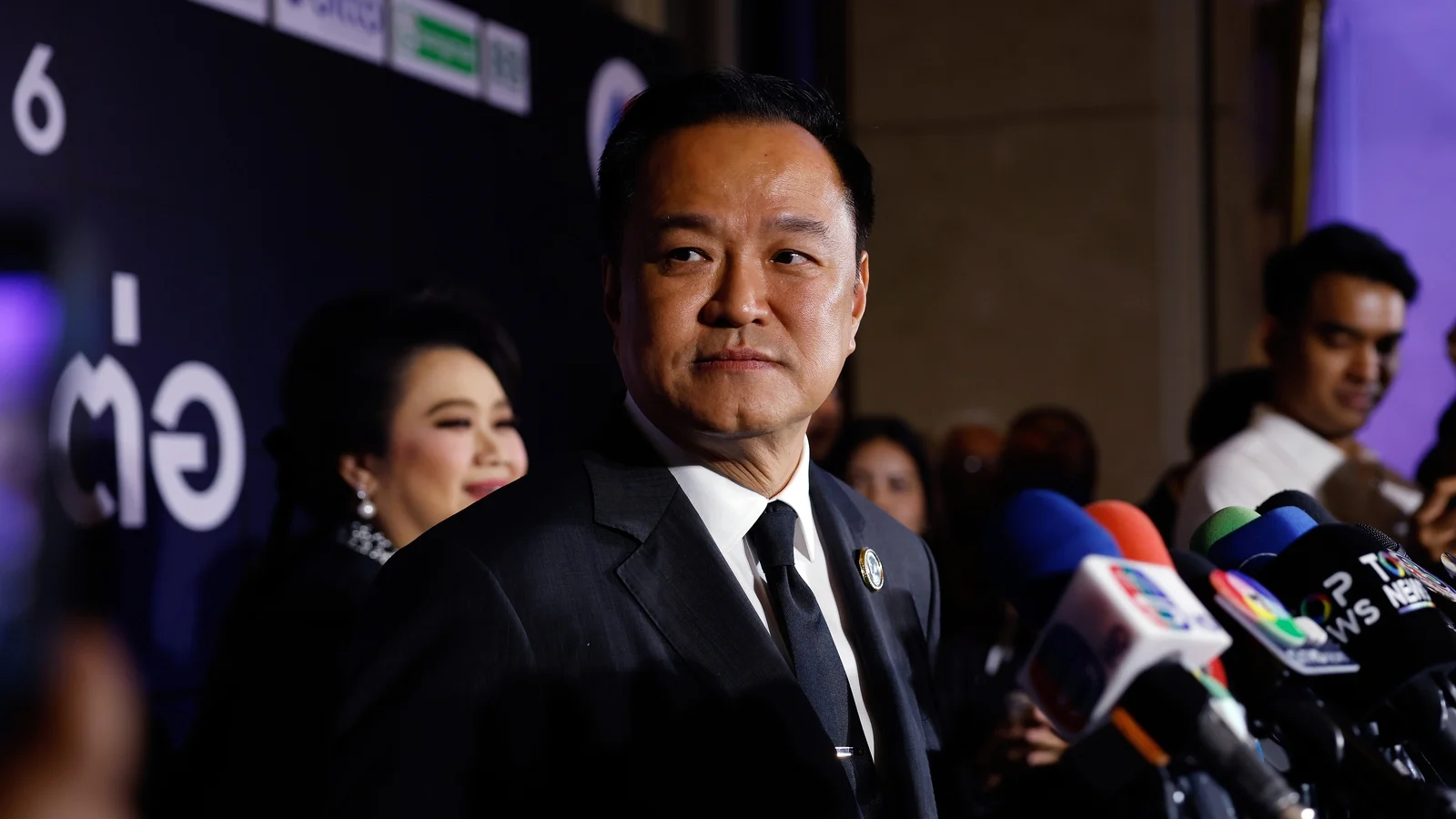
“The House of Representatives is dissolved to hold a new general election for members of the House,” the decree read, ushering in a new chapter for a government that had barely had time to unpack. Prime Minister Anutin Charnvirakul, leader of the conservative Bhumjaithai party, who took office only three months ago, authorized the step that will send voters back to the booths.
The abruptness of power
Three months: long enough to feel like a beginning, too short to feel like a tenure. For many Thais, the dissolution will feel like a clarifying moment—either a reset or an admission of defeat. The Royal Gazette, citing Mr. Anutin’s report, noted that a minority government, mounting domestic challenges and an inability to “administer state affairs continuously, efficiently, and with stability” had led to the decision.
“We tried to govern, but the arithmetic in parliament is not on our side,” a senior government official who asked not to be named told me. “Coalition politics in Thailand has become a daily negotiation. Sometimes the best way forward is to go back to the people.”
Timing—and the drumbeat at the border
We live in an era that judges political acts not only by motive but timing. Mr. Anutin had pledged earlier this year to call fresh elections by early 2026; many expected him to wait until after the Christmas holidays. Instead, the dissolution comes amid renewed violence along Thailand’s northeastern frontier with Cambodia—fighting that has, by official tallies included in government briefings, claimed at least 20 lives and forced roughly 600,000 people from their homes, most on the Thai side of the border.
“We woke up to gunfire,” said Somchai, a rubber-tapper from a border district who fled with his wife and two children to a temporary shelter. “The children are asleep now, but you can hear helicopters and trucks. We don’t know if or when we can go back.”
Border provinces such as Sa Kaeo and Surin—home to rice paddies and market towns where morning life is measured by the price of diesel and sunlight—have become pressured landscapes where geopolitics intersects with the very basic needs: food, shelter, a safe place for a child to sleep.
What this means for Thai politics
Thailand’s modern political life has long been rhythmic—campaigns, courts, coups, recounts. Yet even in this context, one cannot help but feel the fracture lines widening. The Bhumjaithai party occupies a curious place in that spectrum: conservative on many issues, but also pragmatic, known for coalition flexibility. Anutin himself is a familiar face; as health minister in past administrations he became, for better or worse, emblematic of technocratic management.
“Dissolving parliament is an admission that the current government’s mandate is insufficient,” said Dr. Niramol Jitpraphai, a political scientist at Chulalongkorn University. “But it is also a strategic move. If the prime minister believes he can convert public dissatisfaction into electoral strength, why not test that possibility?”
For neighbors and international observers, this is more than domestic theatre. Thailand sits at the heart of Southeast Asia—economically, culturally and geopolitically. Elections here ripple outward: investors watch, development projects pause, and regional diplomacy recalibrates. The timing—against a backdrop of cross-border fighting—also raises questions about stability at a moment when stability is a scarce commodity across the region.
Human stories in the margins
Stats tell one part of the story. Numbers flatten nuance. That 600,000 figure—huge, haunting—represents individuals, households, markets closed, clinics stretched thin. At a makeshift shelter near a temple, mothers trade rice and advice. Fishermen who once rowed dawn waters sit on porches and smoke, their children barefoot on concrete. An elderly woman, voice creaky from years of fieldwork, said, “We can rebuild a fence. We can’t rebuild peace.”
Local officials in the provinces affected say resources are being mobilized—school halls converted into shelters, local volunteers coordinating with NGOs, and mobile clinics dispatched to treat wounds and exhaustion. “The outpouring of support has been extraordinary,” said a provincial administrator. “But what we need is a plan that lasts more than a news cycle.”
Questions for voters and the world
As Thailand moves toward a fresh mandate, several questions hover. Will voters reward decisive action in a time of crisis, or will they punish perceived incompetence? Can a campaign that begins amid displacement and insecurity avoid being defined by it? And what does this election mean for the millions who are seeking shelter and clarity right now?
On the streets of Bangkok, hawkers balanced trays of mango sticky rice while commuters brushed by, some tapping election apps, others counting bills. “Thai people are used to turbulence,” a tuk-tuk driver mused. “But we’re also used to choosing what’s best for our family. In the end, that’s what matters.”
Global reverberations
This moment in Thailand speaks to a larger global pattern: governments under pressure, borders that can flare into violence, and citizens who must weigh short-term crises against long-term hopes. Around the world, fragile coalitions are being tested; in democracies on every continent, voters are asking whether the mechanisms of representation are resilient enough to handle rapidly changing stresses.
It also invites reflection on the relationship between conflict and democracy. Does insecurity prompt consolidation or fragmentation? Does displacement push communities toward solidarity or toward political withdrawal? The answers will emerge over months, not days.
Looking ahead
For now, the decree is a hinge. It ends one brief chapter and opens another—an election season in which campaigns will be shaped by the immediate needs of displaced families, the economy, and the broader questions of governance. For many, the ballot box is not an abstract institution; it is a tool for safety, for dignity, for the chance to return home without fear.
“We can argue about strategy and policy,” said a campaign strategist from a smaller opposition party, “but the electorate decides with their stomachs, their memories, their hopes. We have to listen.”
So the nation prepares: parties retool, candidates sharpen messages, shelters keep whispering lists of names. And as the world watches, one question lingers: when the people of Thailand walk into polling stations, what kind of future will they choose—to stitch, to rebuild, to remake?
- At least 20 people killed and some 600,000 displaced, according to government briefings (majority displaced within Thailand).
- Prime Minister Anutin Charnvirakul dissolved parliament after only three months in office.
- The move, published in the Royal Gazette, paves the way for a new general election.
Will this be a reset that heals, or a reset that deepens the rupture? Thailand is about to decide—and the choice will reverberate far beyond its borders. Will you be watching?