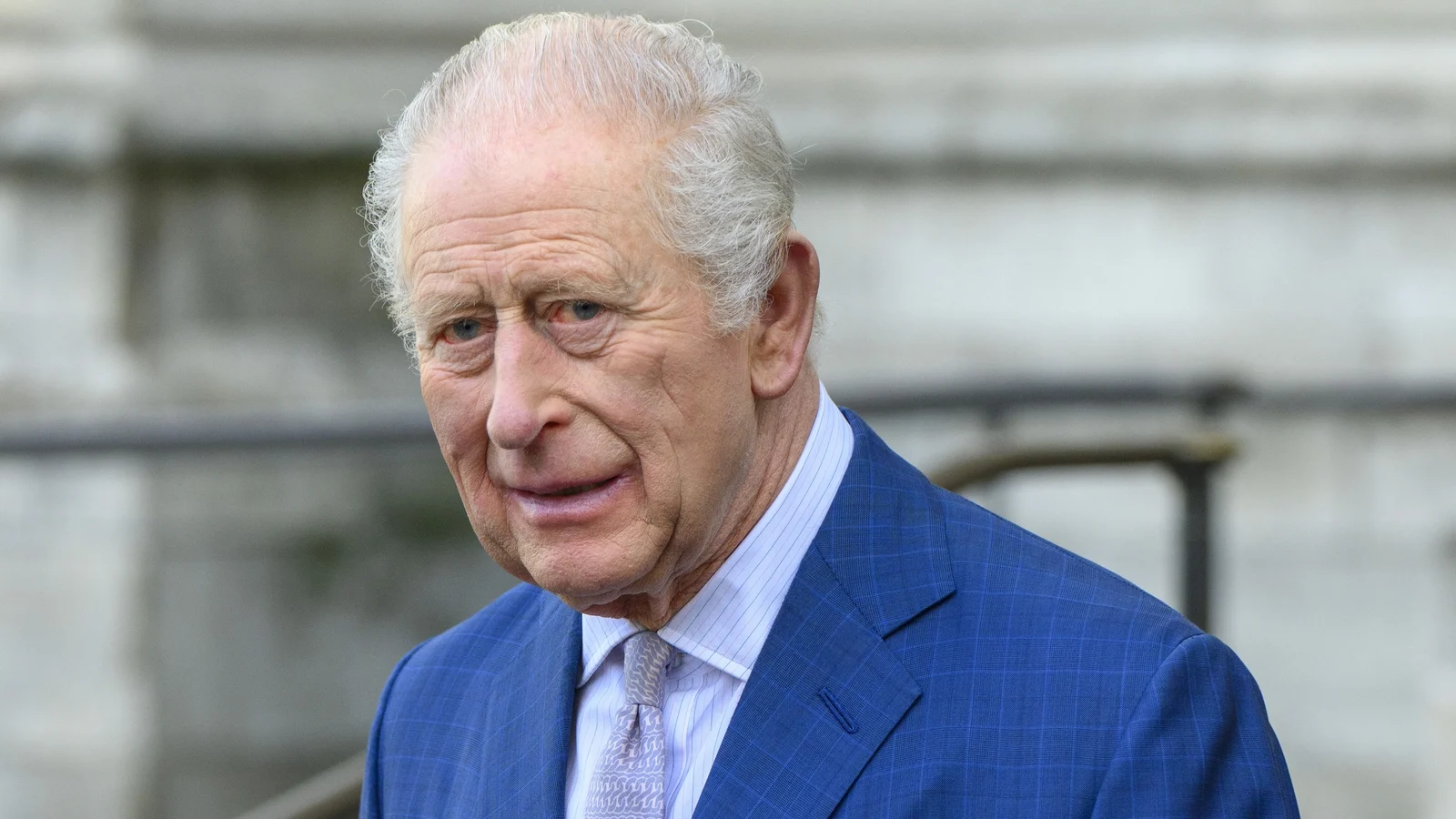
A King’s Quiet Ask: Charles’s Message on Cancer and Why It Matters to Us All
There is an unusual intimacy to a pre-recorded message from a monarch—a voice not on the official balcony but in your living room, measured and human. Tonight, Britain’s King Charles III, aged 77 and living publicly with a cancer diagnosis, will speak directly to a nation and to viewers beyond the UK as part of Channel 4’s Stand Up to Cancer broadcast.
The filmic moment is small in form but heavy in purpose: a recorded address made at Clarence House in the last week of November, scheduled to air at 8 pm. It is, on one level, a monarch’s participation in a charity drive. On another, it is an invitation—gentle, urgent—to talk about early detection, screening and the fear most of us try not to name out loud.
Why this matters: more than one family, one palate of fear
Charles’s announcement that cancer was found while he underwent surgery earlier this year made headlines in February 2024. He stepped back from public duties for several weeks, then resumed work in April, his doctors describing progress as “encouraging.” He has continued treatment since, with a brief hospital stay in March for side effects that reminded even the most stalwart observers of the human cost of medical care.
“A diagnosis can make your world shrink to the size of a hospital room,” says Dr. Nathan Chen, a clinical oncologist based in London. “But when public figures speak openly, it can reduce stigma and nudge people toward prevention and screening.”
That nudge matters. In the UK, charities such as Cancer Research UK estimate that about 1 in 2 people born after 1960 will face a cancer diagnosis in their lifetime. Globally, cancer claimed nearly 10 million lives by 2020, according to the World Health Organization—numbers that place the disease at the centre of public health planning for the 21st century.
Screening: the quiet hero of many survivals
King Charles is expected to use his brief airtime to stress screening programmes—breast, cervical, bowel and more—which detect treatable disease before symptoms fully take hold. These programmes are not perfect, but they change the arc of many lives. “Early detection often means more treatment options and better outcomes,” says Dr. Chen. “We’re talking years—decades—of life that can be preserved.”
For many watching, the plea will be personal. “My mother wasn’t going to go to her screening because she was busy. It took a neighbour to call her selfishly: ‘Mum, go,’” says Aisha Malik, a community volunteer in Birmingham. “People need permission. A king speaking about this gives that permission for some.”
Clarence House, cameras and the ritual of public service
There is a particular domesticity to the thought of Charles recording this message in Clarence House—its red-brick walls a stone’s throw from the ceremonial pomp of the palace. This is a home that has, in recent years, doubled as a place of healing and duty.
Buckingham Palace declined to comment when approached by AFP about tonight’s broadcast, a silence that reads like respect for a private process. Yet the televised address is a public act: his voice intersects with celebrity fundraisers, with village bake sales, with the exhausted nurses and the volunteers who keep registries and encourage appointment attendance.
“We see a spike in calls in the week of big campaigns,” says Maria Velez, director of a small London charity that helps people navigate screening appointments. “People watch and they suddenly book what they’ve been postponing. That’s the power of a face they recognize.”
From the Vatican to a local café: a year of careful appearances
Since announcing his diagnosis, the king has not retreated. He made several official visits within Britain, traveled to Canada and even to the Vatican—gestures that reassured allies and admirers alike that governance and diplomacy could proceed even as he received treatment.
On a damp November morning near St James’s Park, a barista named Tom Brewster wiped down a café window as tourists and office workers filtered past. “People ask me about it while they wait for their coffee,” he said. “Someone told me watching a short video tonight made them finally call their GP. That’s something.”
Voices from the street: fear, resolve and quiet resilience
Across the country, reactions vary. For some the news is quietly consoling—the monarch is part of the same vulnerability that visits ordinary households. “It makes you think of everyone you know who’s been through it,” says 68-year-old Margaret Hughes as she left a church service in Leeds. “Shows you no one’s immune.”
For others, the moment is political and symbolic. A younger Londoner, Aaron Patel, remarks: “We watch the Crown—literally and figuratively—and see a man who isn’t immune to what the rest of us face. It humanises an institution many think is distant.”
Why celebrities and charity nights matter
Stand Up to Cancer is more than an evening of stars and stunts. It channels funding toward research, patient support and outreach—work that in recent decades has pushed survival rates upward for several cancers. Fundraisers this week have spanned viral challenges to intimate community events, each one a tiny bead on a much larger rope of support.
“It’s a mobilising moment,” says Dr. Aisha Khanna, a public health specialist. “Yes, the celebrity grabs attention. But what follows—people booking checks, calling helplines, supporting trials—that’s the enduring substance.”
What can you do tonight and tomorrow?
If the king’s message moves you, consider these simple actions that matter in aggregate:
- Check if you’re up to date with recommended screenings for your age and sex.
- Talk to someone you love about scheduling appointments—reminders from friends are powerful.
- Support local charities that help people navigate diagnosis, transport and treatment costs.
Small choices ripple. The decision to attend a screening can alter a life’s trajectory. The decision to speak about fear can alter a community’s shame.
Bigger questions, quieter answers
Tonight’s broadcast, in many ways, is a microcosm: a royal voice asking the public to join a civic health project; a celebrity-laced fundraiser holding out the promise of better treatments; families and volunteers turning private dread into public action.
Beyond the statistics and the program schedules, the essential question remains intimate: how do we, as neighbors and nations, respond when illness arrives at the doorstep? Do we speak, support and screen, or do we pretend invulnerability until it is too late?
King Charles will speak at 8 pm. Wherever you are—tuning in, making tea, heading to bed—perhaps listen not just for the words, but for the unexpected gift they carry: an encouragement to look after one another, and to act early when it matters most.