Shots on College Hill: A Quiet December Afternoon That Turned the Campus Inside Out
It was supposed to be the last push before the holidays — the soft hum of students cramming for finals, the glow of study lamps in Barus and Holley Engineering, and the steady rhythm of foot traffic down the cobblestone streets of College Hill. Instead, on a cold, blustery afternoon, that rhythm broke. Gunfire echoed through lecture halls; exams stopped mid-sentence. By evening, two people were dead, eight lay critically wounded, and a ninth had been hit by fragments.
“We are a week and a half away from Christmas, and two people died today and another eight are in the hospital,” Providence Mayor Brett Smiley said at a news conference, his voice raw with exhaustion. “So please pray for those families.”
Chaos, Then the Calm of Lockdown
The first emergency alert from Brown University blared at 4:22pm, a terse, mechanical command: “Active shooter near Barus and Holley Engineering. Lock doors, silence phones and stay hidden until further notice.” For students and staff, those words turned living rooms, labs and crowded cafeterias into sealed islands. Phones buzzed with frantic texts. Campus shuttles stopped. Outside, traffic backed up as police raced in.
“We locked the door and pulled the desks in front of it,” said Maya Chen, 20, a junior who was taking an exam on the third floor. “You could hear the sirens, then someone started whispering a prayer. Nobody knew if the person we were hiding from was on the other side of the wall.”
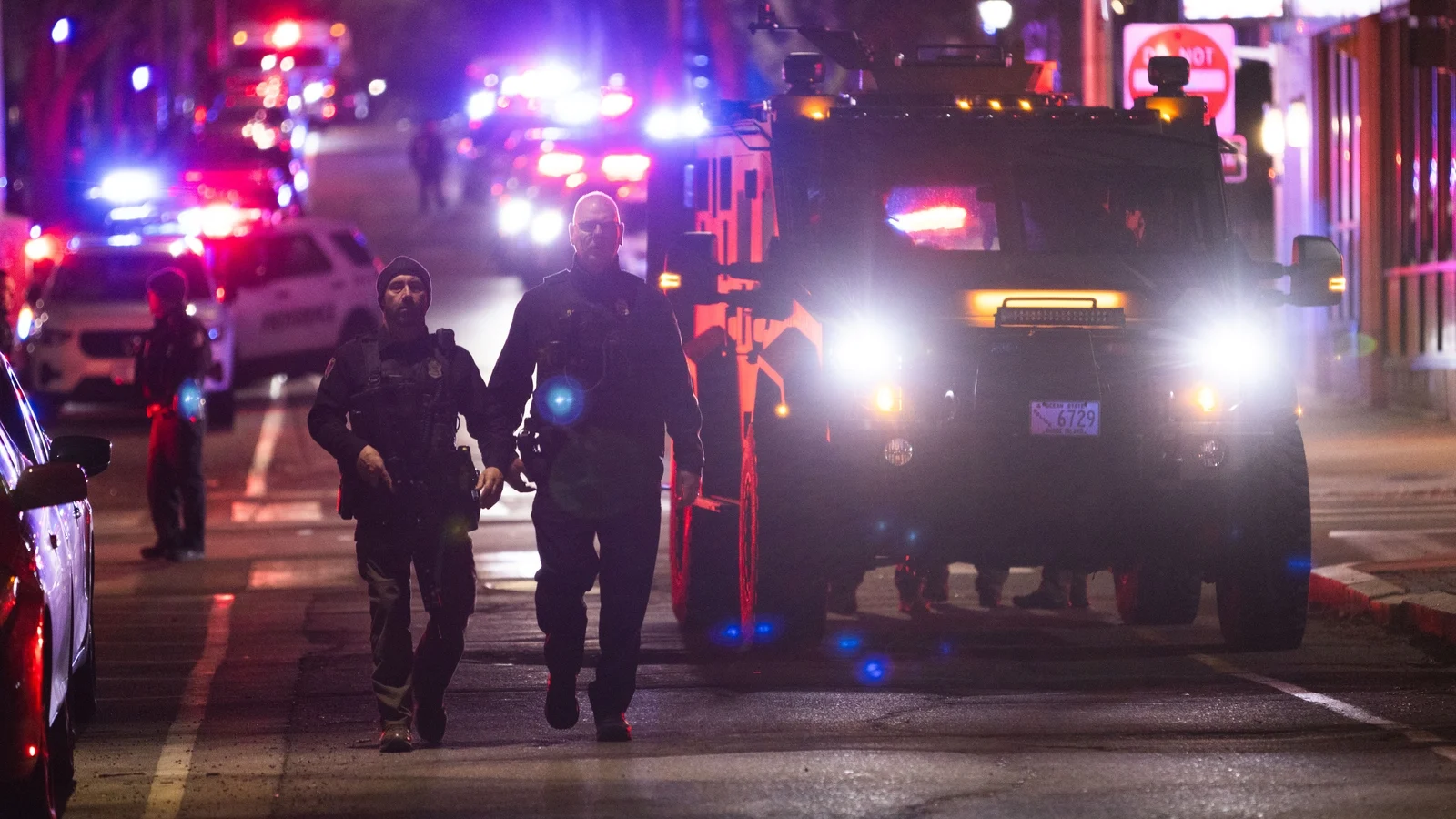
Local officers, joined by the FBI and federal partners, swept buildings and canvassed downtown footage in search of a suspect — described by officials as a male dressed in black — who left the scene after firing into the engineering building where exams were underway. Streets around the campus remained cordoned off for hours, with holiday shoppers and concertgoers stranded and anxious.
On the Ground: Fear, Heroism, and Small Acts of Care
Providence’s College Hill feels like a New England postcard: narrow lanes, brick facades, wreaths on doorways. That picturesque calm was ruptured. Yet amid the fear, there were small, steady acts of humanity.
“A professor kept checking on us through the door gap. He said, ‘If you survive this, we will take care of you,’” recalled a graduate student who asked to remain anonymous. “A janitor gave us tea and wrapped my friend’s wound with cuffs until the medics came.”
Emergency rooms filled quickly. First responders, some covered in dust from forced entries, moved with grim efficiency. Local residents opened their homes to stranded students. A neighborhood bakery offered free coffee to police. A church outside campus became an ad-hoc counseling center, volunteers bearing blankets and quiet words.
Leadership on the Airwaves: The City, the Campus, the White House
Mayor Smiley and university leaders faced hard questions about preparedness and prevention. Brown’s initial directive to shelter-in-place reflected protocols designed for exactly this kind of threat, but it also raised renewed scrutiny about whether campuses are equipped to stop such tragedies before they happen.
From Washington, then-President Donald Trump said he had been briefed and called the event “terrible,” urging prayers for the victims. “All we can do right now is pray for the victims and for those that were very badly hurt,” he told reporters at the White House.
Federal agents and local police continued to pore over camera feeds, bagging evidence and tracing footprints through the throngs of holiday shoppers that descended on downtown Providence — an unfortunate factor that hampered the search.
How Often Does This Happen? A Larger Pattern
This shooting is not an isolated moment. In 2019–2021 and beyond, the United States has wrestled with recurring outbreaks of mass violence in schools and public places, a problem entwined with the country’s gun laws, social isolation, and mental health gaps.
According to the Gun Violence Archive, which tracks incidents where four or more people are shot, there were hundreds of mass shootings in recent years — a grim tally that underlines the scale of the problem. The catalogue of these events includes school campuses, shopping centers and places of worship, each incident leaving communities grappling with grief and questions of policy.
Experts Weigh In
“This kind of incident on a university campus amplifies trauma because colleges are supposed to be places of safety and learning,” said Dr. Lena Ortiz, a campus safety researcher. “Institutions can harden buildings and improve response times, but long-term prevention requires community investment — mental health, early intervention, and sensible firearms regulation.”
“Lockdown drills save lives in the moment,” added Retired Police Captain Aaron Miles, who specializes in active-shooter response training. “But they don’t stop someone from bringing a weapon into a building. That’s where society-level solutions come in.”
Providence at a Crossroads: Holiday Crowds and Long Nights
Providence, a city known for its arts scene, clamorous riverfront and culinary surprise, was bracing for holiday crowds — shoppers, concert-goers, families. That bustle complicated the hunt for the shooter and added a surreal backdrop to the manhunt: lights on downtown stages, last-minute gifts, and officers fanning out between storefronts.
“I saw families with little kids who didn’t know what was happening. It felt like the whole city took a deep breath and held it,” said Kai Rodriguez, who works at a music venue near the river. “We’ve had tragedy before, but this hits a different part of the heart — college kids, exams, the season.”
Questions to Ask, and Actions to Consider
As the search continues and the community begins the work of healing, there are hard questions to be asked about prevention, readiness and responsibility. What investments in counseling and threat assessment can campuses make? How should cities balance openness with security during the holidays? And what practical steps can policymakers take without leaving communities feeling policed into silence?
Can prayer alone suffice, as leaders suggested? Or does grief compel a different kind of response — structural change, policy debate, and sustained civic engagement?
After the Sirens: Healing, Memory, and the Long Work Ahead
The immediate priority is clear: care for the injured, find the shooter, and support families left reeling. But healing will stretch beyond medical charts and press conferences. It will be written in dorm-room vigils, in counseling center waiting lists, in the decisions of lawmakers, and in a city that must reconcile its holiday cheer with a sense of vulnerability.
“We’ll have candles on the quad tonight,” one student said quietly. “We’ll sing, and we’ll try to remind ourselves who we were before this day — friends, scholars, neighbors. That’s how we start.”
For readers watching from elsewhere in the world: what does safety on a campus look like to you? How do communities balance freedom with protection? These are not just local questions. They’re global ones, and how Providence answers them may echo in cities and universities far beyond its brick-lined streets.