When Silence Falls on Campus: Two Cities, Two Universities, One Night That Changed Everything
There are nights in New England when the air feels like a held breath—cold, thin, and full of small sounds. On one of those nights, a rifle’s report broke the hush at Brown University, a place famed for its red-brick quads and late-night study sessions. Within hours, the reverberations crossed state lines, touching a quiet Boston neighborhood where a physicist would be found dead. By morning, a man believed responsible lay dead in a storage unit in New Hampshire. The small compass of communities—students, neighbors, professors—was forever altered.
A brief timeline that felt impossibly long
On Saturday, amid finals and the nervous scratching of pencils, an armed intruder entered a Brown campus building and opened fire. Two students were killed: Ella Cook, known on campus as a spirited leader of Brown’s Republican association, and Mukhammad Aziz Umurzokov, a young man from Uzbekistan who dreamed of becoming a neurosurgeon.
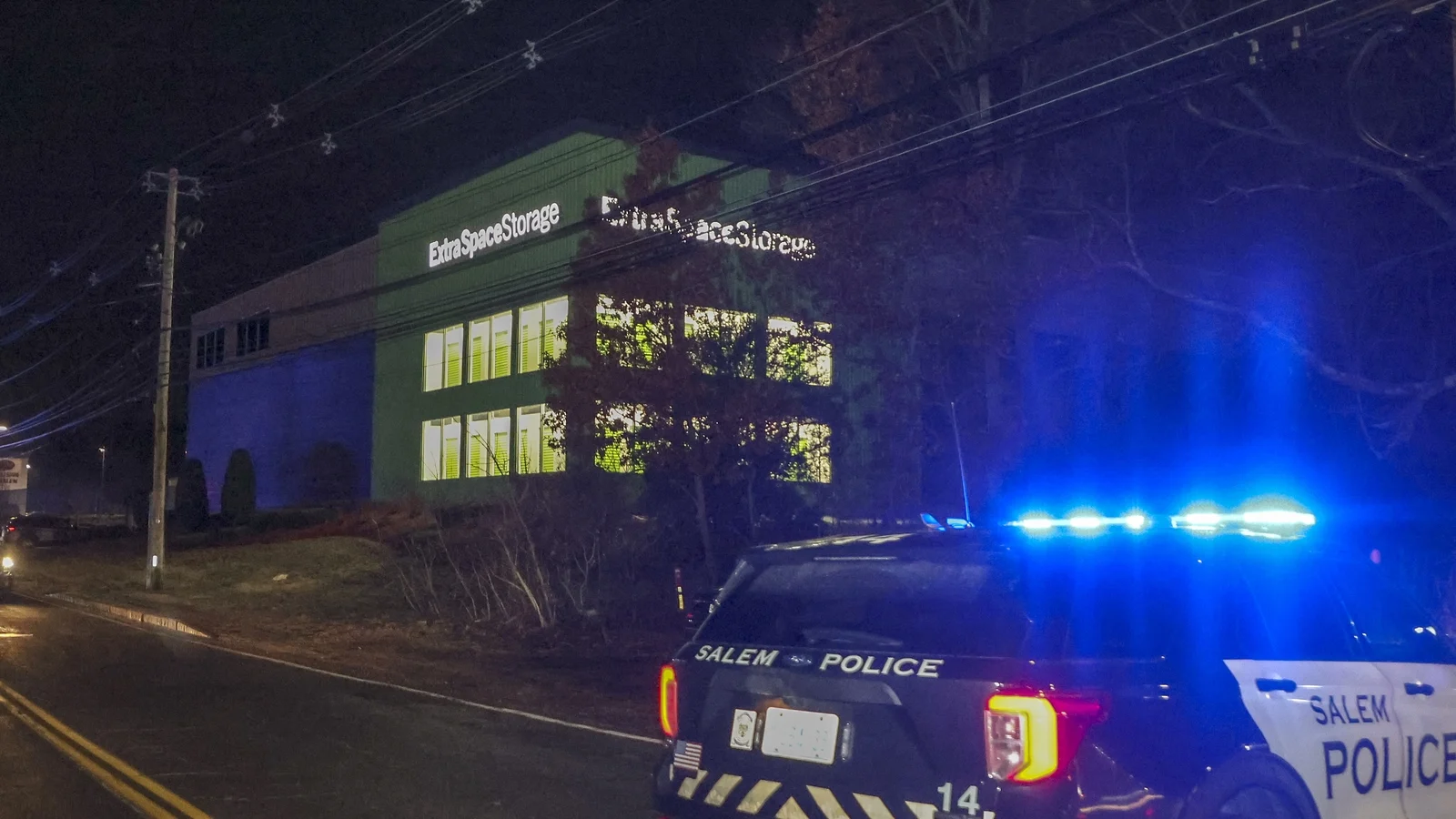
Authorities later said they believed that the same man was responsible for the killing of a physicist at his Boston home on the same night. Police in Providence named the suspect as 48-year-old Claudio Neves-Valente, a Portuguese national who had been studying at Brown. He was found dead inside a New Hampshire storage unit along with two firearms. Providence Police Chief Oscar Perez would tell reporters plainly: “He took his own life tonight.”
Providence Mayor Brett Smiley, speaking with the weary relief of civic leaders who have just watched a manhunt end, said, “Tonight, our Providence neighbors can finally breathe a little bit easier.” Yet that breath carries grief, questions, and a residue of fear.
Faces in the crowd: grief, memory, and a city that gathers
Outside Brown’s Engineering Research Center, a memorial has grown into a small forest of candles and notes. A worn sweatshirt, a stack of sticky notes, and clusters of tulips mark a place where a life was ended far too soon.
“Ella was relentless, in the best way possible,” said Maya Ortiz, a classmate and friend. “She’d argue until she was blue in the face about policy and then hand you a tea when you’d had enough.”
“Aziz wanted to be a surgeon. He used to bring study guides to the library and sit near the big windows, always smiling,” said Ksenia, who remembered him from anatomy lab. “He spoke about his family back in Tashkent like a map he’d never stop tracing.”
These intimate recollections are a kind of first aid for a community trying to stitch itself back together. They are also a reminder that headlines collapse complex lives into a few clipped lines—students, a physicist, a suspect—when what remains is nuanced and human.
From Providence to Boston to New Hampshire: a thread of investigation
For days, investigators pressed forward with little to show. They released images of a person of interest and circulated sightings. They held press conferences with a cadence that, to many, felt like watching a searchlight sweep the night. Officials detained a man briefly; then they released him. Frustration built into the narrative as families waited for answers.
Then the case “blew open,” as one federal law enforcement official later put it, when law enforcement traced the suspect to a storage unit. The presence of two firearms in that unit was confirmed; there was no immediate indication of a motive.
We live now in an era where the logistics of a manhunt can span three states in little more than a day. Cellphone metadata, surveillance footage, witness interviews and old-fashioned legwork are braided together in a race to tell victims’ families what happened—and why.
What the cameras didn’t catch
In the wake of the shootings, attention turned to campus security. Brown University revealed that none of its roughly 1,200 security cameras were linked directly to the city police surveillance system—an omission that prompted public scrutiny and questions from figures as high-profile as former President Donald Trump.
“We must always ask if we did all we could to prevent this,” said Professor Elena Ruiz, who teaches criminal justice at a nearby university. “But cameras are a tool, not a cure. They can help after the fact; they do not stop every violent act.”
Students have asked for more than cameras. They want mental health services that are accessible, threat-assessment teams that are trusted, and an open line of communication between university security and local police—all without feeling surveilled in their daily lives.
On the ground: what people are saying
“I keep replaying the fire alarm,” said Ibrahim Khan, a junior who was taking an exam in an adjacent building. “That sound will be with me for a long time. It’s so ordinary, and then it became a signal of something awful.”
At a vigil, a neighbor from Dorchester described the Boston scene in quieter tones. “We all know somebody who works at MIT,” she said. “To see the calm of that neighborhood broken—it’s like someone made permanent a bruise on the city.”
A country wrestling with a pattern
This year alone there have been more than 300 mass shootings in the United States, according to the Gun Violence Archive, which counts any incident in which four or more people are shot. That statistic lands like a ledger: a tally of moments where ordinary life became extraordinary in the worst possible way.
Attempts to change the laws around firearms remain politically fraught. Congressional gridlock is familiar terrain; state-level shifts have been patchy and uneven. Meanwhile, universities and cities attempt ad hoc policies—some expand mental health services, others rethink access control—while grappling with what feels like a national malaise.
What we are left to ask
How do we mourn and protect at the same time? How do safe spaces stay safe without becoming cages? And what should the balance be between privacy, liberty, and public security when a rifle can dissolve a lecture hall’s sanctity?
These questions are not new. But each new shooting makes them more urgent, more personal. They force us to look at our institutions—their strengths and their blind spots—and to ask whether being safer requires not only better cameras and patrols, but deeper investments in community care, in mental health, and in a politics that can design common-sense solutions without stripping away civil rights.
Closing in, but not closed
Claudio Neves-Valente’s death brings an end to an immediate manhunt. It does not end the ache left in dorm rooms, lecture halls, and dining commons. It does not answer “why.” For that, families and communities will wait, and investigators will piece together a fuller account.
For now, Brown students speak of chapel candles, of late-night study groups that split into hushed conversations, of an unmistakable sense of vulnerability. “We keep trying to go back to classes,” a sophomore said, “because that’s what they would have wanted. But going back isn’t putting things back together. It’s the start of rebuilding.”
As readers, as neighbors, as citizens of places both near and far from Providence and Boston, we are invited to hold two truths: that grief is acutely local, and that its roots reach into national debates about policy, prevention, and public life. How will we answer that invitation? What can we do, in our own corners of the world, to stop these reckonings from repeating?