When a Drone Crossed the Mediterranean: A New Chapter in a War That Keeps Finding New Fronts
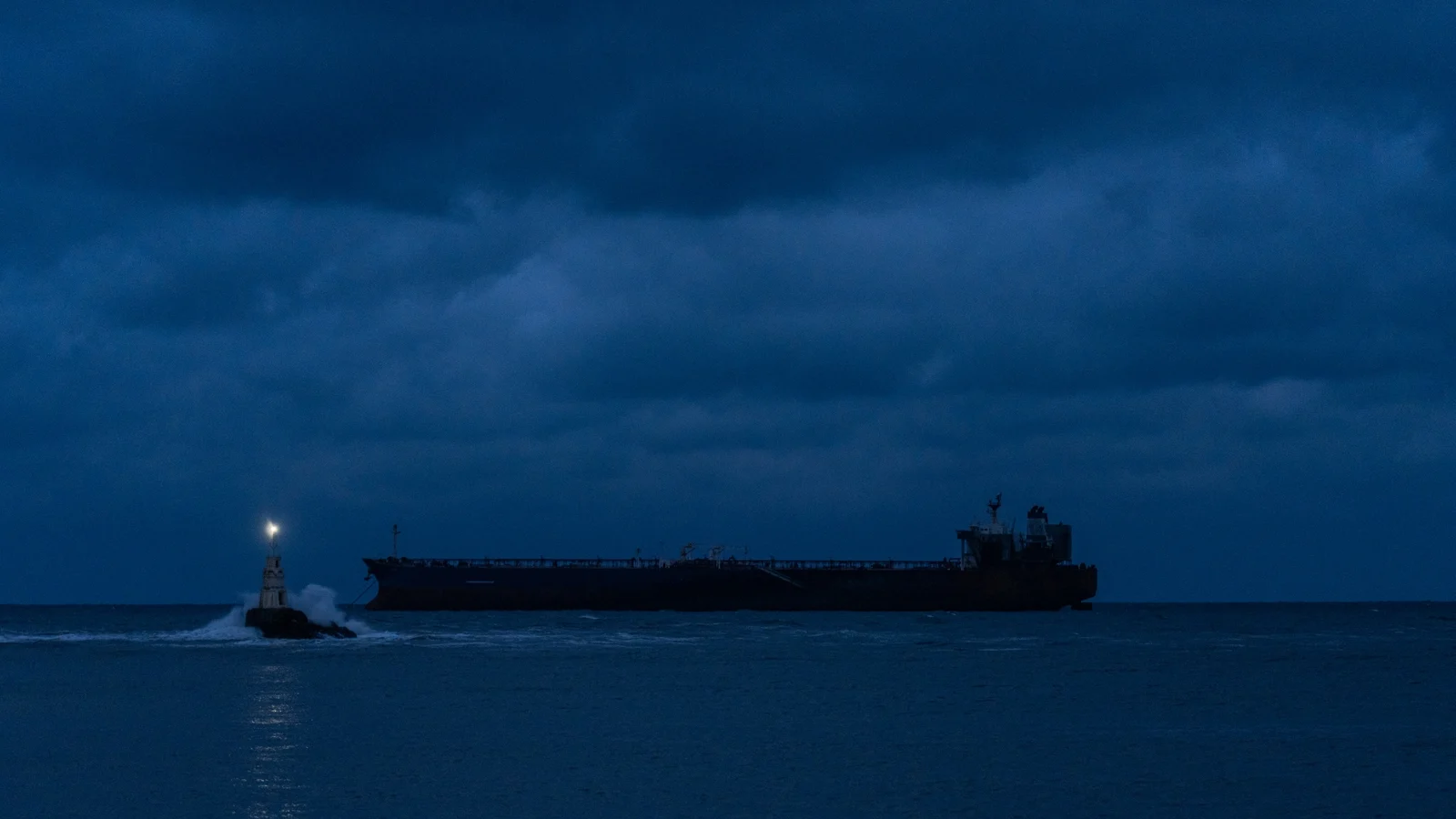
The Mediterranean at dusk is usually forgiving: fishermen haul in nets, cargo ships cut slow, and cafés on the waterfront fill with the low hum of conversation. This week, the same blue expanse carried a different kind of sound—one that will be remembered not for the lilt of waves but for the echo of geopolitics. Ukrainian officials say their security service struck a Russian-linked tanker in neutral Mediterranean waters using aerial drones, marking what Kyiv calls its first maritime strike so far from the front lines.
“We wanted the world to understand that distance is no shield,” an SBU source told a small group of reporters on condition of anonymity. “The enemy must realize Ukraine can act where it needs to, when it needs to.”
The shadow fleet and the oil trail
What Ukrainian officials described as a “shadow fleet” reads like the practical plotline of a spy novel: an estimated armada of as many as 1,000 vessels, changing flags, owners, and paperwork so fluidly that tracking them becomes an exercise in tracing fog.
For Moscow, that opacity has been profitable. Despite sanctions, Russia has found ways to keep crude flowing and cash coming in through complex ship-to-ship transfers, opaque ownership structures and frequent reflags. Western estimates vary, but analysts put the fleet at hundreds, if not close to a thousand, vessels that have enabled energy sales and the resilience of Russian revenues—revenues that, Kyiv argues, pay for this war.
“These aren’t innocent freighters,” said Elena Markov, a maritime analyst who has spent years tracking vessels that sail under “flags of convenience.” “They’re part of a network that exploits legal grey areas. When a tanker vanishes into a chain of shell companies and then reappears under a different flag, you’re witnessing the modern contours of economic warfare.”
What happened — and what Kyiv says it achieved
The struck vessel, named in Kyiv’s briefings as QENDIL, was reportedly empty at the time of the attack. Ukrainian officials insisted there was no environmental catastrophe and that the tanker sustained “critical damage” rendering it unusable. They framed the operation as targeted and lawful, aimed at choking a revenue artery rather than sinking a ship and spilling oil into the Mediterranean.
“This was a precise operation,” a senior SBU official said. “We identified an asset directly complicit in sanctions circumvention and took it out of service. We do not seek escalation for its own sake; we seek to protect our country.”
The strike reportedly took place some 2,000 kilometers from Ukraine’s borders, a detail that underscores a shift: the war is no longer confined to trenches and cities in Eastern Europe. Technology—drones, cyber tools, illicit maritime logistics—allows a conflict to be projectionary, to punch far beyond traditional front lines.
Voices from the Mediterranean
On the docks of a small port town in southern Turkey, a fisherman named Hasan lit his cigarette and shook his head. “We’ve seen different ships overnight,” he said. “One day they’re Greek, the next Panama. For us, the sea is work and worry. If they start hitting ships, what will insurance do? Who will bring fuel to the market?”
In Valletta, a port security official spoke on background: “Every time a big ship is struck, everyone recalculates routes and rates. It’s not just a military statement; it’s an economic tremor.”
Diplomacy on one hand, strikes on the other
The Mediterranean incident arrives as Ukrainian negotiators were in talks with U.S. envoys over a framework to end the war. Kyiv’s delegation chief, Rustem Umerov, described the discussions as “constructive” and said European partners would be involved. The talks are layered in complexity: security guarantees, territorial questions, reconstruction plans. Kyiv says it has agreed on elements—a 20-point framework among them—but acknowledges stickers remain across the final map.
Meanwhile, representatives dispatched by the U.S. administration—figures who have emerged as intermediaries in recent months—are maneuvering from Berlin to Miami, shuttling between diplomats and delegations. “Diplomacy is alive,” one Western official told me. “But alive doesn’t mean easy.”
Another year-end pressure cooker
On the other side of the table, in Moscow, President Vladimir Putin used his annual year-end briefing to frame the conflict as a test Western powers must answer. “We did not start this war,” he said, reiterating the Kremlin’s long-standing narrative. He also threatened further gains on the battlefield should talks falter, and warned of consequences if frozen Russian assets in Europe were repurposed to help Ukraine.
Analysts note that recent Russian advances—described by the U.S.-based Institute for the Study of War as the largest in a year during November—provide context to Putin’s tone. “This is negotiation from a position of force,” says Igor Petrov, a retired military analyst. “But position of force is volatile.”
Why this matters beyond one tanker
When a drone strikes a vessel in international waters, it raises questions that ripple outward: the limits of maritime law, the safety of global trade, and the ethics of extraterritorial military action. It’s an escalation of the sort that doesn’t always involve loud explosions on the evening news, but that silently reorders economies and alliances.
- Maritime commerce: The Mediterranean is a key artery connecting Europe, Africa and Asia. Shipping disruptions raise freight rates and insurance premiums.
- Sanctions enforcement: If shadow fleets can be struck, does that become a new tool for sanction-busting? Or a new flashpoint for wider conflict?
- Diplomatic balance: Kyiv’s move shows the lengths a nation will go to preserve leverage. Is this compatibility with negotiation, or a step toward hardening positions?
Ask yourself: if a war can reach across seas, how should the global community respond without normalizing cross-border strikes as routine? And if sanctions can be bypassed by clever corporate shells, what new international architecture will bind the oceans to law and accountability?
Human cost, local color, and the long view
Beyond the geopolitics are the human textures: ship crews with overtime unpaid, sailors who have become wary of changing ports for fear of paperwork delays; coastal café owners watching fewer truck drivers stop for dinner; fishermen noticing changes in currents and shipping lanes. These are small, daily fractures that add up.
“We don’t want to be part of a headline,” said Maria, a café owner on the Aegean coast. “We want customers, we want to laugh and plan holidays. But everything is heavy now. You feel it in conversations.”
As Kyiv pursues both prayer and precision—the diplomatic table and the drone operator’s console—the world watches. Not just for the immediate consequences of one ship disabled in an expanse of blue. But for what it says about a new era of conflict, where legal gray zones are weapons, where commerce is a battlefield, and where diplomacy must contend with innovations that allow states to project force with surgical stealth.
Does the single strike mark a turning point or a footnote? Perhaps it is both: a symbol of Ukraine’s reach, and a warning shot to a system struggling to govern a globalized, militarized economy. For those watching the Mediterranean’s horizon, the question is not whether the sea will remain central—it is whether the world will adapt its rules before the next drone launches into dusk.