When Backroom Peace Talks Meet Frontline Dirt: Inside the Latest Push to End the Ukraine War
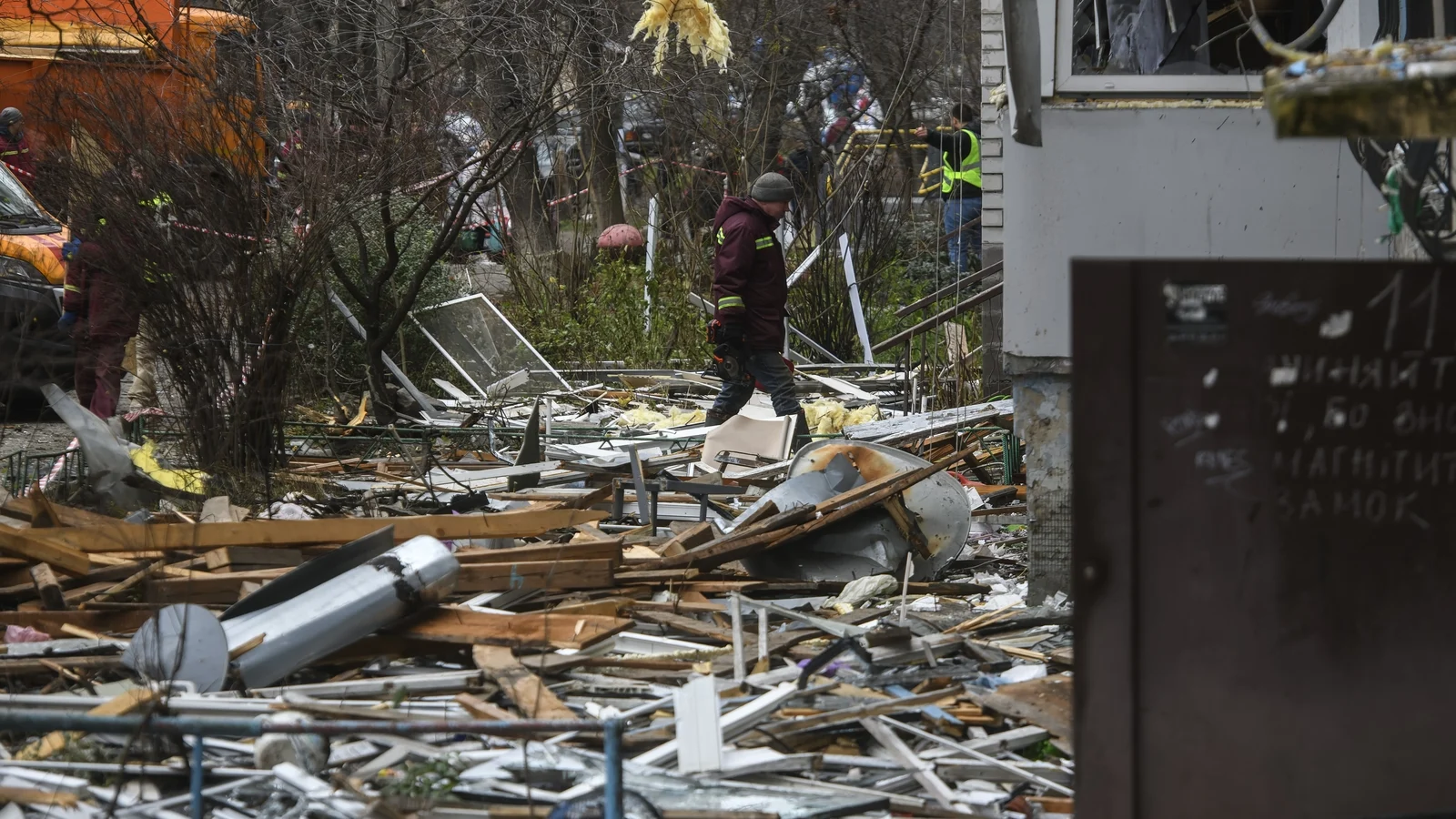
There is a curious, uneasy quiet after stormy headlines—a pause when diplomats whisper and generals hold their breath. This time the whispers crossed oceans: envoys connected to former US President Donald Trump met with a Russian delegation in Miami. Moscow says its leader, Vladimir Putin, has now been briefed and that the Kremlin will “formulate its position.” But on the ground in Ukraine, the sound is different: the scraping of earth where trenches are dug, the distant creak of electricity pylons, and the slow, stubborn work of clearing explosive remnants of war.
When politicians talk about “peace plans,” citizens think about doors that will stay closed or schools that might reopen. Who gives up what? Who gets to decide? And who pays for the reconstruction when the dust finally settles?
The Miami Thread and a Kremlin in Waiting
At the center of the recent diplomatic thread is Kirill Dmitriev, a well-known Russian businessman who has in recent months been acting as an informal channel between Moscow and the United States. Kremlin spokespeople confirmed Dmitriev briefed President Putin after talks in Miami with envoys linked to Mr. Trump. The Kremlin’s tone was cautious—no public thumbs-up, no outright rejection.
“We received the information and now we will study it,” a Kremlin aide told reporters in a clipped, formal register. “All main parameters of the Russian position are already known to our American colleagues. We will continue contacts through established channels.”
Translation: Moscow isn’t showing its cards in public yet. And for Kyiv, every moment of diplomatic opacity comes at a price.
What’s in the Latest Plan — and Why It Matters
In Kyiv, President Volodymyr Zelensky laid out a version of a 20-point plan that sounds, at once, like a pragmatic roadmap and an uneasy compromise. Key elements include a freeze of the front line—essentially recognizing where troops sit now as the “line of contact”—and provisions that could allow for Ukrainian withdrawals and the creation of demilitarized zones. Some previously proposed concessions, like a formal renunciation of Ukraine’s NATO aspirations, have reportedly been dropped.
- Front line freeze: the current deployment lines would be accepted as the starting point for any negotiations.
- Withdrawals and demilitarized zones: mechanisms to pull back troops and create buffer areas are on the table.
- Joint management of the Zaporizhzhia nuclear plant: an idea that raises as many alarms as it does hopes.
- A referendum: any territorial concessions would have to be put to a public vote in Ukraine.
“This plan opens windows rather than shutters,” Zelensky told reporters. “It could delay choices, but it cannot substitute for sovereignty.” He emphasized that any referendum and presidential elections would only come after an agreement was signed—an attempt, perhaps, to preempt accusations that Kyiv would be forced into hasty decisions under pressure.
Numbers That Stain the Map
Putin has publicly suggested Ukraine should cede roughly 5,000 square kilometers of territory in the Donbas region—ground that Kyiv still controls. For context, that area is larger than Luxembourg. Meanwhile, independent observers have documented a grinding attrition on the battlefield: in 2025, Russian forces were estimated to have taken roughly 12–17 square kilometers of Ukrainian territory per day at some points—an unforgiving arithmetic of loss.
Local Voices: Fear, Hope, and the Daily Work of Survival
To understand what these diplomatic exchanges mean, listen to people who return to broken streets every morning. In Kyiv’s Podil district, a café owner named Oksana sips tea and watches young men load crates of rescue gear into vans.
“We hear talk about peace,” she said. “But peace means my sister can go home to Donetsk without fear. It means schools open and that the man who fixes the clock at Saint Michael’s can breathe. Words on a paper don’t fix the pipes under our streets.”
In a village outside Zaporizhzhia, an elderly man named Anatoliy remembers when Energodar—near the Zaporizhzhia nuclear plant—was quiet, populated by nuclear engineers and sunflower fields. Now the town’s name pulses with geopolitical significance.
“If they make the plant a zone run together by Russians and someone else—who knows?—maybe it calms the risk of disaster,” he said. “But do I trust those who occupied my town to keep the lights on for my grandchildren? It’s not a yes; it’s a question.”
Zaporizhzhia: A Nuclear Red Line
The idea of joint US-Ukrainian-Russian oversight of the Zaporizhzhia nuclear plant is both pragmatic and perilous. The plant is Europe’s largest nuclear facility and has been occupied by Russian troops during the conflict, drawing repeated warnings from international nuclear watchdogs. Kyiv insists on no Russian oversight—understandable, given accusations of militarization around the site and fears about safety protocols.
Experts warn that any misstep at Zaporizhzhia would reverberate far beyond Ukraine’s borders. “Nuclear safety cannot be collateral bargaining,” said Elena Markova, a nuclear energy analyst. “Even the perception of politicized control over reactors damages global confidence in complex safety systems.”
How the World Watches—and Worries
Across Europe, capitals are watching with something like dread: what if the United States pursues a pragmatic, rapid deal that leaves European nations with the long, expensive task of reconstruction and security? There are whispers that Trump-era envoys seek a “peace as a political trophy” approach—quick, visible results that might be packaged for domestic audiences.
“If Washington makes concessions that look like a sellout, Europeans will be left not only carrying the bill but bearing the political fallout,” said an EU diplomat in Brussels, speaking on condition of anonymity. “It’s not just about money; it’s about credibility.”
And credibility matters. After years of sanctions, humanitarian aid, weapons deliveries, and a continent re-arming, any abrupt shift in the US posture could force a strategic reckoning in NATO and the EU: Can Europe shoulder the cost of rebuilding a battered neighbor? Should it have to?
So What Happens Next?
We are at a hinge moment. The Kremlin says it will formulate a response; Kyiv insists any concessions must be validated by its people. In the middle are millions of lives—farmers, nurses, teachers—whose daily chores have become acts of resistance.
- Expect more backchannel diplomacy, more envoys and memos exchanged in hotel suites and embassy basements.
- Expect the Kremlin to calibrate language carefully, keeping public options open while listening for guarantees it finds acceptable.
- And expect Kyiv to demand legal and popular legitimacy for any territorial compromise—hence the insistence on referendums and delayed elections.
Questions to Sit With
What is the price of peace? Who decides it? If peace requires territorial concessions, who pays for reconciliation—and how do you restore trust once land has been ceded under duress?
These are not merely diplomatic abstractions. They are decisions that will echo in schoolrooms and marketplaces for generations. They will shape borders, but also identity, memory, and how future leaders learn to negotiate under fire.
As you read this, imagine sitting on a bench in a Kyiv park where cherry trees once blossomed and now stand stripped; imagine being a parent in Zaporizhzhia worried about radioactivity and ballots; imagine a policy adviser in Brussels running the numbers for decades of reconstruction. Which questions would you put first?
Peace is more than a document. It is the sum of small, stubborn acts of everyday life—and the wisdom of negotiators who remember that.