Under the Wet Marble: A Pope’s Blessing and a World of Uneasy Joy
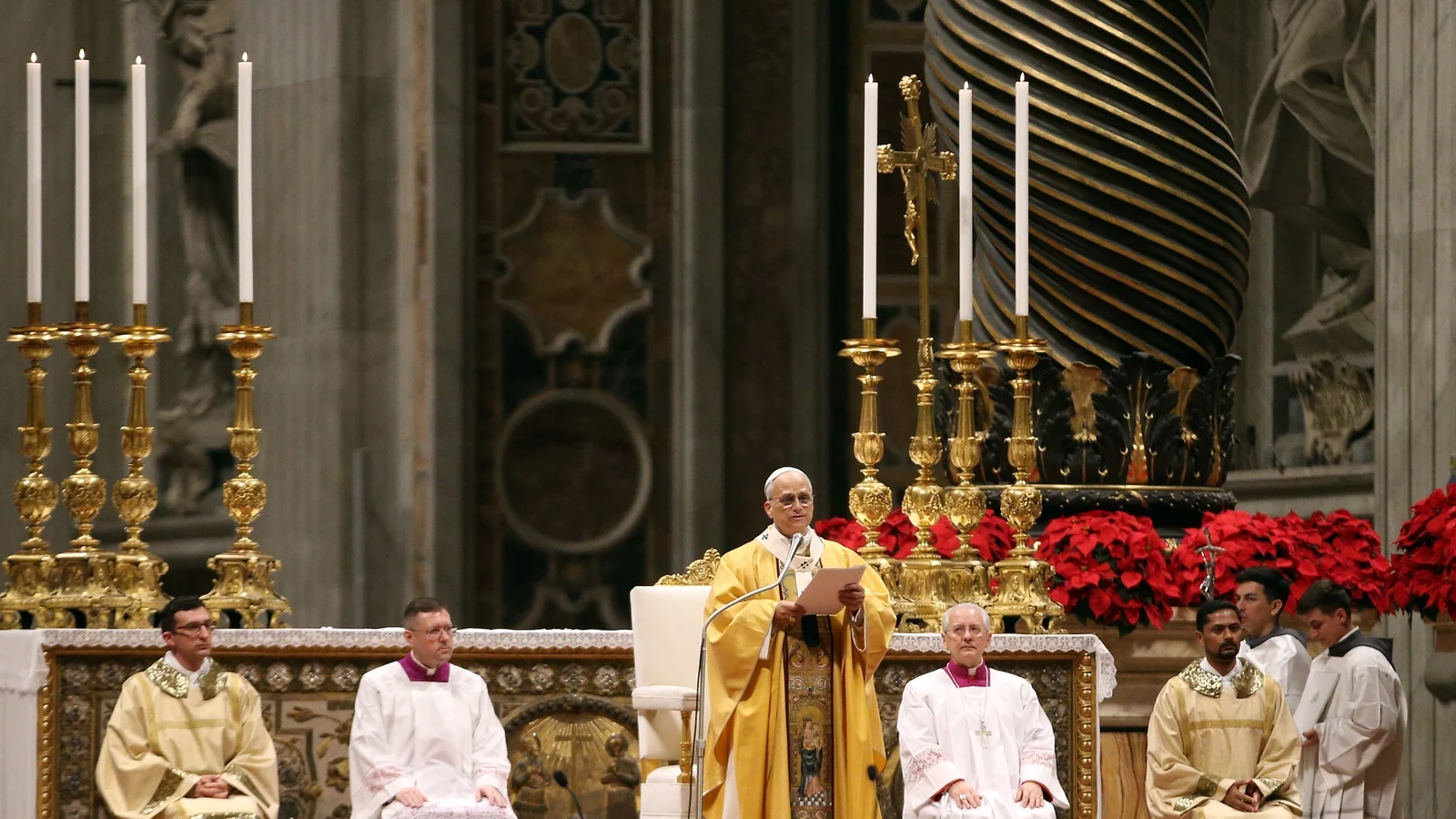
Rain tapped a slow tempo on the travertine steps of St Peter’s Basilica as people huddled under umbrellas and plastic ponchos, their breath visible in the cold Roman evening air. The lights on the façade blurred into halos. The pope — his white cassock a bright, small flame against the stone — stepped forward and spoke of peace, of charity, of hope in a year that has been stubbornly stubborn in its pain.
“We come tonight to light the candles that the world has tried to snuff out,” a Vatican aide later told me, trying to translate the hush into something I could carry home. The crowd, estimated at about 5,000, applauded not because they had faith in easy answers, but because ritual offers a place to stand when the ground is shaking.
The Urbi et Orbi and a Call for Truce
On Christmas morning the pontiff prepared to deliver his traditional Urbi et Orbi blessing — the “to the city and the world” address that has for centuries been a forum for moral appeals aimed at the globe’s troubles. This year’s refrain was familiar: urgent pleas for ceasefires, for corridors of aid, for the protection of civilians in zones of conflict. He renewed a call, earlier this week, for a one‑day global truce, a symbolic pause meant to honor the very notion of peace.
It is a humane request, if at times aspirational. Conflict persisted elsewhere even as Rome prayed: in eastern Europe, gunfire continued despite appeals to lay down arms; humanitarian workers in the Middle East warned that a fragile pause in fighting could crumble as quickly as it was negotiated. The pontiff’s words landed like a seed, small and vulnerable, on soil that has been trampled by years of political and military upheaval.
Bethlehem: The Nativity’s Fragile Resilience
Travel east and you find a different but no less potent scene. In Bethlehem — the town whose very name has been invoked across religions for millennia — light returned to Manger Square in the way a breath returns to lungs after a fever breaks. For the first time in more than two years, the streets filled with the music of festivals, with parades and the bright, impudent cheer of vendors selling toffee apples and toy Santas.
Inside the Church of the Nativity, built atop a grotto revered as the birthplace of Jesus, pews were full long before midnight. Some stood. Some sat on the cold stone floor. A procession of clergymen made its way past the altar to the sound of a single organ, the notes swelling like an answer to all that had been lost. The Latin Patriarch addressed the congregation, speaking not in platitudes but in blunt compassion: suffering remained raw in Gaza, he said, yet he had encountered in refugee shelters and ruined neighborhoods a stubborn hunger for life’s ordinary future.
“They still sing,” said a volunteer nurse from a Gaza aid group who had come to Bethlehem for Mass. “They still sing even when their hands are freezing.”
That singing matters. Aid agencies estimate that hundreds of thousands of people remain displaced across Gaza and neighboring territories, living in makeshift tents or crowded shelters, attempting to withstand winter without sufficient heat, clean water, or predictable medical care. A fragile truce has eased the immediate threat of daily bombardment in some areas, but the structural wounds — collapsed homes, severed supply chains, grief that gathers like snowfall — will take years to heal.
Star Street and the Everyday
Walk down Bethlehem’s Star Street and you catch the small, telling things: an old man arranging a nativity scene under a giant paper star, teenagers posing for photos in front of a glittering tree, the aroma of roasted chestnuts mixing with the smoke from a nearby bakery. “Today is full of joy because we haven’t been able to celebrate because of the war,” said a 17‑year‑old girl, her voice both bright and brittle. “We came to shout that we are still here.”
Damascus, Sydney, and the Uneven Glow of Celebration
Elsewhere, fragile rejoicing threaded through fear. In Damascus’s Old City, strings of lights draped the alleys; shopkeepers placed red baubles in windows, and vendors sold roasted chestnuts beneath the shadow of Roman-era arches. For Syrians, who have endured a decade of war and displacement, these lights were an act of defiance, a claim that joy could coexist alongside grief.
In Australia, the mood was more solemn. Following a deadly attack at a Hanukkah celebration on Bondi Beach in mid‑December, national leaders urged calm and unity rather than triumphalism. “We hold the wounded in our thoughts,” a community organizer in Sydney told me, “and we light candles because it’s our way of refusing to let terror define us.”
Weather, Politics, and the Sharp Edges of a Global Holiday
Christmas this year illustrated a familiar truth: the season offers no single story. In California, severe weather forced officials to declare a state of emergency in parts of Los Angeles, ordering evacuations as rivers swelled and roads transformed into currents. Climate‑driven extremes have become an unwelcome holiday tradition in many places, complicating what should be peaceful domestic rhythms — a reminder that political instability is not the only global emergency demanding our attention.
At a very different register, political rhetoric in some countries turned the holiday into a stage for division rather than consolation. Across newsfeeds, voices amplified grievance as though the holiday provided licence for provocation. For many, the familiar rituals of peace and goodwill now contend with the reality that public discourse is deeply polarized; Christmas gatherings sometimes become arenas for clashing worldviews rather than shelters from them.
Voices from the Ground
- “We needed this — not for show, but to remind ourselves we exist,” said George, a shop owner from nearby Beit Jala, watching families mill about Manger Square.
- “Syria deserves joy,” said Loris, a university student in Damascus, who spoke of the quiet resilience of neighbors sharing small pleasures.
- “Aid is not a headline. It’s a lifeline,” offered a U.N. field officer who has worked in the region for years, cautioning that temporary ceasefires must be paired with long-term planning if they are to mean anything beyond a breath.
Why This Christmas Feels Different
Perhaps the most striking thing about this year’s celebrations is their humility. The pageant of faith has been stripped of some ceremonial sureties; it is suddenly rawer, more human. People who came to St Peter’s or to Bethlehem were not just spectators of history — they were participants in a fragile experiment: can ritual, memory, and public witness still help repair a world that seems to be tearing at the seams?
Ask yourself: what would a truce mean in your life? Not a pause in headlines, but a quiet hour when grievances are set aside. Would we recognize it or would old wounds pull us right back into business as usual? If religion and civic ritual can be a scaffold for reconciliation, then the images of thousands standing together under rain or lights are not merely picturesque — they are practice.
Looking Ahead: From Symbol to Substance
The pope’s blessing, the Nativity procession, the strings of lights in Damascus — these are part of a larger, global conversation about how communities live with tragedy and how they try, imperfectly, to heal. Symbols are not solutions. Yet neither are they frivolous: they can lift morale, marshal aid, and keep the pressure on those with power to act.
In the coming months the questions remain urgent. Will temporary pauses in violence become the scaffolding for negotiations? Will aid flows be protected and expanded? Will communities forged in crisis receive the resources they need to rebuild?
None of this is simple. But on nights like this, when voices join across borders in a plea for peace, we glimpse the stubborn possibility that people — not just politicians — can shape the arc of the year to come. That is the modest miracle these gatherings offer: a renewal of attention, a return to shared life, a candle lit against the dark.