A blueprint on a Kyiv table: hope, scepticism and the heavy arithmetic of peace
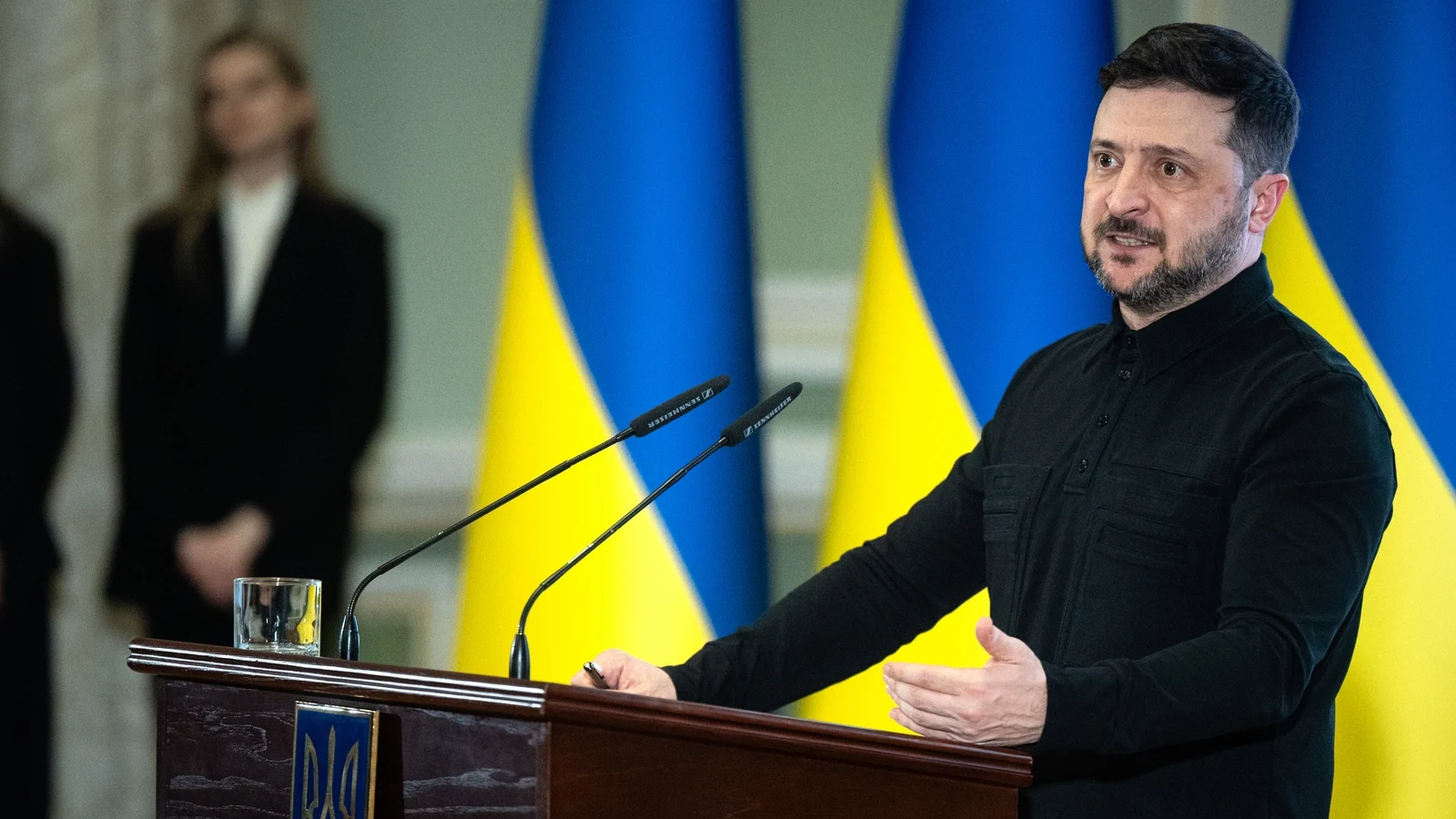
It was a pale winter light that fell across the table where President Volodymyr Zelensky outlined what he called a “comprehensive pathway” to end a war that has scarred a generation. Outside, Kiev’s streets hummed with the ordinary — tram bells, a woman sweeping snow from a bakery doorway, a boy with a bright red scarf racing a friend to the metro — and yet inside the room, the map on the wall seemed to hold the world’s attention.
Zelensky did not produce a polished treaty to hand over to waiting cameras. Instead, he spoke in deliberate, granular terms about a 20-point plan crafted with U.S. negotiators and sent to Moscow for reaction. What he offered was as much a political architecture as it was a peace proposal: security guarantees backed by Western powers, rules for the new lines on the ground, sweeping reconstruction promises, and oddly specific governance and cultural commitments. “We put everything on the table,” he told reporters. “This is not the end of bargaining — it is the start of deciding if we can finally stop the killing and start rebuilding lives.”
What’s in the package — the bones of a bargain
At the core are three pillars: security, territory and reconstruction. On security, Zelensky said the United States, NATO and European signatory states would provide guarantees resembling NATO’s Article 5 — a promise that an attack on Ukraine would trigger coordinated military and economic responses. The plan envisions a peacetime Ukrainian armed forces of 800,000 personnel and contingencies to reinstate global sanctions against Russia should it breach the deal.
Territorial arrangements are blunt and pragmatic. The current line of deployment in Donetsk, Luhansk, Zaporizhzhia and Kherson would be recognized as the de facto contact line, with international monitors — including space-based unmanned systems — watching for violations. A working group would map out troop redeployments and consider special economic zones; crucially, Russia would be required to withdraw forces from a list of regions (including Sumy, Kharkiv, Mykolaiv and Dnipropetrovsk) for the agreement to take effect.
Economic rebuilding is perhaps the most unapologetically ambitious effort. Zelensky said the United States and European partners would spearhead a development package, and that an initial capital-and-grants fund would target $200 billion to jump-start reconstruction, attract investment, and fund modernisation in energy, data centres, AI, and civic infrastructure. He spoke of a “Ukraine Development Fund” and a global financial coordinator — a “prosperity administrator” — to marshal international capital and ensure transparent disbursal.
Points likely to draw heat
There are items in the plan that will please some and alarm others. One clause foresees the Zaporizhzhia Nuclear Power Plant being jointly operated by Ukraine, the United States and Russia — an arrangement that, if enacted, would mark an unprecedented multinational stewardship of a nuclear facility in a post-conflict setting. Another surprises by name: Zelensky said the oversight mechanism would be a Peace Council chaired by President Donald Trump, a detail that will provoke immediate geopolitical debate.
Then there are social and legal stipulations: Ukraine would accelerate EU membership within a specified timetable, adopt EU rules guaranteeing religious tolerance and minority-language protections, and commit to remaining a non-nuclear state under the NPT. The plan calls for all remaining prisoners of war to be exchanged, the release of hostages, and an immediate, legally binding ceasefire once all parties agree — but those are promises that have failed before without ironclad enforcement.
Voices from the streets of Kyiv
“I want my son to go back to school without sirens,” said Olena, a kindergarten teacher who helped pour tea in a canteen near Independence Square. Her husband fought in the early months of the war; she watches the news with a habit of flinching. “If guarantees are real and not just words on a page, then we take them. But we have learned to be careful with promises.”
At a corner café, Mikhail, a veteran who lost a leg in 2022, thumbed a scar and said bluntly: “Security guarantees need teeth. Paper won’t stop tanks.” He wants to see international troops on the ground and an unequivocal mechanism that triggers sanctions automatically if the deal is violated.
“Rebuilding will take more than money — it will take trust,” said Dr. Marta Hrytsenko, an urban planner who has been working on postwar reconstruction models. “Estimates from multilateral institutions suggest hundreds of billions will be needed. The World Bank and IMF have said public and private money must combine. The proposal for a $200bn target is a starting signal; implementation will be the real test.”
Levers, red lines and the international stage
Why does the plan matter beyond Kyiv? Because it exposes the central dilemmas of modern peace-making: how to balance sovereignty and security, how to de-escalate without rewarding aggression, and how to finance recovery while keeping corruption at bay. It also shows the limits of diplomacy in a moment when rival great powers still pursue very different objectives.
“We see in this document an attempt to thread the needle between territorial realities on the ground and the political demands of Ukrainian sovereignty and European integration,” said Ilan Berger, a European security expert. “But any agreement depends on trust — and trust is the one currency this war has spent most recklessly.”
What could go wrong — and where the deal might yet be strong
There are several failure points. Moscow’s reaction will be decisive: will it accept the de facto contact lines and the withdrawal demands? Will it agree to an international role at Zaporizhzhia and to a binding non-aggression policy toward Europe? Within Ukraine, calls for justice and criminal accountability for wartime acts could clash with quick-for-peace compromises on territory.
On the flip side, the proposal’s explicit economic levers — investment funds, a transparency framework, and linkage to EU access — could offer a viable pathway to transform the country’s economy. The inclusion of AI, data centres, and energy modernization in the recovery plan points to a future-focused recovery that seeks to make Ukraine a competitive, high-tech economy rather than a basket-case of war ruins.
Questions to sit with
As readers, ask yourselves: can peace be engineered from the outside without the consent of the communities most affected? Is it possible to guarantee security without keeping foreign troops indefinitely, and who will enforce those guarantees if they are breached? How much sovereignty can a nation cede — in the form of international oversight or security assurances — in order to achieve a lasting ceasefire?
These are not hypothetical queries for Ukrainians alone. They touch on global themes: the fragility of international law, the role of alliances in deterring aggression, and the moral calculus of reconstruction. A successful pact here could set precedents for post-conflict reconstruction elsewhere; a failed one would echo as a cautionary tale.
Back in Kyiv, as evening settled and the city lights stitched new constellations onto streets still pocked by war, people returned to their routines. “We are ready to negotiate,” said Olena, the teacher. “But we will not trade our language, our schools, or our children’s future for a piece of paper unless it truly keeps us safe.”
Whether the 20-point plan becomes a live roadmap or another chapter in a painful, interrupted story depends on responses that are not yet public. For now, the document has performed a crucial work: it has given citizens and leaders a concrete frame to argue over — and in politics, articulation can be a precondition to action.
Where do you stand? Would you accept compromises for security now, or hold out for a fuller restoration of territory later? The answers will shape not just Ukraine’s future, but perhaps how the world thinks about peace in an era of uneasy power balances.