When Diplomacy Becomes a Drumbeat: Somaliland, Israel, and the Unexpected Ripples Across the Red Sea
There are moments when a single diplomatic decision sounds like a pebble dropped into a very large pond — the initial splash is small, but the concentric waves reach distant shores. This week, that pebble was Israel’s formal recognition of Somaliland. For many around the world it was a headline: a tiny, self-declared republic on the southern edge of the Red Sea finally acknowledged by a state long focused on its own fragile neighborhood. For others, it was the opening chord of a new, unsettling symphony in the Horn of Africa.
What Somaliland is — and what it has always wanted
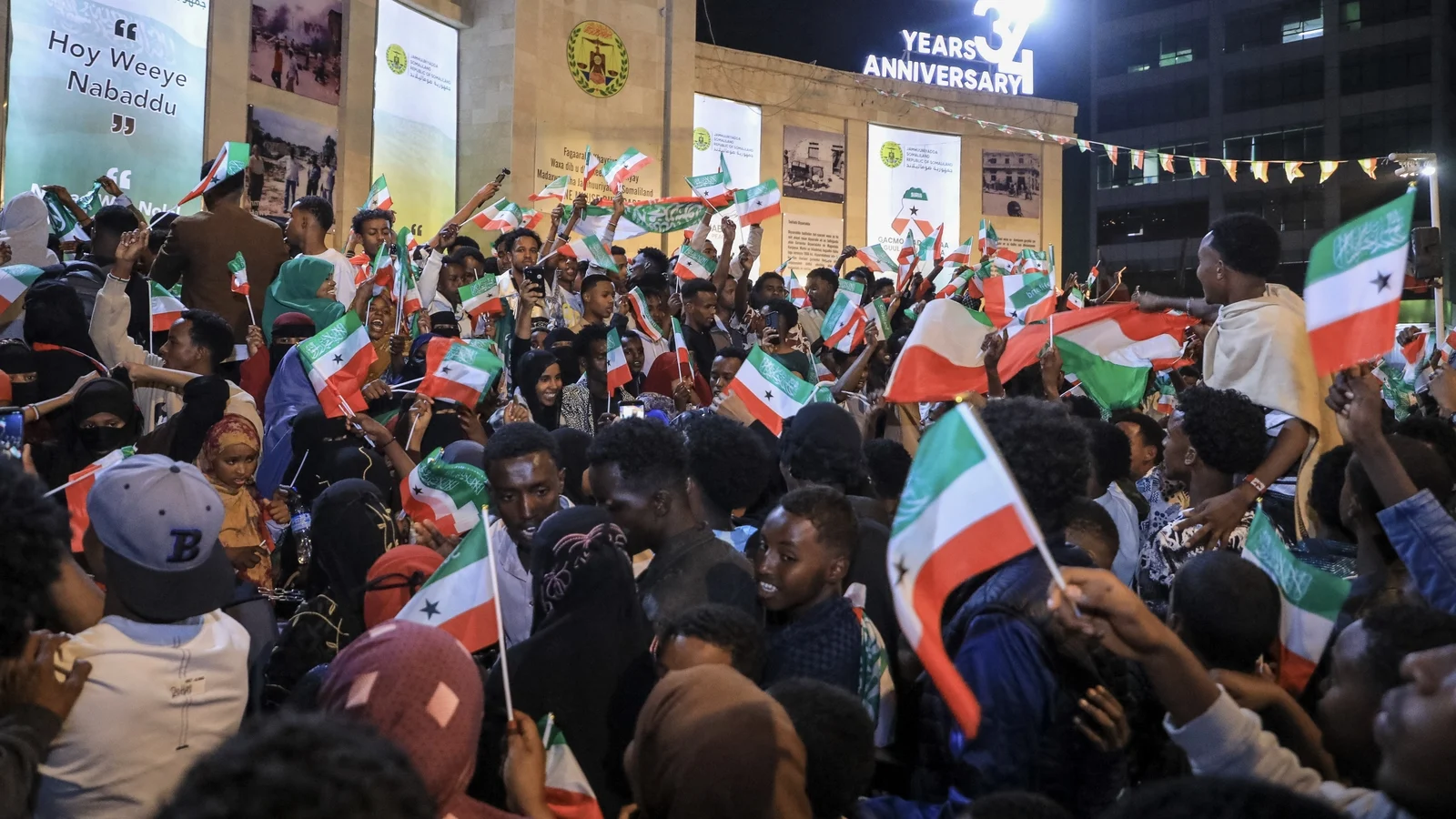
Somaliland separated from Somalia in 1991, following the collapse of the central government in Mogadishu. It built institutions, held elections, and cultivated a sense of national identity. In Hargeisa — its de facto capital — you can still hear the thrum of commerce: donkey carts and tuk-tuks winding past brightly painted tea stalls, markets selling frankincense and textiles, young men checking smartphones between bargaining sessions.
It issues its own passports and currency (the Somaliland shilling), maintains a functioning administration and an army, and controls a stretch of coastline directly opposite Yemen. Estimates of its population vary — most sources put it between three and five million people — and its territory covers roughly 176,000 square kilometers of semi-arid plains and coastal shores. Yet despite these trappings of sovereignty, it has remained diplomatically isolated: neither the United Nations nor the African Union recognizes it as an independent state.
“For ordinary people here, recognition has always been a distant hope — like rain in a long dry season,” says Amina Yusuf, a schoolteacher in Hargeisa. “We have raised our children, built schools, paid taxes. We expected the world to notice someday. Maybe now it has.”
A reaction that echoed through parliaments and capitals
Somalia’s government responded in fury, calling Israel’s move a direct assault on its territorial integrity. In an emergency parliamentary session, President Hassan Sheikh Mohamud told lawmakers the decision threatened regional stability and violated the sovereignty of the Somali Republic.
“This is not only a breach of law, it is an affront to our people,” President Mohamud said. “We will defend our unity and pursue every diplomatic avenue to reverse this action.”
Across the region, the response was swift and severe. The African Union, which has long held a cautious line on breakaway regions to prevent broader instability, voiced alarm. Egypt, Turkey, the six-member Gulf Cooperation Council, and the Saudi-based Organisation of Islamic Cooperation all publicly denounced the recognition. For capitals watching the Horn of Africa closely — Cairo, Ankara, Riyadh — the specter of a new state on the Red Sea’s southern flank is far from merely theoretical.
Behind the headlines: the strategic heartbeat of the Gulf of Aden
To understand why this matters beyond the Horn, imagine the map as a chessboard. The Gulf of Aden and nearby Bab el-Mandeb strait are chokepoints for global trade. Around 12% of global seaborne trade by volume transits the Suez Canal — and the alternative routes and the corridors leading into it are what give ports like Berbera in Somaliland their outsized importance.
Berbera’s deep-water port sits on the Gulf of Aden and has drawn foreign commercial and military interest for years. The United Arab Emirates and DP World have previously invested in port infrastructure there; regional powers have for the past decade quietly maneuvered to secure logistical footholds. Add Israel to the mix, and the calculus shifts: naval access, intelligence cooperation, counter-piracy efforts, and influence over Red Sea shipping lanes suddenly come into play.
“This is not just a story about recognition or borders,” says David Mbeki, a maritime security analyst based in Nairobi. “It’s about access. Whoever has a network of allies and bases along the Red Sea gains leverage over some of the busiest routes on the planet.”
Voices from the street: pride, fear, uncertainty
In Hargeisa, opinions are mixed. For some, recognition is vindication.
“My father fought during the conflict in the 1980s,” says Abdirahman Ali, now a small-business owner. “We were told to wait for justice. Recognition from Israel is another government saying: you exist. That brings hope to families who want normal lives.”
But there is trepidation, too. Many Somalis fear that international moves could inflame tensions at home and in neighboring regions. There is concern about foreign military footprints, and whether new alliances will weave Somaliland into larger geopolitical rivalries that have little to do with local priorities like water, pastoral grazing rights, and economic opportunity.
“We want development, not being a pawn,” says Hodan Warsame, who runs a women’s cooperative sewing garments for export. “Investment is welcome, but who benefits? Will the profits leave, and will our streets become militarized? We have seen outside powers come and go.”
International law and the politics of recognition
The question of recognizing new states is messy and political. International law offers no strict formula: recognition is a political act by existing states. The African Union has historically discouraged unilateral secessions to avoid a proliferation of fragile entities, arguing that the solution to separatist grievances is internal reform rather than redrawing maps.
That principle, however, faces real-world pressures: as climate change, economic desperation, and state weakness create localized governance vacuums, communities sometimes organize themselves into more stable administrative units — as Somaliland did — and demand international legitimacy. Those tensions are playing out now on a very visible stage.
What happens next?
There are several plausible paths forward. Somalia might pursue legal and diplomatic action through international bodies. African states may convene emergency meetings to craft a joint response. Israel could deepen ties with Somaliland — economically, militarily, or diplomatically — further unsettling regional balances.
Local dynamics will matter most. Somaliland’s leaders say they seek recognition to unlock investment and migration agreements; Somali leaders insist the path to any change must be through dialogue with Mogadishu. The balance of power — and the choices made by other regional actors like Ethiopia, Djibouti, and Yemen’s political actors — will be decisive.
- Key fact: Somaliland declared independence in 1991 but is not recognized by the UN or African Union.
- Key fact: The Gulf of Aden and Bab el-Mandeb are strategic maritime chokepoints for global trade, linking the Indian Ocean to the Mediterranean via the Suez Canal.
- Key fact: Somaliland’s population is estimated at roughly 3–5 million people and it controls key ports such as Berbera.
Why you should care
Because this is not local news shrunk to fit a headline — it’s a story that connects questions of self-determination, great-power competition, maritime security, and the livelihoods of everyday people. What happens in the streets of Hargeisa can push oil prices, influence shipping insurance costs, and ripple into the politics of capitals thousands of miles away.
So ask yourself: when a new state is born in the shadow of old conflicts, who gets to decide its fate? Is recognition a tool for justice — or a shortcut that amplifies instability? And perhaps most urgently: how do we ensure that ordinary people, the shopkeepers and teachers and farmers, are not merely chess pieces for larger powers?
For now, Somaliland stands at a crossroads — buoyed by a rare diplomatic victory yet shadowed by the potential for greater friction. The waves from Israel’s decision will keep spreading. What matters next is whether the region can channel those waves into cooperation, negotiation, and real investment in people — or whether they will crash into contestation and conflict instead.