Dawn over the Strait: Drums, Missiles and the Everyday Life Between Two Worlds
There is a certain hush that settles over Taipei on mornings like this — not the ordinary quiet that follows predawn traffic, but a taut, electric silence that comes when distant rumble becomes a warning. Coffee shops that usually hum with conversation find patrons speaking in shorter sentences. Ferry schedules are scanned twice. Children at school windows watch the horizon as if it might rearrange itself.
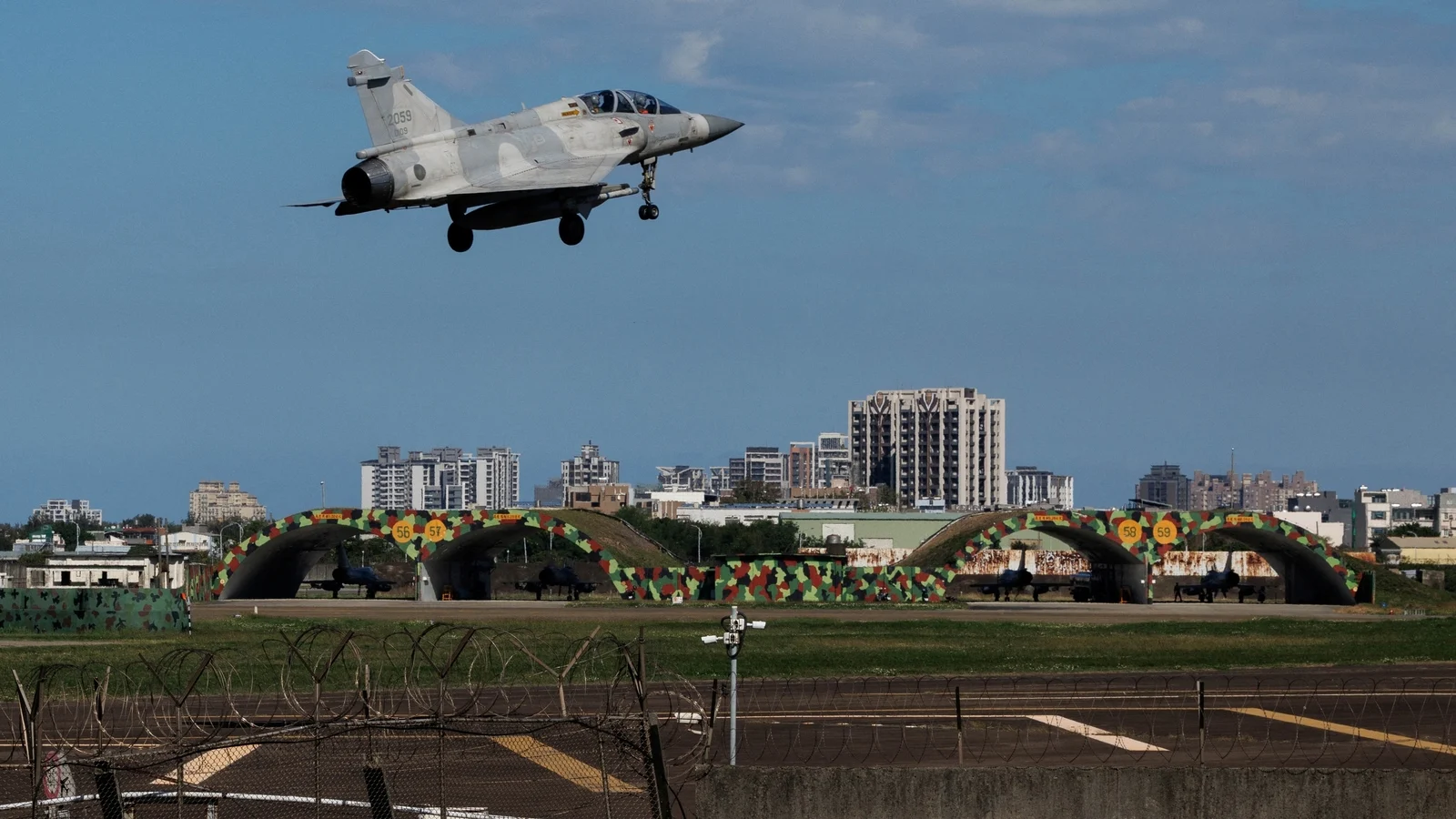
Today that horizon is studded not with clouds but with warships and aircraft. China has launched live-fire military drills around Taiwan — a sprawling exercise the People’s Liberation Army has dubbed “Justice Mission 2025.” The maneuvers employ destroyers, frigates, fighters, bombers and unmanned aerial vehicles, the PLA said, and include live-fire training on maritime targets north and southwest of the island. Taiwan’s coastguard reported four Chinese vessels sailing close to its northern and eastern coasts, prompting immediate deployments and a rapid-response posture from Taipei.
What the exercises look like
The Chinese announcement was blunt and theatrical: multi-domain forces — army, navy, air force and rocket units — will run joint assaults, test blockade scenarios, exercise sea-air patrols and rehearse the seizure of “comprehensive superiority” over key ports and areas. Senior Colonel Shi Yi of the PLA Eastern Theater Command framed the drills as a “stern warning” to what Beijing calls “Taiwan Independence” forces and a necessary act to safeguard China’s sovereignty.
From the Taiwanese side, the response has been equally steely. “We have established a response centre, deployed appropriate forces and carried out rapid response exercises,” a defense ministry statement read. The Presidential Office called China’s actions a “disregard for international norms and the use of military intimidation to threaten neighbouring countries,” a diplomatic rebuke that landed in capitals from Washington to London.
Who’s involved — and what’s at stake
- China: multiple naval fleets, air wings, rocket forces — practising blockade, joint strikes and all-dimensional deterrence.
- Taiwan: coastguard and military units mobilized to monitor and respond; civilian authorities issuing contingency plans.
- Global players: the United States, Taiwan’s principal security backer, whose recent approval of an approximately $11 billion arms package to Taipei preceded the drills; Japan and other regional powers watching nervously.
Why does this matter beyond the headlines? Because the Taiwan Strait is not just a strip of sea but a choke point for global trade, a symbol of national identity, and a living room for millions who sleep within a day’s drive of its shores. The narrowest point of the strait is roughly 130 kilometres (about 80 miles), a reminder that what looks distant on maps is intimate on the ground.
Voices from the island
“When the coastguard called this morning, we thought it was a scare drill,” said Lin Mei-hua, 58, a tea vendor who runs a stall near Keelung Harbor. “But you know, worry is like a kettle that never cools. My regulars are older folks; they ask if the world is changing too quickly to keep up with.”
A young fisherman off Hualien described seeing gray shapes on the horizon. “They’re big ships. We kept our distance — the ocean feels different when tanks are in it. You go out to make a living and suddenly the sea is political,” he said. His hands were rough and steady as he talked; his anxiety was practical: would fishers be prevented from casting nets, would fishing grounds be closed, and how long could families survive on interrupted incomes?
At the Presidential Office, spokeswoman Karen Kuo offered a stark assessment: “These actions further confirm the ruling party in Beijing as the aggressor. They are the greatest destroyer of regional peace.” Her words were measured but firm; they reflected not just alarm but a political calculus aimed at international audiences.
Analysts weigh the wider meaning
“China’s pattern is clear: show military capability, enforce political red lines, and deter external support for the island,” said Dr. Arun Dasgupta, a security analyst at a think tank in Singapore. “But this dynamic has costs. Each show of force raises the risk of miscalculation, and even the most sophisticated command-and-control systems can’t eliminate human error.”
Another expert, retired Admiral Susan Park (name changed for privacy), pointed to the technological mix that the PLA is using. “Unmanned systems add a new layer of complexity. Drones can extend surveillance and strike ranges with lower political cost. But navies still have to manage rules of engagement in congested waters — and that’s where accidents happen.”
History, power and everyday life
The drills are the latest episode in a long, often fraught relationship. China considers Taiwan part of its territory and has never renounced the use of force to bring the island under Beijing’s rule. Taiwan, home to some 23.5 million people, governs itself and has its own democratic institutions. That friction has been magnified in recent years by increased Chinese military activity near the island and by strengthening ties between Taiwan and other democracies.
In April, similar live-fire exercises prompted international criticism. The United States called them “intimidation tactics”; Britain warned of dangerous escalation. This week’s drills came on the heels of an announced U.S. arms package estimated at roughly $11 billion—intended, Washington says, to bolster Taiwan’s self-defense capabilities. Beijing responded with sanctions against U.S. defense firms and stern warnings against “external forces” interfering.
Local color: markets, music and the mood
In Taipei’s Raohe Night Market, the usual soundtrack of sizzling scallion pancakes and hawkers’ banter was underscored by hushed conversations about conscription and emergency kits. A middle-aged man named Chen, who sells handmade umbrellas, shrugged and said, “We make small things here — umbrellas, tea. Big politics sometimes feels like a storm you can’t forecast. We just try to sell enough to sleep well tonight.”
Down in Kaohsiung, the port town where containers move like lifeblood, logistic managers were doing the math. “If a checkpoint is closed, reroutes will cost weeks and millions,” said an operations supervisor. “Global supply chains are tugged by these moments. It’s not just our islands that feel the ripple.”
Questions to sit with
What happens when everyday life is threaded by strategic signaling? How does a family plan a budget when the sea can be closed at a moment’s notice? And for countries far from East Asia, what obligations — moral, economic, strategic — should guide responses to crises that aren’t on their soil but touch their shipping lanes, supply chains, and values?
These are not purely military questions. They are also about diplomacy, about fisheries and tourism, about people’s sense of safety on streets where children once played. They are about a world where regional flashpoints have global aftershocks.
Where this could go
For now, the drills are a show of force and a message. Beijing says any attempts to prevent unification will fail; Taipei says it will defend its sovereignty; Washington and others issue statements of concern. But words only go so far. The real measures of risk are on the water: whether vessels will steer clear of collision, whether radar blips remain blips, and whether diplomacy can cool what saber-rattling has heated.
On the streets, people return to routines with a new awareness. The tea vendor brushes a steam-streaked pot. The fisherman checks his nets. The night market lights blink on as if the day had not been extraordinary. They are living between the headlines, carrying on while history executes its maneuvers.
As you read this, somewhere on the other side of the world someone is watching a feed, weighing sanctions, planning responses. In both places — in living rooms and in war rooms — decisions are being made that will shape lives for years to come. What role should the global community play when an island becomes the stage for powers to rehearse their future?