A Hole in the Quiet: How a Gang Turned a Gelsenkirchen Bank Into a Treasure Vault for the Holidays
On a cold, white-misted morning in Gelsenkirchen, the automatic blink of a bank’s fire alarm did something it rarely does: it woke an entire community. What followed was not the polite flutter of emergency crews responding to a false alarm but a tableau that looked ripped from a heist film — except the grief and fury in the faces of the people outside the branch were painfully real.
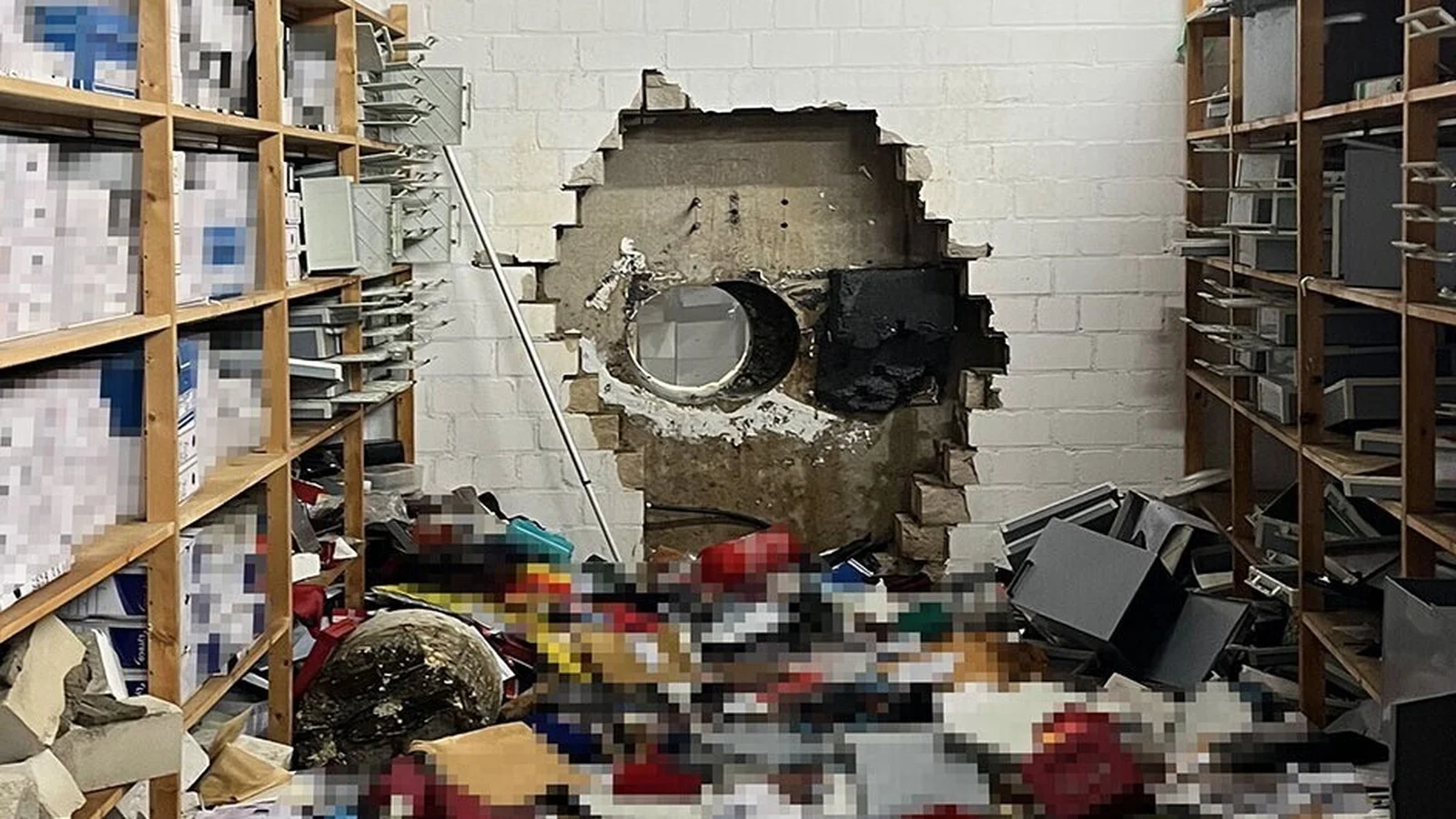
By the time daylight broke over the Ruhr valley, crews discovered a gaping breach in the underground vault at a Sparkasse branch beneath a municipal parking garage. The thieves had not come with masks and a getaway driver for a quick draw. They had come prepared to live inside the bank — literally, investigators suspect — and to spend the long Christmas holidays carving open safety deposit boxes with a large drill and cold efficiency.
Numbers that feel like a punch
The tally reads like the beginning of a thriller: more than 3,250 safe deposit boxes, over 95% of them forced open, an estimated damage figure circling €30 million. Police say the average insured value per box was north of €10,000. But insurance numbers only tell part of the story — several customers told authorities the sentimental and actual value of what disappeared far exceeded any paperwork figure.
“My grandmother’s wedding band has been in that box for thirty years,” said one woman who stood shivering outside the shuttered branch, clutching a worn photograph against her chest. “It’s not about money — it’s about lineage. They don’t understand what they took.”
How they did it
Police allege the gang bored their way in from the parking garage directly above the vault, a shadowy excavation that took advantage of the long public holiday. Germany’s businesses closed for the Christmas holidays on Thursday and Friday, and the suspects likely used the quiet to their advantage, possibly lingering through the weekend as they opened boxes one by one.
Witnesses described the eerie sight of men hauling large bags in the stairwell in the small hours between Saturday and Sunday. Security footage later captured a black Audi RS6 — a powerful, fast estate car — leaving the garage in the dim hours, occupants masked. Investigators added a small detail that felt particularly brazen: the Audi’s license plates had reportedly been stolen earlier in Hanover.
“This was not opportunistic,” a police spokesperson told reporters. “A great deal of planning and criminal energy went into this. It’s professional, methodical. Think Ocean’s Eleven tactics but with a harsher, real-world aftermath.”
The human consequences
Outside the bank, a crowd of customers and onlookers gathered, their faces drawn and eyes bright with exhaustion. Hundreds, by most counts, demanded answers, pressed for reassurances, for the return of family heirlooms — jewelry, cash tucked away for a child’s education, and documents no amount of insurance could replace. Tension rose quickly when threats were reportedly made against bank staff, forcing the branch to remain closed for safety.
“They kept saying, ‘You have to tell us what you know, you have to tell us who to talk to,'” a bank employee later recalled. “We were shocked, we were frightened. There were tears. There were shouts. This is supposed to be the place where people feel secure.”
The bank has set up a hotline and promised written notices to affected customers while coordinating with its insurer. Sparkasse officials publicly expressed their shock, saying they were standing by customers and would do everything in their power to assist. Still, for many, the immediate question was not about paperwork: it was about trust.
Voices from the Ruhr
“Gelsenkirchen is a working-class town,” said Mahmoud, owner of a small jewelry stall near the old market. “People here value things differently. A watch from your grandfather, a bracelet from a parent — these are memories. It’s painful for them to see those gone.”
Soccer fans passing by — the blue and white scarves of the local FC Schalke 04 are a common sight here — paused to watch the police vans. For a city that has reinvented itself since the last coal mine closed, the heist felt like an assault on a fragile security net.
Why this matters beyond Gelsenkirchen
Physical safety deposit boxes exist in an era where so much of our wealth is intangible: cryptocurrency wallets, stock portfolios, cloud backups. Yet many people still choose to stash their most private, irreplaceable items in concrete vaults beneath banks. This robbery forces a global question: how secure are our last refuges?
Security experts say this kind of operation, while rare, illuminates a broader vulnerability: when criminals are willing to invest time and specialization, they can overcome static defenses. “The human element — the ways institutions underestimate downtime, assume no one would risk remaining onsite — is often the weak link,” a security consultant who asked not to be named told me. “Physical security requires not just walls and cameras, but rotation, detection algorithms, and often unpredictable human oversight.”
There are deeper social trends at play too. As policymakers and banks push for digital transitions, sometimes the protections for physical assets lag behind. And when thefts of this magnitude happen, they don’t just redistribute wealth — they erode confidence.
Old stories, new methods
Heists have always captured public imagination — from the Antwerp diamond robbery to cinematic capers — but what makes this episode so unnerving is its ordinariness: it happened in a mid-sized town on a holiday weekend, with people who had entrusted banks with their most private possessions.
“It feels like a betrayal,” a retired teacher waiting for information said calmly, wiping frost from her hands. “We put things in safes because the world outside feels uncertain. Now what? Will the bank change its vault? Will they compensate memories?”
After the dust settles: questions and consequences
Investigators continue to search for the perpetrators. For the people of Gelsenkirchen, the longer ramp-up to Christmas morning — the quiet streets, the closed storefronts — will now be remembered as the time when the familiar formally opened its cracks.
For readers in other cities, the scene invites reflection. Where do you keep what’s irreplaceable? How much trust do you place in institutions — and what happens when that trust is shaken?
This heist is a story about money and metal, yes, but it is also about the fragile economies of memory and belonging. It reminds us that security is not simply a vault or a camera; it’s the consensus we maintain with one another that certain places remain safe sanctuaries.
As police piece together how the gang tunneled, drilled and spirited away millions, the residents of Gelsenkirchen face the long, quiet work of inventorying what’s gone and, perhaps harder, deciding what it will take to feel safe again.
“We want our things back,” a man who had stored his father’s medals in a box said, voice breaking. “But even if we get them, I wonder if I will ever put anything valuable away again.”
What would you do if a trust you had in place for decades suddenly collapsed over a holiday weekend? How much of our personal history is safe, and how much is sitting in a vault simply waiting for the right pair of hands?