When the Sea Exploded: A Shoreline Story of Drugs, Diplomacy and Deepening Doubt
It was a sound that did not belong to the rhythm of the Venezuelan coast — a distant boom that swallowed the night and left fishermen counting their boats as if inventorying lives. News of a U.S. strike that “knocked out” a docking area used by alleged drug-running vessels began as a terse presidential line delivered from Mar‑a‑Lago, and by morning it had spread into an argument about sovereignty, the rule of law, and the shadow wars of interdiction.
“At first we thought it was thunder,” said Ana Ricardo, a 42‑year‑old fisherwoman from a small village outside Maracaibo. “Then everyone ran to the shore. The smell — like burnt rubber and diesel — stayed with us for hours. We are tired of breaking the days between fear and hunger.”
Tonight’s Blast—A Fragmentary Account
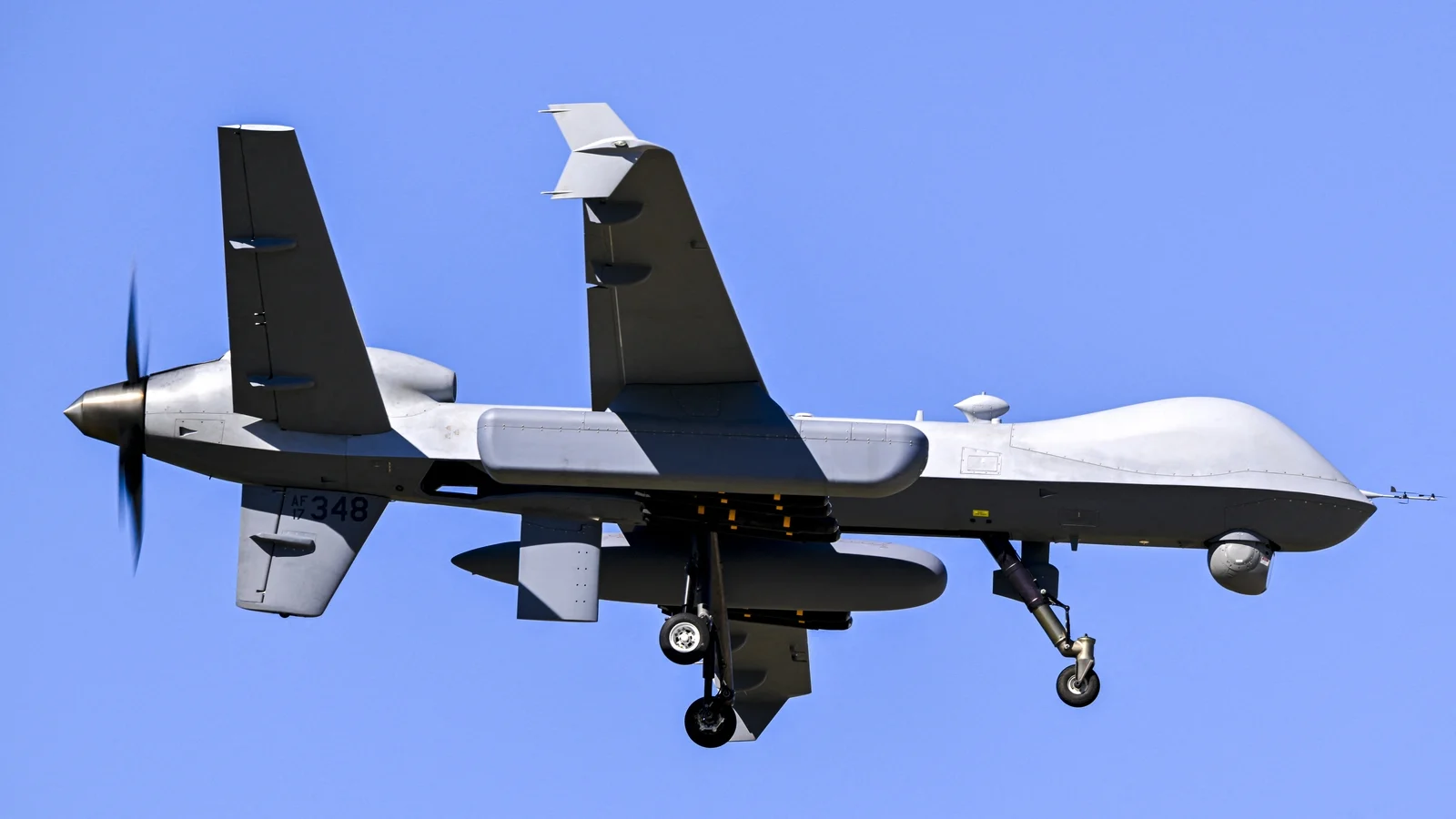
President Donald Trump told reporters that U.S. forces had “hit all the boats” and destroyed an “implementation area” along a shoreline where drug shipments were loaded. He would not specify whether the operation was military or carried out by the Central Intelligence Agency; U.S. media outlets later reported that sources familiar with the matter told CNN and The New York Times the CIA had launched a drone strike on a port facility.
According to those reports, the target was connected to Tren de Aragua, a sprawling Venezuelan criminal network whose reach has reportedly extended from prisons to informal border economies. Officials said no casualties were reported at the site because the docks had been empty at the time of the strike.
But absolute certainty remains out of reach. The Venezuelan government offered no immediate official comment, the Pentagon referred questions to the White House, and U.S. officials were tight‑lipped on location and operational detail. In the absence of transparent confirmation, the air filled with competing narratives.
What we do know — and what we must treat as unresolved
- The U.S. president publicly confirmed an attack on a shore facility used in alleged drug trafficking.
- U.S. outlets reported the CIA conducted a drone strike; those reports cite unnamed sources.
- There were reportedly no casualties at the targeted docks.
- The U.S. military announced an additional maritime strike in the eastern Pacific that it said killed two people, bringing its reported maritime campaign total to at least 107 dead.
Voices on the Ground
On the windswept spit at the mouth of the Gulf, locals have grown adept at turning disaster into story. “I have seen the coast change more in one year than in ten,” said José Alvarez, a second‑generation boat builder in Zulia. “The sea gives and the sea takes, but now strangers take on the sea. Planes, drones — they are new weather.”
An NGO volunteer distributing water to displaced families described the scene with weary clarity: “You can’t separate the drugs issue from the collapse of institutions. People turn to informal economies because formal ones have disappeared. When a strike happens, the ones who lose are not the big men — they are the wives who lose a day’s fish.”
Back in Washington, one retired legal adviser to the Pentagon—speaking on condition of anonymity—said, “These operations are being framed as law enforcement at sea, but the line between law enforcement and military action on foreign soil is legally thin. The administration believes it’s disrupting supply chains. Critics warn it could violate international law.”
The Moral and Legal Ledger
The strikes in the Caribbean Sea and eastern Pacific that Washington has conducted since September are controversial not only for their lethality but because they are carried out largely without public evidence of wrongdoing, according to human rights groups and some international law scholars. Several organizations have flagged the maritime campaign as raising grave questions about extrajudicial killings and sovereignty.
“When a state uses force in another state’s territory without consent and without judicial process, it enters legally fraught territory,” said Dr. Helena Moretti, an international law scholar at the Atlantic Institute. “There are avenues under self‑defense and consent, but these operations often lack the transparency required to justify such exceptions.”
That opacity has consequences beyond the courtroom. It shapes narratives about who is attacking whom, feeds recruitment myths for criminal organizations, and can harden popular anger. It also leaves families and communities in limbo — uncertain whether the looming drones are their protectors or the next danger.
Numbers that Matter
Data and statistics are the ballast in this storm of rhetoric. The U.S. military announced that the maritime campaign had resulted in at least 107 deaths from strikes it claims targeted drug smuggling operations. Meanwhile, the UN Office on Drugs and Crime (UNODC) and other agencies have been tracking shifting smuggling routes and rising flows of cocaine through the Caribbean and Central America, though precise figures on interdicted tons versus produced supply vary year to year.
Experts warn that interdictions alone rarely change global supply. “You can sink boats and seize shipments, but unless demand and the production economies are addressed, the market adapts,” said Professor Miguel Torres, a drug policy expert. “We need a strategy that combines interdiction with development, strong courts, and regional diplomacy.”
Local Color and the Everyday Stakes
To understand the stakes, you must imagine a Sunday market in a coastal town: plantains sizzling on a makeshift grill, a radio playing salsa, children chasing a dog between baskets of cassava. In places where state services have receded, informal economies — some illicit, some not — become the fabric of daily life. Dockside crew who once mended nets now take jobs moving opaque cargo; boatyards that once built casitas for festivals are repurposed into quick, utilitarian docks.
“We are musicians, not smugglers,” laughed Rafael, a makeshift bandleader whose terraza is a popular stop for sailors. His laugh was a shield for a more guarded reality: “If you are hungry, you take what work you can get. It is not pride. It is survival.”
Why this matters beyond Venezuela
When a powerful country carries out actions along another country’s littoral in the name of counter‑drug operations, the reverberations are global. The strike raises questions about the rule of law, the political uses of force, and the effectiveness of single‑minded interdiction strategies. It also spotlights the tangled connections between corruption, porous borders, economic collapse, and organized crime.
And it asks an unsettling question: do quick, kinetic strikes provide a durable answer to a problem rooted in demand, poverty, and weak governance? Or do they simply push trafficking routes and fuel cycles of violence that cost more in blood and trust than they ever remove from the market?
Where Do We Go From Here?
Policymakers in Washington and capitals across Latin America face a stark choice. They can double down on remote strikes and risk legal blowback and local resentment, or they can invest in the slower, messier work: judicial reform, economic opportunity, anti‑corruption measures, and regional cooperation that is not perceived as coercion.
“We cannot bomb our way into stability,” said Dr. Moretti. “If operations continue, they must come with oversight, accountability, and clear multilateral frameworks.”
For the people on the shoreline, these debates are not abstract. They are about children who will sleep through the boom, fishermen who will count their nets, and small towns that will decide whether to welcome development or fear the next drone.
So ask yourself: when you hear of a strike that claims to close a drug corridor, do you imagine a headline ending a story — or the beginning of another chapter we have not yet learned to read? The answer will shape not just the coasts of Venezuela, but the kind of global order we want to live in.