Midnight in Sofia: A Nation Trades Coins for Community
At the stroke of midnight, beneath a forehead-numbing skyline and the faint crunch of snow on cobblestones, Sofia shed an old skin.
A projection of gleaming euro coins washed over the facade of the Bulgarian National Bank. People in heavy coats cheered. Someone somewhere popped a bottle of champagne. For many, it felt like New Year’s Eve and a national turning point wrapped into one: Bulgaria had joined the eurozone, becoming the 21st country to adopt the single currency.
“It’s like stepping onto a wider stage,” a retired schoolteacher named Elena told me as she stood with her family in the crowd, breath fogging in the cold. “We keep our history in the museums, but we want our children to feel they belong to something bigger.” Her voice threaded hope and caution in the same breath.
Why This Moment Matters
For a country of about 6.4 million people that entered the European Union in 2007, the move to the euro is not merely a monetary adjustment. It is the culmination of decades of political calculation, economic reform, and debate over identity. Central bankers and European officials have long framed the euro as both a practical tool and a political symbol: easier travel, fewer conversion fees, clearer prices for cross-border trade, and visible integration into western institutions.
Christine Lagarde, president of the European Central Bank, welcomed Bulgaria with measured warmth, calling the euro “a practical anchor and a signal of shared values.” Ursula von der Leyen, president of the European Commission, added that it should make life easier for citizens who travel or live abroad and boost market transparency.
What changes for ordinary people?
Practicalities abound. Tourists will no longer need to change levs at the airport. Bulgarian exporters may find invoicing simpler for European buyers. The euro will be used daily by more than 350 million people across the continent, raising the scale and liquidity of transactions for industries here.
- Lower currency-conversion costs for travellers and businesses
- Potentially easier cross-border trade with eurozone partners
- Greater price transparency—consumers can more readily compare prices with other EU markets
Joy, Skepticism, and the Noise of Politics
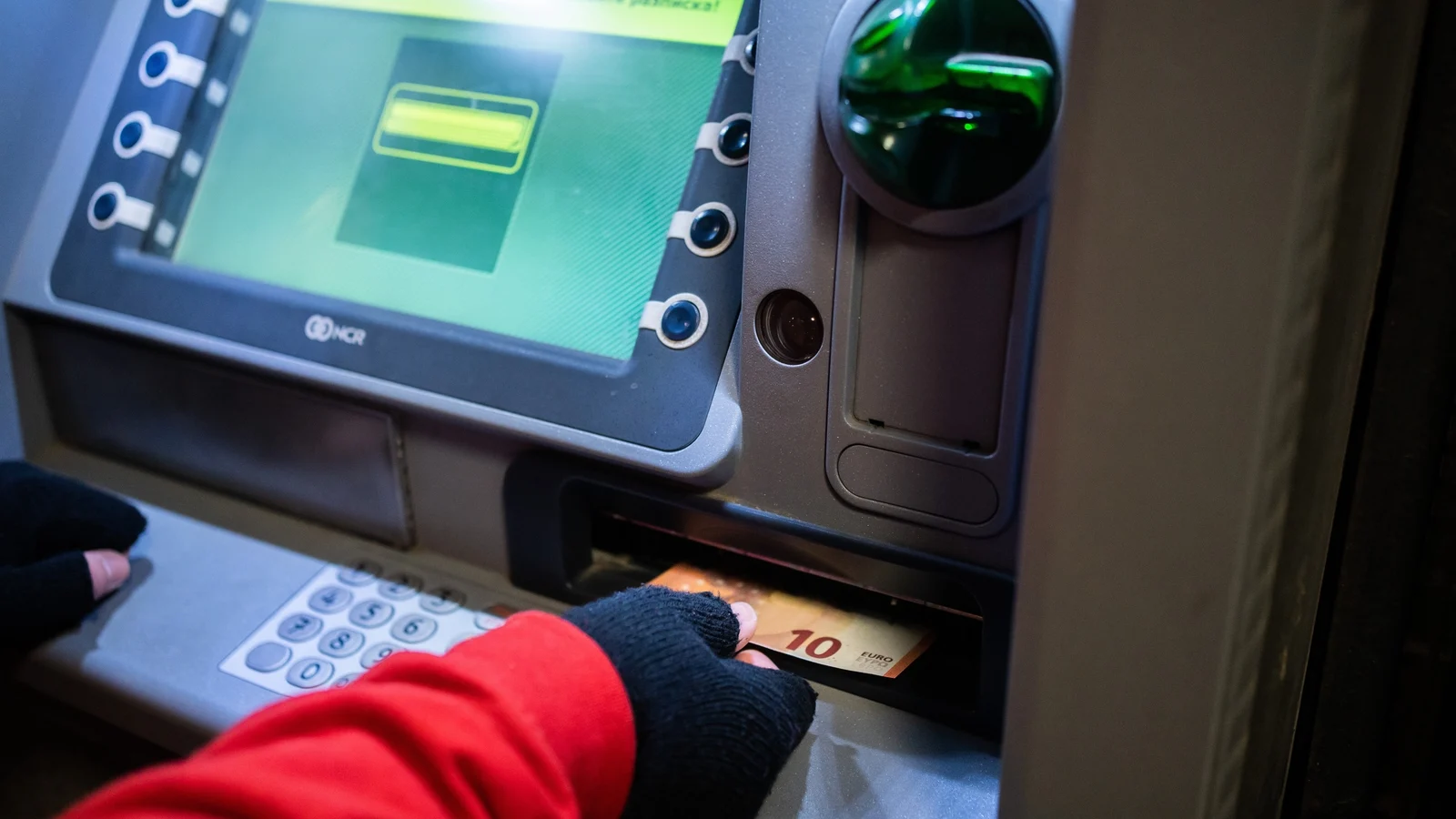
But the street-level mood in Sofia was a patchwork: small celebrations mingled with wariness. Dimitar—no last name given—grinned after withdrawing €100 from an ATM and proclaimed, “Great! It works!”
Across town, a pastry shop owner ran a hand over the display case and grimaced. “Prices no longer correspond to levs. We are already pricing by euros in our heads,” she said, asking to remain anonymous to avoid political backlash. “It’s not that the currency changes food. Markets do.” Her worry resonated with many who fear that switching currencies could accelerate inflation or at least make price increases feel more permanent.
Those fears are not abstract. The National Statistical Institute reported food-price inflation at around 5% year-on-year in November—more than double the eurozone average at that time—and households still feel the squeeze. A recent Eurobarometer poll found 49% of Bulgarians opposed the changeover, underscoring the depth of public ambivalence.
Politics has not been quiet, either. Anti-corruption protests ousted a conservative-led government in mid-December, and Bulgaria faces its eighth national election in five years. President Rumen Radev hailed the currency change as “a final step in our EU journey” but expressed regret that Bulgarians had not been asked in a referendum. “This refusal was one of the dramatic symptoms of the deep divide between the political class and the people,” he said, evoking the protests that have convulsed the capital.
Practical Kinks: Euros on the Ground
Not everything went smoothly. Shopkeepers reported difficulties getting euro “starter packs” from banks; some markets displayed prices in both levs and euros on the same stall, a visible sign of a transition in progress. That double display offered an odd comfort: familiar numbers next to new ones, a bridge for those counting pennies and memories.
Alpha Research analyst Boryana Dimitrova warned that any stumbles—real or perceived—could be exploited by anti-EU politicians. “Currency change is technical, but it becomes political in a flash,” she told me. “When households see their grocery bill jump by a few leva, the message is simple: someone else decided for you.” It’s a reminder that even monetary policy is filtered through trust, or the lack of it.
Experts Weigh the Balance
Economists point to clear positives—but also trade-offs.
“Adopting the euro reduces transaction costs and tends to attract foreign direct investment by removing exchange-rate uncertainty,” explained Dr. Miroslav Petrov, an economist at Sofia University. “But you also hand monetary policy to the ECB. That’s fine if inflation and growth are broadly in line with the eurozone, but it can limit national tools in shocks.” He paused. “The key is fiscal discipline and structural reforms—less flashy, more important.”
Indeed, Bulgaria has operated for years under a currency board arrangement that pegs the lev tightly to the euro. That prior discipline softened the shock of adoption: the conversion is a formalization of a reality that has been in place for decades. Still, the shift places Bulgaria fully inside a monetary union whose policy priorities are set in Frankfurt, not Sofia.
Local Color: Markets, Sparklers, and the Human Scale
Walk around any market in Sofia and you’ll find the heart of the story. Vendors bundle sparklers for New Year’s Eve, their price tags showing both “лв” and “€”. Muscovite pines and jars of pickled peppers sit side by side. The exchange of the lev for the euro did not erase these small rituals—if anything, it underscored how livelihoods and celebrations exist through currency but are not defined by it.
“The whole of Europe has managed with the euro,” one shopper told me while hefting a bag of oranges. “We’ll manage too.” Her resolve was practical, not ideological.
What Does This Mean Globally?
This transition in Bulgaria is part of a larger pattern: the euro continues to expand as a political and economic anchor in a Europe that is reassessing its dependencies and alliances. For countries on the periphery, the single currency offers a certain insulation from volatile exchange-rate swings and, in some views, a bulwark against external political influence—particularly from Russia, a frequent theme in Bulgarian political discourse.
But questions remain universal. How do nations balance sovereignty and integration? When is it right to surrender a national symbol for economic stability? And when does the promise of convenience outpace the day-to-day realities of households?
Looking Ahead
There will be stories to tell in months and years: businesses adapting to euro accounting, consumers checking receipts for rounding errors, politicians using any perceived mishap as a talking point. For now, Bulgarians stand at a threshold—some with optimism, others with anxiety, many with a mixture of both. Currency changed at midnight, but trust will be built more slowly.
So, reader: would you give up your country’s money in exchange for a broader belonging? What does a coin represent to you—a simple tool, an emblem of identity, or something in between?
In Sofia, as the first euro notes passed through trembling fingers, the answers were as varied as the crowd—hopeful, wary, resolute. And that, perhaps, is the most accurate measure of what this moment really signifies.