A snapped line under a cold Baltic sky: what the seizure of the Fitburg reveals
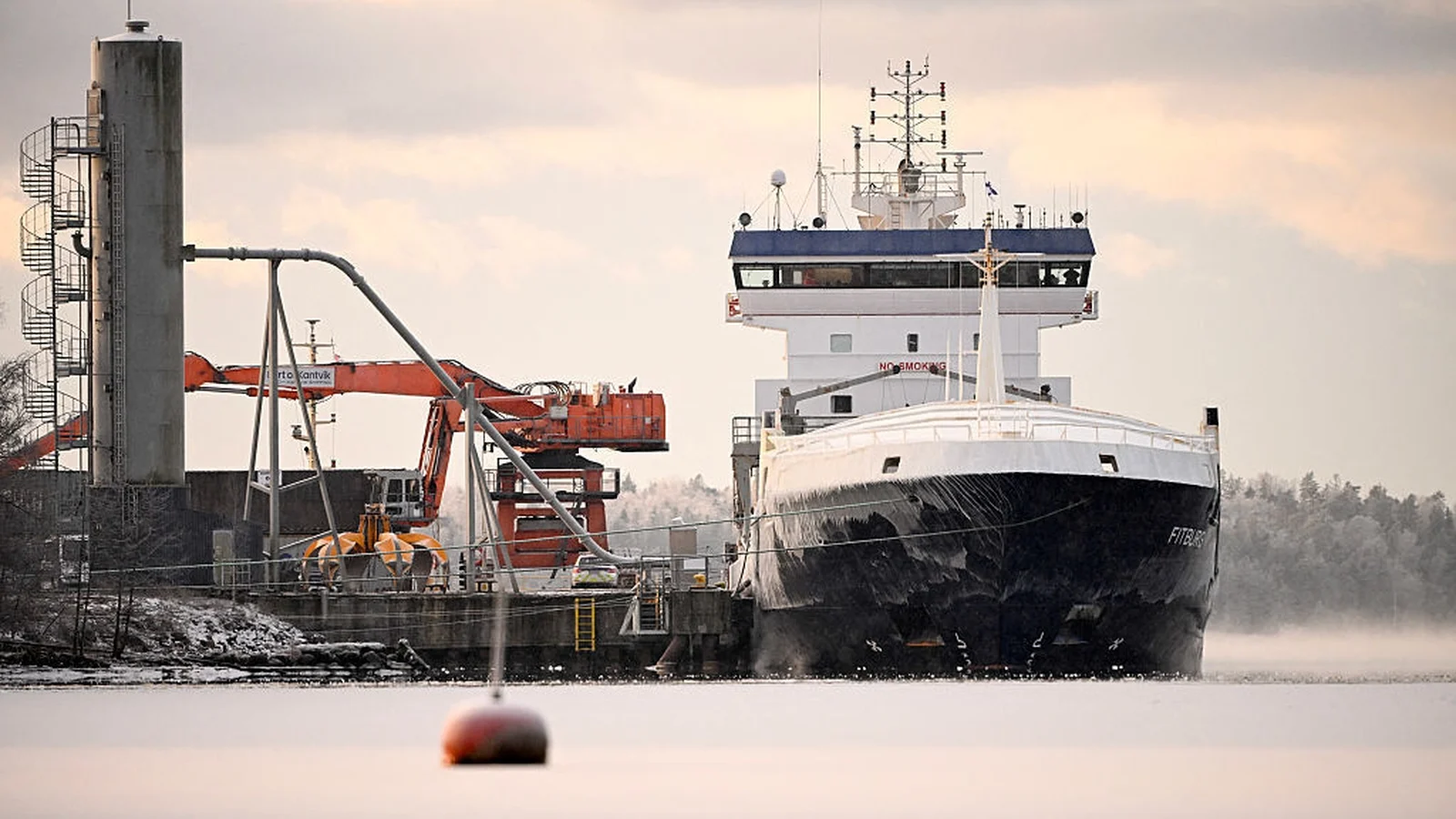
It was not, on the face of it, an overtly dramatic scene: a steel-cargo vessel idling in the grey sweep of the Gulf of Finland, tugs and patrol boats converging quietly, coastguard officers climbing down ropes and across gangways. But the silence of the sea that day hid something far more consequential than a stalled freighter.
Finnish authorities announced this week that the cargo ship Fitburg was seized while en route from Russia to Israel after investigators concluded it likely played a role in damaging an undersea telecommunications cable linking Helsinki and Tallinn. Two crew members have been arrested, two others barred from leaving Finland, and the rest — fourteen people in all, from Russia, Georgia, Kazakhstan and Azerbaijan — are being questioned.
“The interviews have clarified the course of events and the different roles of the crew members,” Detective Chief Superintendent Risto Lohi of Finland’s National Bureau of Investigation said in a terse statement, the kind of language that means the work is far from finished but is moving forward.
Not just a cable: why this matters
To most commuters on the ferries crisscrossing the Gulf, a telecommunications cable is invisible infrastructure — a thin line on a map. But the digital pulse of cities, banks, emergency services and governments depends on these arteries. Around 99% of global intercontinental internet traffic travels via undersea cables, and hundreds of such links lace the world’s seabeds. When one is severed, the effects are immediate, cascading and often quietly expensive.
Authorities in Finland say the cable is currently inoperable; the full extent of damage will take time to assess. For businesses in Helsinki and Tallinn, it means rerouted traffic, potential slowdowns and a reminder of how fragile the modern network really is.
Local voices: fear, irritation, and a flicker of resolve
“On the ferry, everyone was on their phones — and then it just slowed down to a crawl,” said Jaan, an IT support technician in Tallinn, sounding more annoyed than alarmed. “We rely on redundant systems, but redundancy doesn’t equal invulnerability.”
Marek, who has fished these waters for three decades, leaned on the railing and gestured at the shipping lane. “Ships anchor, ropes bite into the seabed,” he said. “But people talk of more than accidents now. There’s a weight in the air — like you’re walking on thin ice.”
A ferry operator on the Helsinki-to-Tallinn run, Anna, added, “We see ships from everywhere. Yesterday’s morning looked the same as any other — cranes, cables, containers. But the sea remembers. And so do we.”
The pattern: not an isolated incident
This episode sits against a worrying backdrop. In recent years the Baltic Sea has been the scene of several incidents where subsea cables, pipelines and power links were damaged. Last year, investigators pointed to the Russian-linked oil tanker Eagle S as having damaged a power cable and multiple telecoms links — a finding that added to regional unease.
Estonian President Alar Karis, while cautiously optimistic, summed up the region’s anxiety: he said the incident was “hopefully not a deliberate act, but the investigation will clarify matters.” For many in the Baltic capitals, hope is not the same as confidence.
Is this hybrid warfare by another name?
Europe’s security community has been wrestling with a thorny question: could these attacks be part of a broader pattern of so-called hybrid warfare — deliberate actions intended to disrupt, intimidate or coerce without crossing the threshold of open conflict?
Officials have voiced increased concern that such hybrid threats have risen since Russia launched its full-scale invasion of Ukraine in 2022. Moscow denies these accusations. The Russian embassy in Helsinki said it is in contact with Finnish authorities and “hopes that the situation will be resolved in a spirit of cooperation and in accordance with the relevant legal norms.”
Maritime-security analysts are reluctant to leap from suspicion to verdict, but they do warn that the sea is becoming an arena for low-visibility operations. “Undersea infrastructure is the soft underbelly of modern economies,” said a maritime security expert who has advised several European governments. “It’s cheap to disrupt, expensive to fix, and politically ambiguous — which makes it attractive to states and non-state actors alike.”
Technical realities: what repairing a cable entails
Repairing an undersea cable is not like fixing a snapped phone charger. It requires a cable ship, remote-operated vehicles, divers in severe cases, and often several days to weeks depending on weather and the depth of the damage. Boats must locate the break, haul the cable up, splice it, and test the line. Costs spiral quickly — into the hundreds of thousands, sometimes millions, for major failures.
- Time to repair: days to weeks (depending on depth, weather, traffic)
- Cost: potentially hundreds of thousands to millions of euros or dollars
- Impact: slowed internet, rerouted traffic, disrupted services
In short, an attack or accident at sea can have an outsized economic and strategic impact on shore.
Questions for the reader: what would you protect?
Pause for a moment. Imagine your world without reliable connectivity for a week. How would your work change? How would emergency services cope? This is not hypothetical for the thousands who depend on these cables every day.
If a thin strand of fiber can bring cities to a standstill, what should nations do? Strengthen monitoring? Mandate more redundancy? Push for international rules to protect undersea infrastructure? There are no easy answers, but the argument for collective responsibility grows louder.
Looking ahead: investigation, accountability, prevention
For now, the Fitburg sits under Finland’s scrutiny while investigators piece together motives, mechanics and responsibility. Two detained crew members face legal processes. Questions remain about the ship’s behavior — it was seen dragging its anchor at the time — and about whether this was negligence, an accident, or something more deliberate.
“This is a test of our institutions,” the maritime security expert said. “Not just for law enforcement and international law, but for the public’s faith in the safety of critical infrastructure.”
Across harbors and cafes from Helsinki to Tallinn, people sip coffee and scroll the feeds, waiting for clarity. In the meantime, the sea keeps its own counsel, indifferent and deep. But beneath the indifferent surface, strings that bind modern life — wires, pipes, routes — hum with a fragile importance.
We can follow the investigation and hope for clear answers. Or we can do something more: ask our leaders to treat undersea infrastructure not as invisible plumbing, but as a shared global commons that needs watching, defending and repairing. The Gulf of Finland may seem small on a map, but what happens there matters to us all.