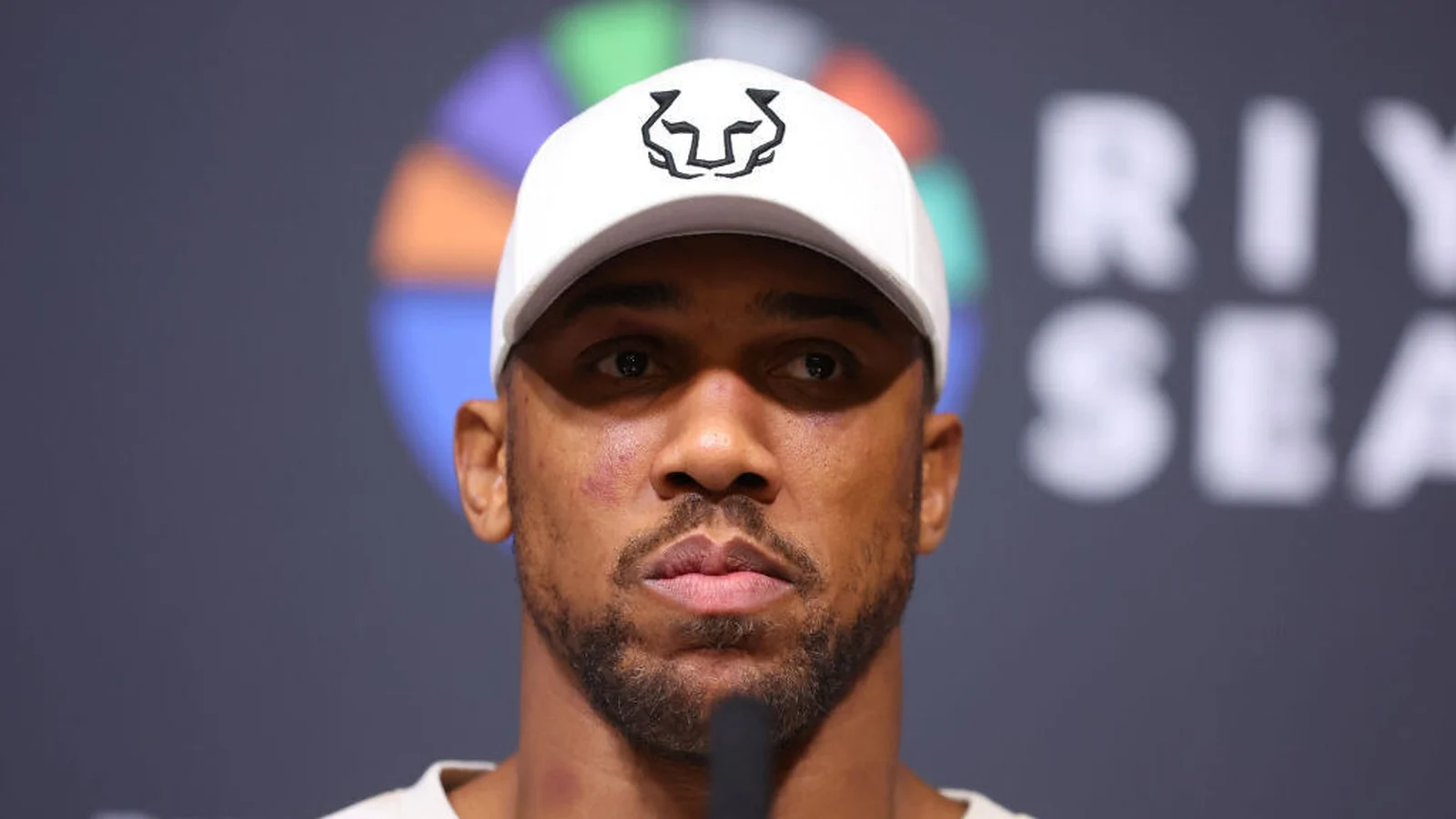
When the Highway Stilled: Anthony Joshua, a Night of Mourning and Questions on Nigeria’s Roads
There are moments that seem to stop time — a shriek of metal, a wash of flashing lights, the hush that falls when people step out of their cars and realize the world has rearranged itself. That hush descended on the Lagos-Ibadan Expressway after a crash that left two of Anthony Joshua’s close friends dead, the British-born heavyweight briefly injured and a nation asking, again, how so many tragedies play out along its busiest arteries.
On a stretch of tarmac known for speed and commerce — where long-haul trucks rub shoulders with clattering minibuses and roadside traders sell fried yam and sachet water to drivers who pull off for a breath — a Lexus SUV carrying Joshua collided with another vehicle and then a stationary truck. The accident, according to Federal Road Safety Corps (FRSC) preliminary findings, involved an apparent attempt at an unsafe overtaking manoeuvre at speed before the collision. Two of Joshua’s companions, identified as Sina Ghami and Latif Ayodele, were killed. Joshua, 36, suffered minor injuries and has since been discharged from hospital after checks. The episode felt painfully ordinary and shockingly public all at once.
Charges Laid, Court Date Set
By late afternoon the story had moved from the roadside to the courthouse. Ogun State police said the driver of the other vehicle, Adeniyi Mobolaji Kayode, 46, appeared before the Sagamu Magistrate Court and was charged with four counts, including causing death by dangerous driving. The case was adjourned to 20 January.
“We have filed charges following the preliminary investigations,” a police statement read. “The matter has been placed before the court to allow further processes to be conducted.” Authorities did not make the defendant available for comment, and Reuters did not immediately reach his legal counsel.
Faces in the Headlines: People Behind the Names
If the news cycle can feel abstract — figures and dates and fast edits — this one did not for the vendors and drivers who witnessed the aftermath. “I saw them pulling people from the cars,” said Aderemi Okonkwo, a roadside tea seller who has watched accidents become part of daily life on that highway. “There was shouting, a mother cradling a phone calling someone, it was like a film. But this time the names I heard — they were famous. That made it worse.”
For many in Nigeria and for the global boxing community, Anthony Joshua is more than an athlete: he is a symbol of diasporic possibility, a British champion with Nigerian roots who carries both national pride and international attention. The shock was therefore not just of loss but of vulnerability. “Celebrities are not invincible,” said Dr. Chioma Nwankwo, a sports psychologist. “When someone like Joshua is involved in a tragedy, it reframes the risk for everyone. It’s a reminder that our roads are indifferent to fame, status or wealth.”
Local Color: The Highway That Keeps Moving
The Lagos-Ibadan Expressway is an artery of commerce — buses with names painted in flamboyant fonts ferry passengers; tricycles weave between lanes; produce trucks lurch under the weight of yams and tomatoes. It is also a route where impatience, commerce and insufficient infrastructure meet in dangerous ways. “People here are always rushing,” said Ifeoma Eze, who runs a hair salon five minutes from the road. “A man may lose his job if he comes late. So they drive like that. We pray and keep our doors open.”
Numbers That Haunt
Tragedies on the Lagos-Ibadan Expressway are not isolated incidents. According to the World Health Organization’s global road safety reports and data compiled by local agencies, Nigeria’s road fatality rate is among the highest in Africa. The FRSC and local civil society groups have long warned that a combination of speeding, poor vehicle maintenance, unregulated overtaking and a dearth of safe road infrastructure drive a steady toll of deaths and injuries.
“We are fighting an epidemic of dangerous driving,” said Isaac Nwosu, a spokesperson for a local road safety NGO. “Every year, thousands die on Nigerian roads. When a high-profile case like this happens, policymakers pay attention — but the attention often fades.”
Law, Accountability and the Weight of Public Scrutiny
Legal proceedings will now play out in Sagamu. Charging the driver is a necessary step, but it opens questions: Was the other driver speeding? Were both cars roadworthy? How will witness evidence be collected when traffic flows resume and witnesses return to their livelihoods? “Charging a suspect addresses individual responsibility,” said Femi Adebola, a criminal law lecturer in Lagos. “But to reduce such tragedies we must also look at systemic issues: enforcement, road design and the economic pressures that push drivers to take risks.”
President Bola Tinubu issued condolences to Joshua and the families of those who died, calling it a “tragic accident.” The words were read across television screens and social feeds, but for people near the scene they were not enough. “Condolences help for a moment,” said Okonkwo, shaking his head. “We need to see roads fixed, lights installed, strict checks on how trucks move at night.”
When a Moment Becomes a Mirror
If you are reading from afar — from a city where highways hum and sirens wail at night, or from a country where drivers obey the rules and accidents are rarer — you might wonder why the death of two men on a Nigerian freeway matters beyond the immediate circle of friends and fans. It matters because it exposes something universal: the fragility beneath our daily commutes and the unevenness of what societies choose to protect. When roads fail, they fail everyone. They take the ambitious young man heading to a job, the grandmother carrying bread to sell, the famous athlete and his friends returning from a career high.
It also matters because moments like these can catalyse change. “Public outrage is a tool,” said Dr. Nwankwo. “When attention focuses on systemic flaws, there’s an opportunity — to redesign junctions, to equip traffic corps with better technology, to demand safer vehicles.”
What Comes Next?
In the coming weeks, the court will hear the case against Mr. Kayode; investigators will compile reports; Joshua and the boxing world will prepare for the next fight on the calendar. Meanwhile, families will grieve, friends will remember, and vendors on the roadside will continue to pour tea into plastic cups for drivers who pull over to catch their breath.
What do you think should change? Is it stricter enforcement, better infrastructure, more public education, or some combination of all three? When a celebrity is touched by the same vulnerabilities as everybody else, perhaps it becomes easier to see our shared priorities. This is not simply a sports story or a legal brief — it is a mirror on public safety and collective responsibility. And until the engines on the Lagos-Ibadan Expressway slow and the overtakes become safer, the same questions will keep returning to that stretch of road and to every country where speed still too often outpaces safety.