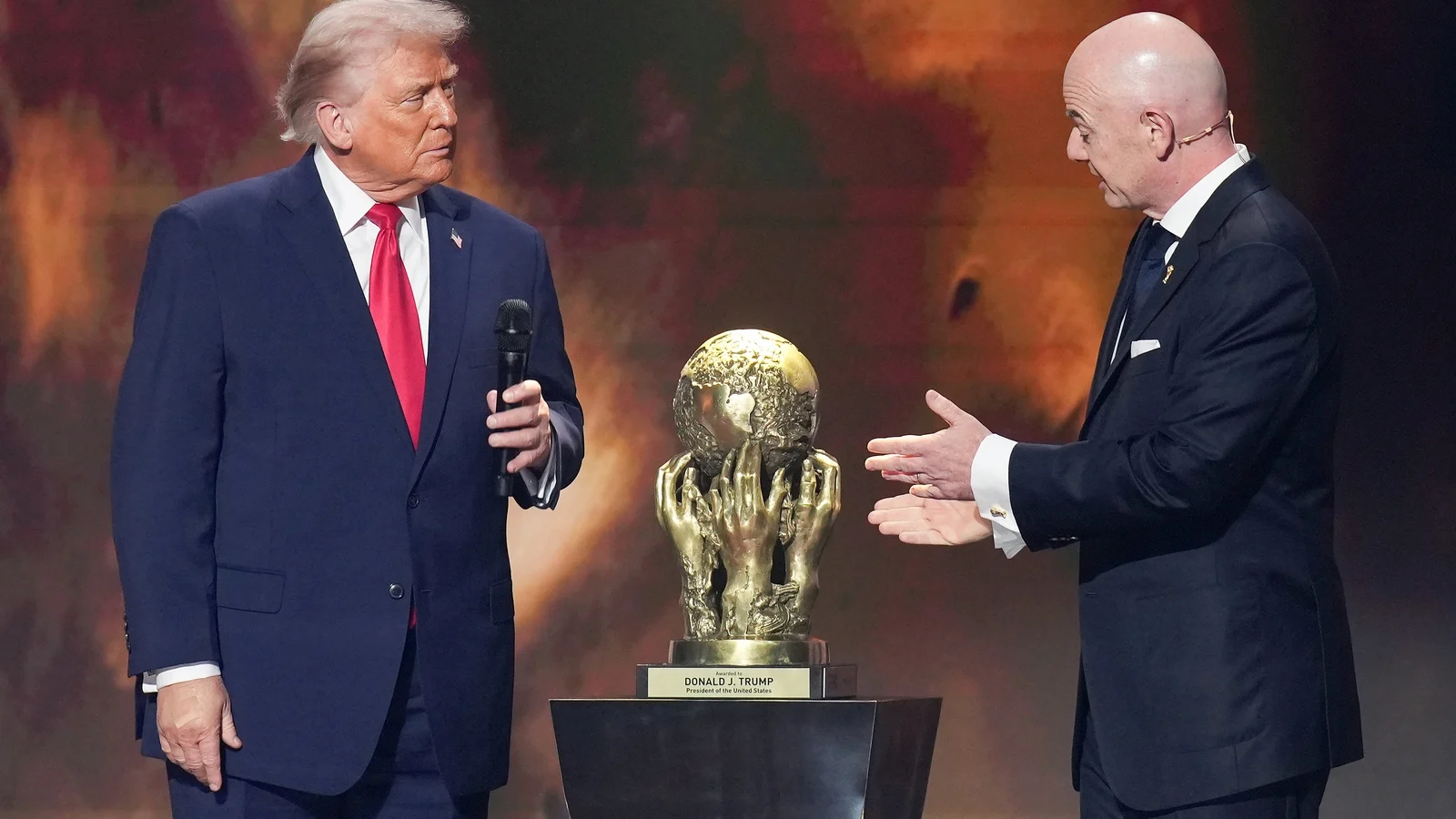
The Peacemaker Who Picked a Fight: A Journey from Promises to Patrols
When a president begins his term with a vow to be the world’s peacemaker, the world listens. It leans in, hopeful. It remembers the rhetoric: unity, diplomacy, the end of endless wars. Yet less than a year into that pledge, the air smells different—charged, metallic, and full of questions.
Reports arriving across the morning wires painted an abrupt, dissonant picture: a leader who wore “peace” as a campaign medal, now overseeing the deployment of force in distant theaters. Whether you read it as hard-nosed realism or the unraveling of a rhetoric-driven promise depends on where you stand, what you believe, and how willing you are to accept that the language of peace and the instruments of war can, sometimes, sit side by side.
From Inaugural Ideal to Military Muscle
It is a short leap—politically, emotionally—from promising to end wars to insisting that shows of force secure peace. “Peace through strength” is an old political axiom, one that dates back to imperial defenses and Cold War summitry. But the phrase is slippery. For some, it means deterrence: prevent conflict by convincing potential adversaries that the costs will be unacceptably high. For others, it becomes a pretext for intervention and muscular foreign policy.
“There is an almost performative quality to it,” said Dr. Helena Ortiz, a security analyst who studies national narratives and foreign policy. “You hear the rhetoric about peace and unity, and then you see the budgets, the basing decisions, the strikes. People abroad—especially in places where the bombs fall—don’t parse the nuance. They feel the consequences.”
Let’s put one fact on the table to anchor this: the United States, by longstanding measures, accounts for a plurality of global military spending. According to SIPRI data through 2022, the U.S. exhausted roughly $800–900 billion a year on defense—somewhere approaching 40% of global military outlays. Those are dollars that shape geopolitics and people’s lives.
Across Borders and Headlines
Stories from three corners of the globe—carried in desperate phone calls and terse official statements—converged into a single narrative thread: a moment when the promise of peacemaking collided with the calculus of coercion.
In Caracas, the mood was brittle. A street vendor wiping down a stall full of arepas looked at me with the kind of weary skepticism that years of political drama breeds. “They speak of peace in Washington, and here we patch our roofs after the storms,” she said. “What does their peace bring us? More headlines or more fear?”
In the Sahel and on other fronts thousands of miles away, families tracked the movements of forces and listened for the distant rattle of helicopters. “Every time a plane passes overhead, our children hide under the table,” said an aid worker in a regional town who agreed to speak on the condition of anonymity. “Peace promised from a podium is a different thing from peace that keeps your child from hearing an explosion.”
Voices, Anger and Ironies
Not everyone greeted the shift toward force with surprise. Some international relations scholars say the move was a predictable pivot—the old tension between campaign vows and governance, sanctified by the messy business of statecraft.
“Leadership often betrays the optics of campaign language. When a president inherits a world in motion, decisions are rarely tidy,” said Marcus Liang, a professor of geopolitics at a mid-Atlantic university. “But that doesn’t absolve leaders of responsibility. The challenge is balancing credible deterrence with diplomacy that reduces the need for kinetic options.”
There is also an unavoidable irony here: the laurels of peace and the spoils of war are sometimes awarded from the same stage. Around the globe, the Nobel Peace Prize and other honors celebrate people and movements seeking nonviolent change. Yet the machinery of states—their militaries and covert services—can act in ways that sit uneasily next to such honors. Citizens watching from the sidelines ask: can a government truly claim the mantle of peacemaker if it makes a habit of sending soldiers into harm’s way?
What the Critics Say
Voices of skepticism have been loud and pointed. A vocal group of lawmakers, retired military officers and human rights advocates argue that the threshold for using force has lowered, and that long-term consequences—destabilization, refugee flows, damage to the United States’ global reputation—are being discounted.
“We seem to be slipping into a pattern of quick strikes with no long-term strategy,” said an ex-diplomat who has worked crisis postings across Latin America and Africa. “That plays to short-term political calendars, not to the slow work of peacebuilding.”
- Global military expenditure (SIPRI, 2022): roughly $2.2 trillion worldwide
- U.S. share: approximately 38–40% of global spending
- Proxy and irregular conflicts have increased in intensity in several regions over the past decade, complicating intervention calculus
Local Color: Everyday Life Under the Shadow of Power
Travel through any city touched—directly or indirectly—by great power politics and you’ll be struck by ordinary routines carrying on in strange juxtaposition with the extraordinary. In Caracas, neighbors barter over milk and the latest telephone credit. In a West African town, children chase a kicked bottle down a dusty street while elders trade worry about troop movements. The daily choreography of life continues even while the headlines reel.
“People learn to normalize crisis,” observed Rosa Alvarez, a community organizer who has worked to help displaced families. “They are resilient, but resilience is not a substitute for justice or stability.”
Questions for the Reader
So what do we make of a leader who promises peace and then embraces force? Is it hypocrisy, a pragmatic response to shifting threats, or something else entirely? When does deterrence become occupation by another name? And who bears the cost when states choose to assert power abroad—civilians on the ground, taxpayers at home, or the moral standing of the state itself?
These are not abstract queries. They are the kind that follow soldiers home, that linger in the eyes of refugees, that appear on ballots when an electorate decides whether to reward boldness or punish overreach.
Looking Beyond the Soundbite
What this moment demands, more than rhetorical flourishes, is clarity and humility. Military power can be a tool for defense, for deterrence, for protecting lives. It can also be a blunt instrument that deepens cycles of violence if wielded without a carefully constructed political endgame.
In the coming months we will watch how alliances recalibrate, how international institutions respond, and how citizens—both those who voted for change and those who opposed it—measure the outcomes. For now, the most important stories are being written not only in presidential addresses and congressional hearings but in neighborhoods and hospitals, in refugee camps and in the quiet conversations of families deciding whether to stay or depart.
Whatever side of the debate you occupy, ask yourself this: when a promise of peace is followed by the thunder of options for war, what would you want your leaders to explain to you—and what would you be willing to accept as an answer?