Morning in Dublin: a city that thrums with tech — and the hush of uncertainty
The rain had stopped by the time I walked past the glass-fronted offices clustered along Dublin’s River Liffey, the skyline still glittering from a city that has spent decades reinventing itself as a hub for global tech. Commuters with umbrellas tucked under arms paused for coffee, business cards and the quiet rituals of an urban workday. For many, today’s coffee tasted a little like apprehension.
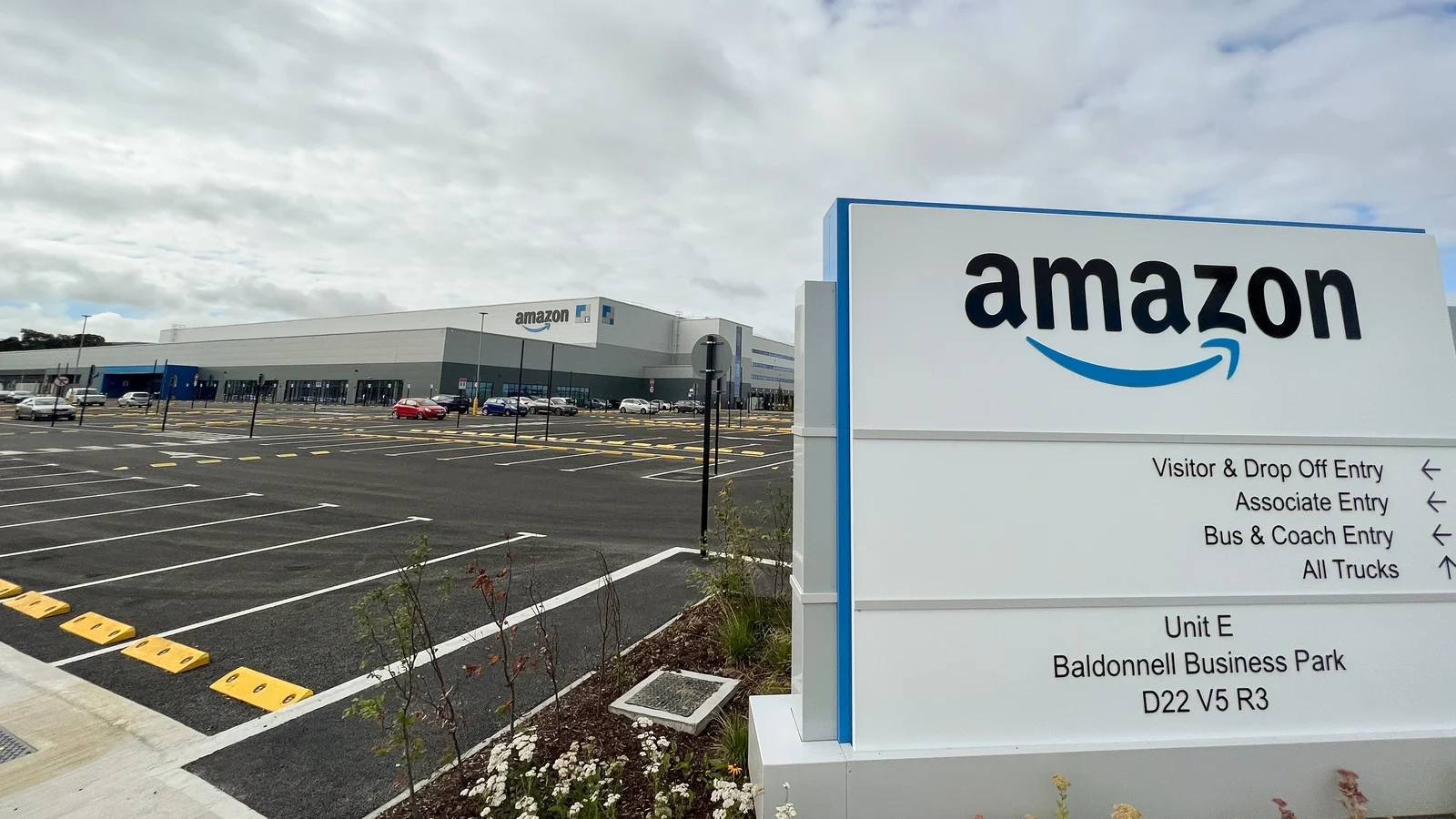
Word rippled through the corridors: Amazon, the Seattle-born leviathan whose Irish operations employ nearly 6,500 people, announced a wave of corporate cuts — part of a broader cull of 16,000 roles globally. In Ireland, government sources and local reporting suggest roughly 300 positions could be at risk. For a community built on international investment, this feels both familiar and unnervingly new.
Numbers that land like stones
Let’s lay out the arithmetic plainly:
- Amazon confirmed 16,000 corporate job cuts today — the latest chapter in a plan that could reach about 30,000 since last October.
- Amazon’s worldwide workforce sits at about 1.58 million, meaning these corporate cuts affect a small sliver of the global headcount but nearly 10% of its corporate staff.
- In Ireland, some 6,500 people work for Amazon; RTÉ and local sources estimate roughly 300 of those roles may be impacted.
- By way of contrast, Ireland’s development agencies reported healthy inbound investment recently — the IDA cited 323 investments in 2025 with potential to create 15,300 jobs, and Enterprise Ireland announced over 12,600 new roles in 2025.
Numbers tell a story, but they leave out the faces behind them. A human resources memo can be parsed by analysts; the people affected cannot be reduced to a spreadsheet.
Voices from the street and the office
“We built lives around meeting schedules and project cycles,” said “Maeve,” an Amazon staffer in Dublin who asked that her surname not be used. “You don’t expect your job to be the thing you rely on one week and then wake up to see a memo about strategic changes the next.”
Across town, at a small café near the Docklands, I met a former retail manager who now works in logistics technology. He sighed and pushed his tea around the cup. “This city has always been adaptable,” he told me. “But adaptability has a cost — bills, family commitments, mortgages — the human cost. Government support matters when a global contract shifts.”
A spokesperson for the Department of Enterprise in Dublin said the government had received a notification of proposed collective redundancies and underscored Ireland’s continued appeal to multinational firms. “Many companies are making staffing adjustments in response to global market pressures,” the spokesperson said. “Ireland remains competitive for foreign direct investment, as our recent IDA and Enterprise Ireland numbers show.”
Inside Amazon, leadership described the moves as painful but necessary. “We’re focused on simplifying structures and removing unnecessary layers so teams can move faster and own outcomes,” a company note read. “We recognize the impact on people and are committed to supporting those affected.”
Union, policy and community reactions
Trade union representatives warned that the cuts will ripple beyond those directly dismissed. “Every corporate job in a tech hub supports cafes, taxis, caretakers and dozens of services,” said a union organizer in Dublin. “When firms scale back, whole local ecosystems feel the shock.”
Local entrepreneurs, meanwhile, urged calm and a longer view. “Short-term pain, perhaps,” said an accelerator founder in Grand Canal Dock, “but Dublin’s ecosystem is resilient. People here create startups from layoffs as often as they mourn them.”
Why now? Pandemic over-hiring, AI and changing strategy
There’s an accounting of causes that has become familiar over the past two years: a hiring spree during the pandemic when online shopping surged; a subsequent recalibration as spending patterns normalized; and now, a new layer — the rapid ascent of artificial intelligence and automation.
“Companies during Covid expanded headcount to meet extraordinary demand,” explained an AI researcher at Trinity College Dublin. “Now they’re integrating automation into workflows — not only in warehouses with robotics, but in corporate teams where AI can handle repetitive tasks or speed up coding and analysis. That changes the calculus of how many people are needed for certain roles.”
Executives have been honest about this. Amazon’s leadership previously signalled that AI-driven efficiencies would change the mix of roles in corporate settings. Yet how those efficiencies are deployed — and where displaced workers can find new work — is a question that sits at the heart of public debate.
Beyond the headlines: what does this mean for Ireland and the world?
Look beyond the individual layoffs and you see larger patterns: globalization’s double edge, the fragility of jobs tied to multinational strategies, and the speed at which technology can reshape work. Ireland has thrived as a magnet for foreign direct investment, but dependence on a handful of large employers can be a vulnerability when global strategy shifts.
So what are the options? Policy responses range from immediate support to medium-term resilience-building:
- Rapid redeployment services and retraining tailored to digital skills
- Stronger local safety nets and wage supports during transitions
- Incentives for multinationals to keep headquarters functions and R&D onshore
- Investment in homegrown companies to diversify the employment base
“We can’t stop technological progress, but we can choose how societies share its benefits,” an economics professor I spoke with noted. “Policymakers need to be as agile as firms are becoming.”
What happens next?
Amazon is expected to publish quarterly results next week. Internally, leaders warned there could be more adjustments; externally, the company has already signaled the closure of its remaining Fresh groceries and Go stores, stepping back from certain physical retail bets.
For the people in Dublin — and the thousands around the globe affected by these corporate steps — the weeks ahead are likely to be a mix of uncertainty and determination. Will displaced employees find roles in other tech firms? Will the state accelerate training and relocation supports? Or will cuts push more people toward freelance and startup worlds, adding new lines to Ireland’s entrepreneurial story?
These questions aren’t merely academic. They shape where families live, what children learn, and how communities stitch together meaning and stability in a fast-moving economy.
Closing thoughts: a city, a company, a choice
As I walked back along the river, a busker played an old Irish tune beneath a sky rinsed clean. The melody felt like a small act of defiance — beauty pressed into everyday life. Dublin has ridden successive waves of global change — from famine to flight to the Celtic Tiger and the tech boom. Each era left scars and scaffolding. Each forced choices about who benefits and who bears the burden.
The Amazon cuts are more than corporate housekeeping. They are a prompt to ask how societies prepare citizens for rapid technological shifts, how governments anchor global capital to local wellbeing, and how workers can be supported to move from uncertainty to new possibility. What do we, as a global community, owe the people who turn the gears of a digital economy?
In a world that prizes speed, may we also prize care. Slán go fóill — goodbye for now — but not forever. The work ahead is collective, and the stories we tell about these moments will shape what comes next.