When the Rain Wouldn’t Let Go: Floods That Swept Through Sri Lanka, Indonesia and Beyond
The air over Sumatra and Sri Lanka still tastes like mud and diesel: heavy, metallic, and seeded with the sharp chlorine of disinfectant as neighbours try to salvage what they can. Helicopter rotors thud in the distance like anxious heartbeats. Children, soaked to the waist, pick through sodden toys while elders sift through mud-caked photographs and grocery tins. For many, the storm didn’t end when the rain stopped — it simply left a new, quieter kind of ruin.
In the past week, torrential rains driven by separate weather systems and a rare tropical cyclone have hammered large swaths of South and Southeast Asia. Officials say nearly 1,000 people have died across four countries — Indonesia, Sri Lanka, Thailand and Malaysia — with hundreds more wounded or unaccounted for as whole villages remain cut off by mudslides and collapsed roads.
On the Ground: Stories from the Flood Lines
Indonesia: Isolated villages, a president under pressure
In Sungai Nyalo, a village an hour or two from Padang in West Sumatra, the water has ebbed but it left everything grey. Once-bright houses are muted with a film of silt; banana trunks lean at odd angles, their leaves shredded. Trucks push slowly through waist-deep water. “Everything I planted this year is gone — the cassava, the rice seedlings,” says Rudi, a farmer whose hands are permanently stained with earth. “How do you replace a season of food?”
Indonesia has been hardest hit in raw numbers. Officials report at least 442 fatalities, with hundreds still missing as rescuers comb through mud-choked ravines and collapsed slopes. President Prabowo Subianto flew to North Sumatra and vowed to make “the immediate delivery of aid” his priority, deploying helicopters, aircraft and three warships with supplies — along with two hospital ships — to reach communities unreachable by road.
“There are several isolated villages that, God willing, we can reach,” Prabowo said as he toured inundated districts. Yet he faces growing calls to declare a national emergency and pleas from citizens for clearer leadership. For now, international assistance has not been publicly requested — a stance that contrasts with neighbouring Sri Lanka’s open appeal.
Sri Lanka: A country reaching for help
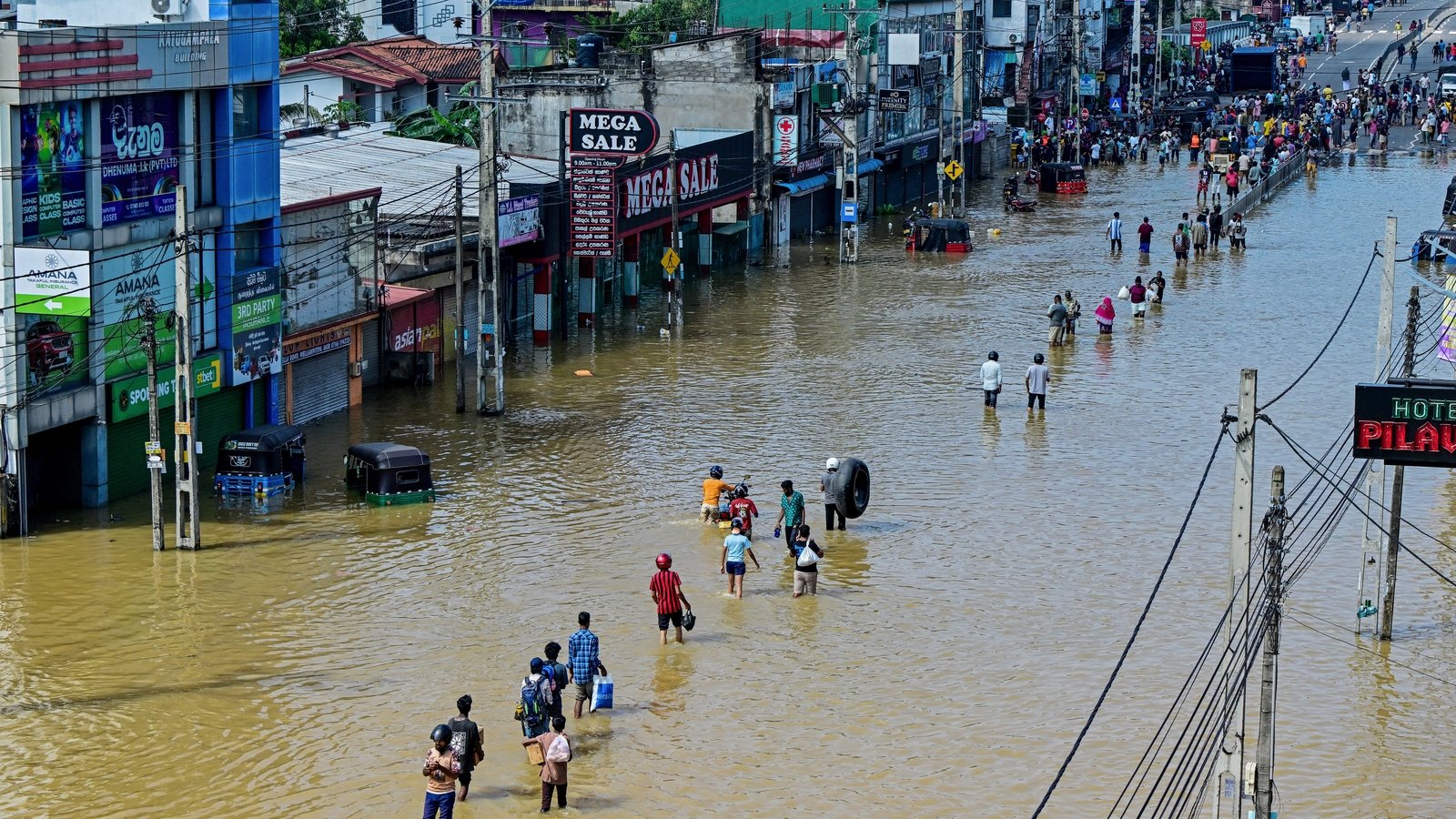
In Kaduwela and across the central highlands, the scene is both immediate and eerily familiar — a reminder of earlier catastrophes. Sri Lanka’s disaster management authorities report at least 334 dead, with many communities still inaccessible because of fallen trees and landslides triggered by Cyclone Ditwah. President Anura Kumara Dissanayake declared a state of emergency and, speaking to a nation wrapped in blankets and waiting for power to return, promised rebuilding.
“We are facing the largest and most challenging natural disaster in our history,” he told the country. “We will build a better nation than what existed before.” His words carried hope, but citizens on the ground speak of fear and fatigue.
“My house is completely flooded,” said Selvi, 46, sheltering in a Colombo suburb, her voice trembling. “I packed four bags—clothes, papers, a few things I could not leave. I don’t know where to go yet. We need shelter, clean water, something to cook.” Military helicopters have airlifted some stranded residents and delivered food, but one helicopter reportedly crashed north of Colombo, underscoring the perilous nature of rescue operations.
Thailand and Malaysia: Anger and heartache
Southern Thailand recorded at least 176 deaths in the latest deluge, making it one of the deadliest flood incidents in the country in a decade. Across the border in Malaysia’s Perlis state, two people lost their lives. Public anger in Thailand has focused on perceived delays and mismanagement: two local officials have been suspended as citizens demanded faster, more transparent relief.
“People are asking: why did it take so long to get help to our villages?” asked a local volunteer in Phuket. “Lives are not just numbers; they’re our mothers, our children.” The question hangs over much of the region — a nagging thread between grief and the politics of response.
How We Got Here: Weather, Vulnerability and a Warmer World
The immediate cause is familiar to anyone who tracks weather in this part of the world: monsoon season, intensified by a rare tropical system that dumped rain over wide areas of Sumatra, Sri Lanka and the Malay Peninsula. But climate scientists warn that it’s not just timing — it’s intensity. A warmer atmosphere holds more moisture. For every degree Celsius of warming, the air can store roughly 7% more water vapor, making extreme rainfall events more likely and more severe.
“We’re seeing the fingerprints of climate change in the increased frequency and severity of these storms,” said Dr. Aisha Khan, a climate scientist based in Singapore. “Add to that decades of deforestation, unplanned urban expansion, and fragile slopes destabilized by human activity, and you create conditions where a single heavy rainfall can become a catastrophe.”
Long-term trends matter. The floods follow a string of extreme events across the globe — from European heatwaves to North American floods to island nations losing beaches and freshwater sources — and point to a sobering truth: adaptation and preparedness will be as crucial as mitigation.
Relief Efforts and the Limits of Rescue
Governments and aid groups have mobilised: ships loaded with supplies, helicopters lifting families from rooftops, and hospital vessels anchoring offshore. In Indonesia, authorities have used naval assets to reach villages inaccessible by road. Sri Lanka has called for international assistance; Indonesia has so far kept a more inward-facing approach.
On the practical side, relief prioritises food, clean water, shelter, and medical care. Volunteers and NGOs are coordinating with militaries to deliver:
- Emergency rations and drinking water purification tablets
- Temporary tarpaulin shelters and blankets
- Mobile medical units and psychological support teams
Yet logistics remain a nightmare. Roads are buried under mud, communication lines are down in pockets, and many communities are reachable only by air or sea. The challenge is not just to save lives in the short term, but to keep them safe for months ahead as diseases, hunger, and economic collapse can follow in the wake of the floodwaters.
Looking Forward: Rebuilding, Responsibility and Resilience
There is grief, of course—families counting the missing, markets shuttered, schools closed. But there is also an uneasy resolve. “We will be back,” said Rudi, the farmer in Sungai Nyalo, rolling his mud-stained sleeves up to check a broken irrigation pipe. “It will take time. The land will take time. But we will plant again.”
The broader questions are harder: How will these nations balance immediate rescue with long-term planning? How will leaders incorporate climate science into infrastructure planning? And what global responsibilities do wealthier nations have to support adaptation in vulnerable regions?
As you read from afar, consider this: your mornings may be dry, your rooftops intact, but the rains that fell here are part of a shifting global weather system with consequences that ripple across economies and supply chains. Will the lesson be a call to action — smarter land-use policy, investments in resilient infrastructure, early-warning systems — or will it be filed, like too many tragedies, under ‘unpreventable’?
The people in the flood zones are not waiting for philosophical answers. They want clean water, safe shelter, and the kind of steady, accountable help that rebuilds not just houses but livelihoods. If the images of mud and broken lives move you, consider supporting reputable relief organisations, staying informed, and asking elected leaders what they are doing to bolster resilience at home and abroad.
The storm has passed for now. The real work — the slow, grinding labor of repair and reform — is just beginning. And as helicopters turn for another run and neighbour helps neighbour pull a sodden mattress from a ruined home, you can feel it: a fragile, human determination to keep going.