Gunfire at a Suburban Synagogue: Smoke, Sirens and a Community on Edge
Just after dusk on a quiet stretch of Orchard Lake Road, the ordinary suburban hum of West Bloomfield—coffee shops closing, kids finishing homework, a woman walking her dog—was ripped apart by the staccato crack of gunfire and the keening chorus of sirens.
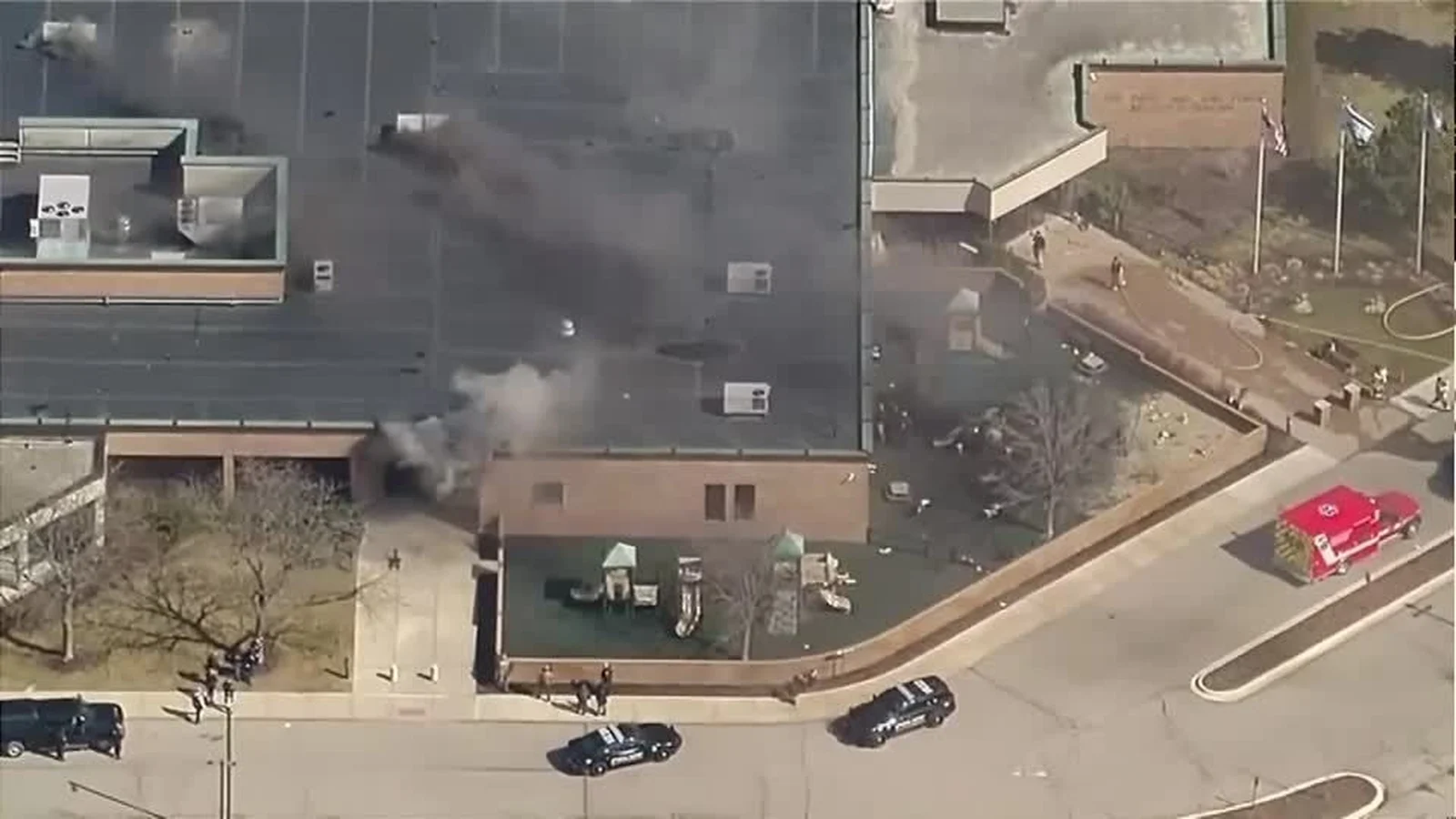
By the time neighbors poured onto their porches, a plume of smoke had already threaded the sky above Temple Israel, a modest stone-and-glass building that has sheltered worship, weddings and Shabbat dinners for decades. Flashing lights painted the snow-dusted lawns red and blue. Officers fanned out. The scene felt, for many, unbearably close to home.
What Happened
Oakland County Sheriff Michael Bouchard told reporters that at least one person approached the synagogue and was met by on-site security, who exchanged gunfire with the assailant.
“At least one individual came to the temple,” he said. “Security saw him, engaged him in gunfire.”
The sheriff added that no one inside the building had been confirmed injured at the time he spoke, though the shooter “potentially” sustained harm. Law enforcement did not yet have the person in custody and were investigating whether more than one assailant was involved.
CNN, citing a law enforcement source, reported the suspect was dead; federal authorities, including the FBI’s Detroit Field Office, were among the agencies assisting on the scene. Local outlets also showed images of a vehicle apparently driven into the synagogue and a small fire on the building’s exterior.
The Jewish Federation of Detroit issued an immediate advisory: agencies were in precautionary lockdown and community members were urged to stay away from the area.
Voices on the Street
“It felt like a movie,” said Miriam Katz, a retiree who lives two blocks from Temple Israel and arrived within minutes. “I ran out in my slippers—your heart doesn’t know what to do. You want to help but you are terrified. I can still smell the smoke.”
A volunteer who asked not to be named described the scene inside the temple before the alarm. “We were closing up after a meeting. Some people had already left. Those of us who stayed were told to shelter in rooms, lock doors, and stay quiet. The security guard moved fast—he saved lives tonight, I truly believe that.”
Gov. Gretchen Whitmer, speaking from Lansing, said, “This is heartbreaking. Michigan’s Jewish community should be able to live and practice their faith in peace. Anti-Semitism and violence have no place in Michigan.” Her office pledged state assistance and support for local law enforcement.
“We’d been preparing,” Sheriff Bouchard later said, his voice low with both fatigue and resolve. “We’ve been talking for two weeks about the potential, sadly, of this happening. So there was no lack of preparation. All Jewish facilities in the area are going to have a lot of extra presence around it until we figure this out.”
Neighbors, Rituals, and the Geography of Safety
West Bloomfield sits on the northwest rim of Detroit’s metropolitan sprawl—a place of strip malls and synagogues, of bagel shops whose owners know the names of rabbinical leaders, where the Jewish community is woven into local commerce and schools. On Sundays, the farmers’ market draws a mixed crowd; on Fridays, the synagogue’s parking lot can be full by evening.
“This place is part of our fabric,” said Daniel Rosen, who runs a kosher deli a mile from the temple. “People drop by after services. Kids here grow up with bar mitzvahs, Hebrew school, mitzvah projects. You don’t expect to see smoke from the synagogue at night.”
There was a visible presence from community rituals even after the shooting—vehicles with mezuzot on their doorposts, a folded yarmulke placed on a mailbox as an improvised symbol of solidarity. Volunteers at a nearby community center began organizing meals for first responders and for families displaced by the lockdowns.
Context: A Time of Heightened Fear
This incident arrives amid an already-tense national backdrop. Authorities say they had been on heightened alert since the U.S.-Israeli conflict with Iran intensified nearly two weeks ago—an escalation that has been felt far beyond diplomatic channels.
Experts have long warned that foreign conflicts can produce reverberations at home, inflaming domestic actors and amplifying violent rhetoric online. “We’re seeing a dangerous convergence,” said Dr. Leila Mahmoudi, a scholar of extremism and digital disinformation. “International crises create openings for lone attackers and small groups to act on impulses that are nourished by online ecosystems—hate, conspiracy, calls to violence.”
Data from civil rights organizations and federal reports consistently show that Jewish communities in the U.S. have been disproportionately targeted in religiously motivated hate crimes. While figures fluctuate year to year, watchdog groups say spikes often track global flashpoints in the Middle East; synagogues, schools and community centers become both symbolic and literal targets.
Who Responded?
- Local law enforcement: Oakland County Sheriff’s Office and West Bloomfield police
- Michigan State Police and the Governor’s office coordinating state resources
- Federal agencies: FBI Detroit Field Office assisting the scene
- Community organizations: Jewish Federation of Detroit placing agencies on lockdown
What This Means for Communities and Policing
There are immediate, practical ripples—more armed security at houses of worship, cancelled events, and a renewed urgency among Jewish institutions to reassess safety plans. “We can’t live in a fortress,” Rabbi Aaron Lichtman said in a later interview. “But we also can’t pretend daffodils and doors will stop bullets. We have to balance welcome with vigilance.”
Security experts advocate layered protection: trained personnel, surveillance, community watch programs, and close coordination with local and federal law enforcement. “The ideal is a layered, community-centered approach,” said Elena Morales, a security consultant who has advised faith communities across the country. “One guard can matter. But the architecture of safety needs community awareness, hardening of access points, and trust with police.”
A Wider Conversation
What do we owe each other in moments like this? How do communities hold grief and fear without retreating into isolation? How do democracies protect freedom of worship while confronting the very real risks of targeted violence?
Those questions are not theoretical for the families who gather at Temple Israel on Friday nights. They shaped telephone calls to friends, plans to drive children to services for months to come, decisions to double-check safety plans at all neighborhood institutions—mosques, churches, temples, and schools.
“We’re not looking for pity,” said Miriam Katz, the neighbor. “Just peace. The right to light candles and sing without thinking about whether someone’s coming to hurt us.”
What to Watch Next
Investigators are piecing together motive, the suspect’s background, and whether this was an isolated act or part of something larger. Federal authorities will lead parts of the probe given the possible civil rights implications and the suspected vehicle-ramming element.
Officials have urged restraint in the rush to narrate the event. Rumors breed fear. Verified information, they say, must come from law enforcement channels and the Jewish Federation, which is serving as a community hub for real-time updates and counseling resources.
For now, the neighborhood remains split between shock and defiance. Gardens that once played host to Shabbat dinners are now staging areas for grief and mutual aid. People leave notes of thanks for first responders on the synagogue gate. Strangers bring coffee to volunteers. A young man lays a small bouquet at the curb with a Post-it: “We stand with you.”
Closing — An Invitation to Reflect
This is a story of a community that nearly became a scene from a national tragedy—and of people who, in the minutes and hours that followed, chose to show up for one another. It asks us to consider how we guard both the body and the soul of communal life.
What would you do if your place of worship were threatened? How can neighbors, officials, and technology companies better collaborate to reduce the chances of these flashpoints becoming tragedies? When a global conflict reaches our local streets, what lines do we draw—and how do we hold them?
Tonight, West Bloomfield sleeps a little more guardedly. But in the small of the night, beneath the smoke and the headlines, a community remembers its rituals, its neighbors, and the fragile, fierce work of staying open in a world that often asks us to close.