They lit the sky: Artemis II’s bold shove toward the Moon
When the Orion capsule’s engine roared to life, it felt less like a technical procedure and more like a promise. The six-minute burn — a controlled, thunderous shove — nudged four astronauts out of Earth orbit and sent them on a three-day arc toward Earth’s companion. For anyone who watched the telemetry and listened to Mission Control’s clipped confirmations, the moment was electric: “Looks like a good burn, we’re confirming.”
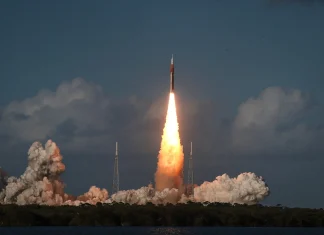
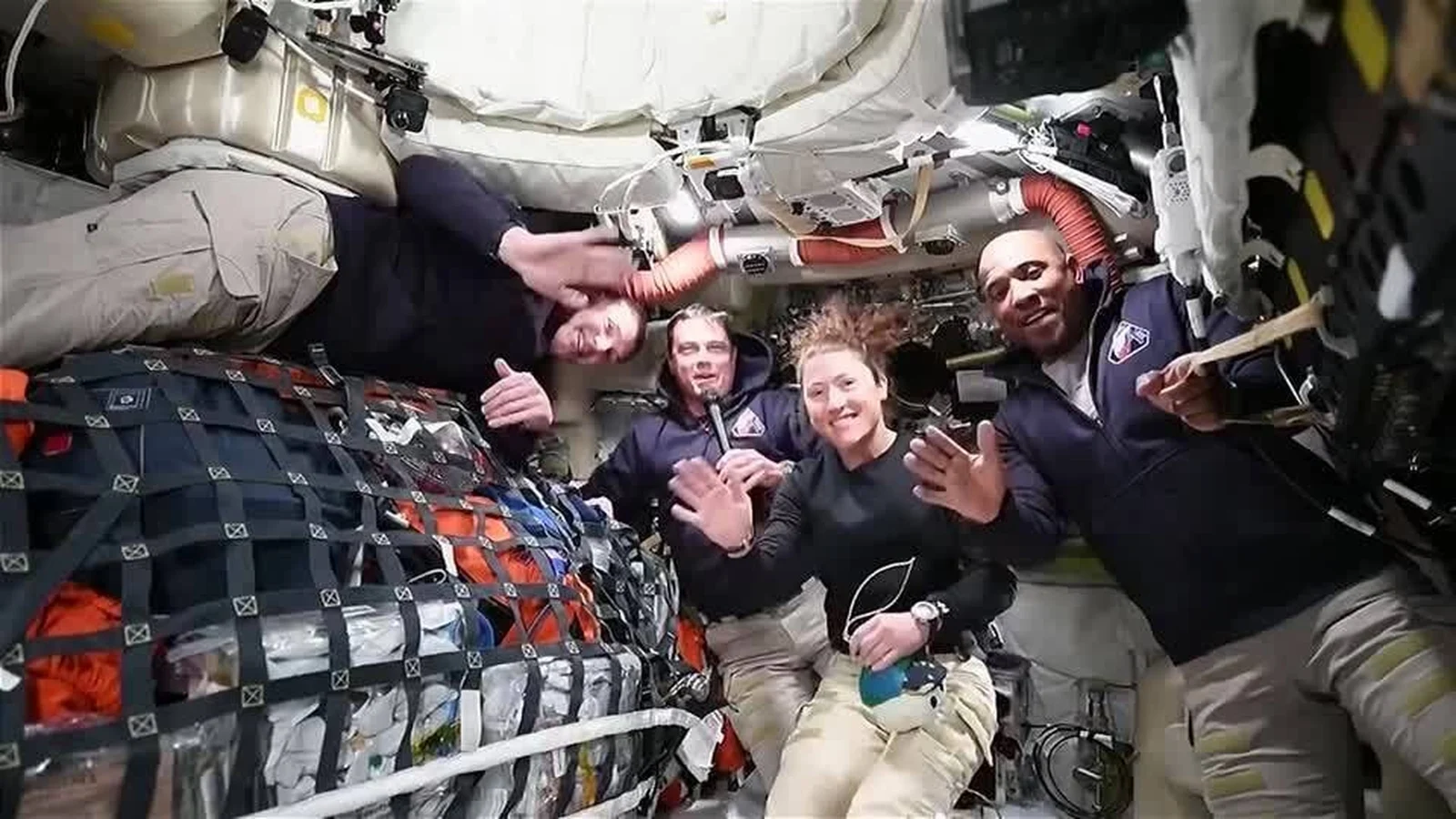
Onboard, astronaut Jeremy Hansen grinned into a camera and said, “The crew is feeling pretty good up here on our way to the Moon.” You could hear the pride in his voice. Outside, along Florida’s Atlantic coast, people paused their conversations and turned toward a sky still tinged with dawn orange where the Space Launch System had cleared the horizon the day before.
A return after a long silence
It’s worth sitting with the history here. Apollo 17, in 1972, was the last time humans looped beyond low-Earth orbit. Now, half a century later, a new generation is carrying a different flag into the same dark. Artemis II is not a landing mission; it is a rehearsal, a pathfinder. But its symbolism is huge: the first crewed lunar flyby in more than fifty years.
“We’re not just reliving old glories,” said Dr. Amaya Reyes, a space policy analyst. “We’re preparing the logistics for sustained presence — habitats, transport, industry. The burn today was the start of that choreography.”
Speed, suits and small human moments
The Orion engine gave the capsule a shove with the kind of force that would launch a parked car to highway speed in under three seconds. That surge set the craft on a “free-return” trajectory — a clever gravitational path that will use the Moon’s pull to slingshot the crew back towards Earth without needing further propulsion. It’s a safety net built with orbital mechanics rather than hardware alone.
On the human side, the crew has been busy with mundane and meaningful tasks: systems checks, troubleshooting a communications hiccup and, yes, a temperamental toilet. They also took time for Earthly comforts. “We kicked off our second day with ‘Green Light’ by John Legend and Andre 3000,” a mission update said — a tongue-in-cheek nod to the literal green light they’d soon receive to start the engine.
Exercise matters up there. Each astronaut will carve out 30 minutes a day on a flywheel exercise device designed to mimic resistance so muscles and bones don’t melt away in microgravity. And the suits they wear are more than ceremonial; they are survival systems. For up to six days they can keep oxygen flowing and pressure regulated if the cabin ever loses integrity — a sobering buffer for a small but not impossible risk.
Meet the crew
Four voices, four backgrounds, one tight little capsule: Reid Wiseman, Victor Glover, Christina Koch and Jeremy Hansen. Hansen, a Canadian, brings an international thread to what is broadly an American-led mission. Their presence underscores Artemis’s new character: a mixed team pioneering a platform intended to host partners from around the world.
“Being the first non-American on this leg feels like carrying both a personal dream and a national one,” Hansen said in a post-burn interview. “We’re doing this together.”
Quick mission facts
- Mission duration: 10 days
- Trajectory: Free-return, leveraging lunar gravity
- Engine burn that put them on the path: just under six minutes
- Projected farthest distance: more than 400,000 km from Earth — potentially a new record for human distance from our planet
SLS, politics and the price of reaching back out
The Space Launch System, the orange-and-white giant that peeled off Earth, is the first rocket purpose-built to ferry humans beyond low-Earth orbit since the Saturn V. It’s also a political and fiscal lightning rod. Years of delays, technical setbacks and escalating costs have shadowed SLS’s development. “It’s been an expensive, complicated piece of engineering,” said Dr. Victor Chen, an aerospace economist. “But the question policymakers keep asking is: what does the public get in return?”
That question has multiple answers: technological spinoffs, renewed STEM interest among young people, strategic positioning in a new space environment and scientific returns. Still, critics point to the price tag and say investments might be better spent on pressing problems at home.
There’s also an unmistakable geopolitical angle. China has outlined ambitions to land humans on the Moon by 2030, and other nations are expanding lunar and deep-space plans. “Competition has a way of accelerating innovation,” remarked a NASA spokesperson. “But the Artemis program is also about partnerships.”
Onlookers, local color and the human ripple
At Cocoa Beach and the Merritt Island National Wildlife Refuge, locals tracked the mission with a mix of awe and routine. Retired teacher Rosa Alvarez brought a thermos of coffee and a foldable chair. “I watched Apollo on a black-and-white television,” she said. “To see it again — in color, with people from different backgrounds — it stirs something in you.”
Children drew rockets in the sand. A surf instructor joked that the rocket’s plume made for “the longest, loudest bonfire of my life,” and an elderly veteran offered a quiet nod: “It’s not just science. It’s poetry.”
Why it matters — and what to watch next
Artemis II is a hinge point. The mission’s success opens the door to Artemis III and the first planned human landing later this decade, with a stated 2028 target. But timelines are slippery; hardware and partnerships must align. The program leans heavily on private-sector partners for landers and logistics, a model that stretches public funds and private ingenuity together in new ways.
There are wider questions, too. Whose footprints will be prioritized on this next phase of exploration? How will lunar activities be governed and shared? Will the economic benefits ripple equitably across societies, or be captured by a narrow set of contractors and nations?
“Every deep-space mission is a mirror,” Dr. Reyes mused. “It shows us our ambitions, our anxieties, our collaborations. We can choose to look away, or we can use it to set a course that reflects our better values.”
Looking up—and inward
Tonight, as the capsule arcs toward the Moon and the crew settles into their eight- to nine-hour sleep cycles, people around the globe will be thinking different things. Some will be analyzing flight data. Others will find themselves transported back to a childhood nighttime watching a streak of light. Many will argue about budgets and priorities. All of them, ultimately, will be part of the ripple this mission creates.
So I’ll ask you, quietly: when you look up at the Moon tonight, what do you hope we’ll bring back with us? Knowledge? Resources? A better way of working together? The answer you give says a lot about the future you want humanity to build off-world — and here on Earth.