Australia draws a line on childhood and screens — and the world is watching
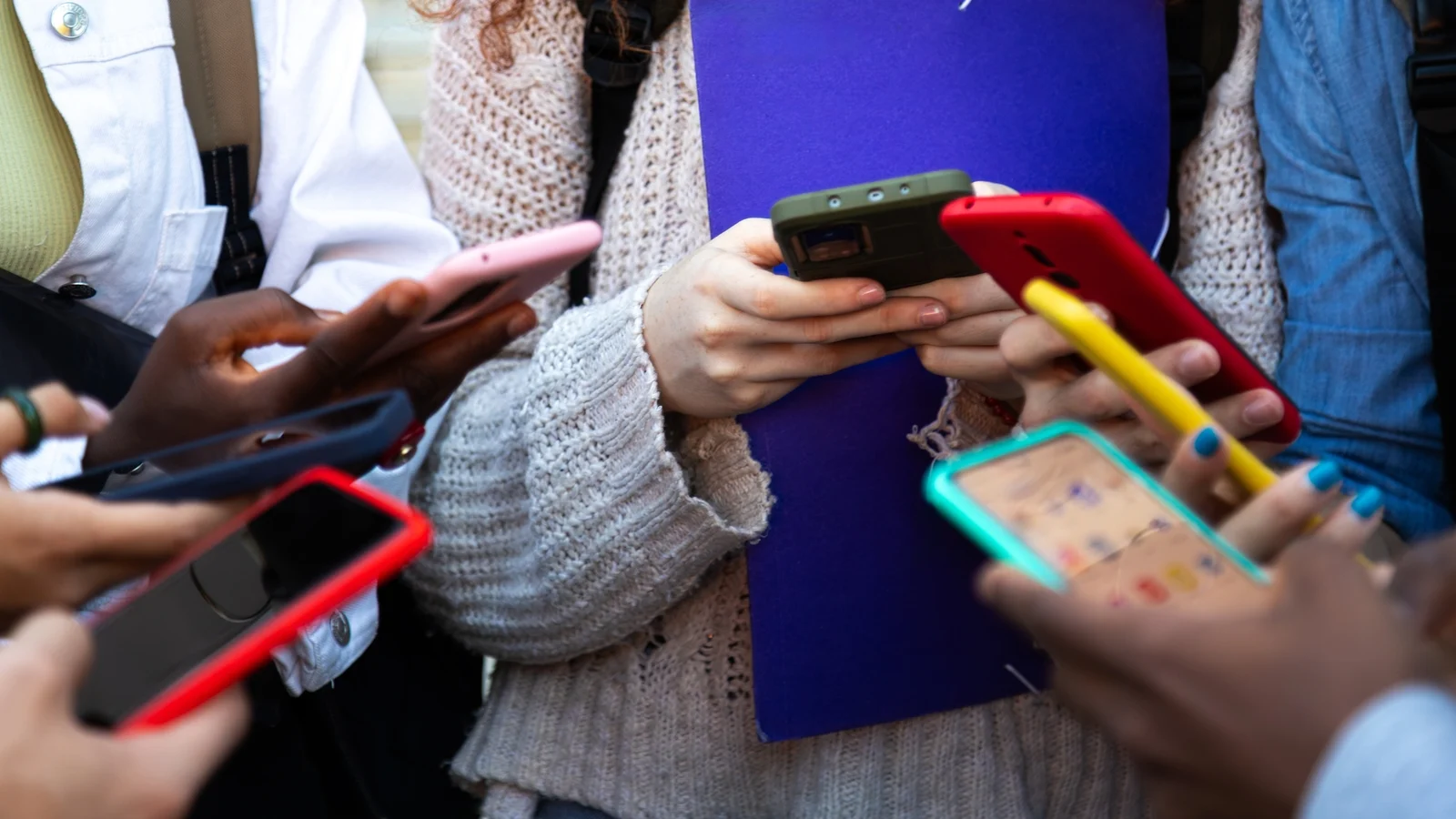
At midnight in Canberra, Australia flicked a switch that will change millions of small routines: the scrolls in school corridors, the early-morning TikTok dances, the private group chats parents watch from the other room. New legislation now makes Australia the first country to require social platforms to ban anyone under 16 from many mainstream apps — or face fines large enough to make Big Tech sit up and take notice.
From 00:00 local time (1pm Irish time), ten of the largest platforms were told to block accounts belonging to Australians under the age of 16 or risk penalties of up to A$49.5 million (roughly €28 million). The move is straightforward in its wording but complicated in its living effects. It asks platforms to police age the way playground teachers used to — with a heavy, digital hand.
A simple rule, messy reality
On paper, the rule looks tidy: under-16s off the major social apps. In practice, it confronts a thicket of questions. How do you know someone’s age on the internet? What about privacy? What happens to teenagers who have already built social lives and creative followings online? And who decides which services are “major” enough to be covered — and which fly under the radar?
To make the law work, platforms say they will use a mix of techniques: asking for uploaded ID, querying linked payment details, analyzing user behavior to estimate age, or running selfie-based age estimation tools. Some will rely on “age inference,” an algorithmic nudge that guesses a person’s years from how they act online. Others will push users to prove their birthday with documents.
“We’re not in favour of children being left alone on platforms designed for adults,” said a child psychologist in Melbourne. “But asking kids to hand over identity documents to access their friends is not a neat solution either. There are trade-offs, and families will feel them.”
Voices from the neighbourhood
In a small cafe near Bondi Beach, Maria, a mother of two who works nights, folded her hands around a warm cup and explained why she welcomed the change. “My 12-year-old learns so much from content — but they also find algorithms that push the worst bits: body shame, bad advice, quick dopamine bursts. If this law helps me breathe a little as a parent, I’m grateful,” she said.
Across town, Jamal, a 17-year-old skateboarder who posts trick videos to build his profile, felt differently. “I made a small following and it’s how I get gigs now. I get that kids need protection, but rules that blanket everyone don’t fix the real problem. They just move it.”
At a high school in Adelaide, teachers described a complicated classroom reality: students who are now more anxious, yet more savvy about online privacy tricks. “We’ve got kids who are masters at getting past rules — using VPNs, fake birthdays, sibling accounts,” said an educator. “You can erect a fence, but kids find the gaps.”
Big Tech pushes back — and adapts
Technology companies did not accept the new rule without a fight. Several argued the law violates free expression and that forced age checks could be abused or leak sensitive data. Some platforms will comply by trying to estimate ages rather than requiring documents. One high-profile executive called the policy a dangerous precedent for internet control, warning of unintended consequences.
Platforms have also argued economically: while advertising to children may not be lucrative now, under-16 users are the pipeline of future audiences. Companies fear globalization of rules like Australia’s — once a major market sets a regulatory standard, others often follow.
Numbers that matter
The Australian government notes that social media use among kids is high: 86% of Australians aged 8 to 15 used social media before the ban took effect. Globally, researchers have flagged worrying trends — rising rates of anxiety and disordered sleep among teens, and increasing scrutiny over algorithms that favour engagement over wellbeing. At the same time, social platforms are showing signs of structural stagnation: growth has plateaued in several markets, and time-on-platform metrics have fallen in recent years.
Those figures are part of the calculus governments now face: protect a generation and risk disrupting social patterns — or leave things to a market that has repeatedly proved reluctant to self-regulate.
How the law will be enforced — and evaded
Practical enforcement will look like a patchwork. Platforms will decide how to detect age. Some will ask for identity documents, others will infer. Critics warn that any system that centralizes sensitive youth data could create new vulnerabilities.
- Age inference: algorithms make probabilistic guesses based on behavior and content interaction.
- Age estimation: photo-based tools try to determine age from faces — an approach fraught with bias.
- Document checks: uploading passports or driver’s licences raises privacy concerns and inequity issues for younger users without official ID.
“Every method has a cost,” said a privacy advocate in Brisbane. “If we demand IDs, we penalize kids who don’t have them and create databases that hackers would love. If we rely on algorithms, we bake in bias.”
Is this the start of a global wave?
Australia’s move has been framed by some analysts as a bellwether. Officials from Denmark to Malaysia have signalled interest in stricter protections for minors online, and some U.S. states are reconsidering trust-and-safety features that once protected young users.
“Countries are watching to see what happens if a major democracy forces platforms to choose: comply or pay big fines,” said an internet policy researcher. “If the system works — and stays secure — other governments will take notes.”
Wider questions, larger currents
Beyond the technical mechanics lies a human question: what kind of childhood do we want to protect? This is not merely a debate about apps; it is a collision of parenting, commerce, technology, and civic values. Some see the law as overdue — a hard boundary in an age that blurred boundaries. Others see it as an blunt instrument that could push kids into shadowier corners of the web.
Ask yourself: would you trade a bit of constant connectivity for a quieter adolescence? And who should be trusted to make that decision — parents, platforms, lawmakers, or kids themselves?
What comes next
Legal challenges are already brewing. A High Court challenge overseen by a libertarian politician remains pending, and several platforms are exploring technical and legal responses. Meanwhile, families and schools will adapt, making choices that combine workaround savvy, technological literacy, and new rules at home.
One thing is clear: this moment is not just Australian. It is a conversation the whole world is having about the cost of early exposure to attention-hungry systems — and who pays for the fix. Whether this policy becomes a model, a cautionary tale, or a starting point for more nuanced regulation will depend on how it is applied in real lives — in kitchens, bedrooms, and classrooms across the planet.
We will be watching. Will the fence keep out what we fear, or simply reroute a generation? The answer will shape the next decade of growing up online.