Inside a Mountain Shelter: Life Between Bombs and Memory
On a damp morning in Aintoura, up in the hills that cradle Beirut, a former school wears a new name: refuge. The bell tower still leans into the sky like a question, but there is no morning assembly here. Instead, people move through its corridors with duffel bags and the slow gravity of the long-displaced—children trailing behind, elders sharing thermoses of coffee, and the constant, quiet scrolling of phones showing villages that no longer exist.
“We opened this place in 2006,” says Omar Toni Azar, standing in a hallway that used to smell of chalk dust and chalkboards. “It was for another war. It wasn’t built to be home forever, but what else do you do?” He laughs without humor; the shelter is run by him and his parents, a labor of charity and necessity. “There are about 160 people now. Sometimes rooms hold three, four families. We have rooms with six, seven families—sometimes thirty people crammed into one place.”
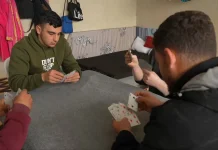
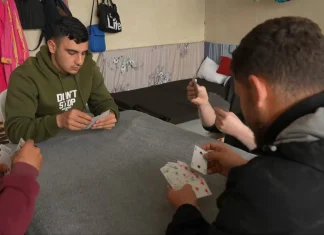
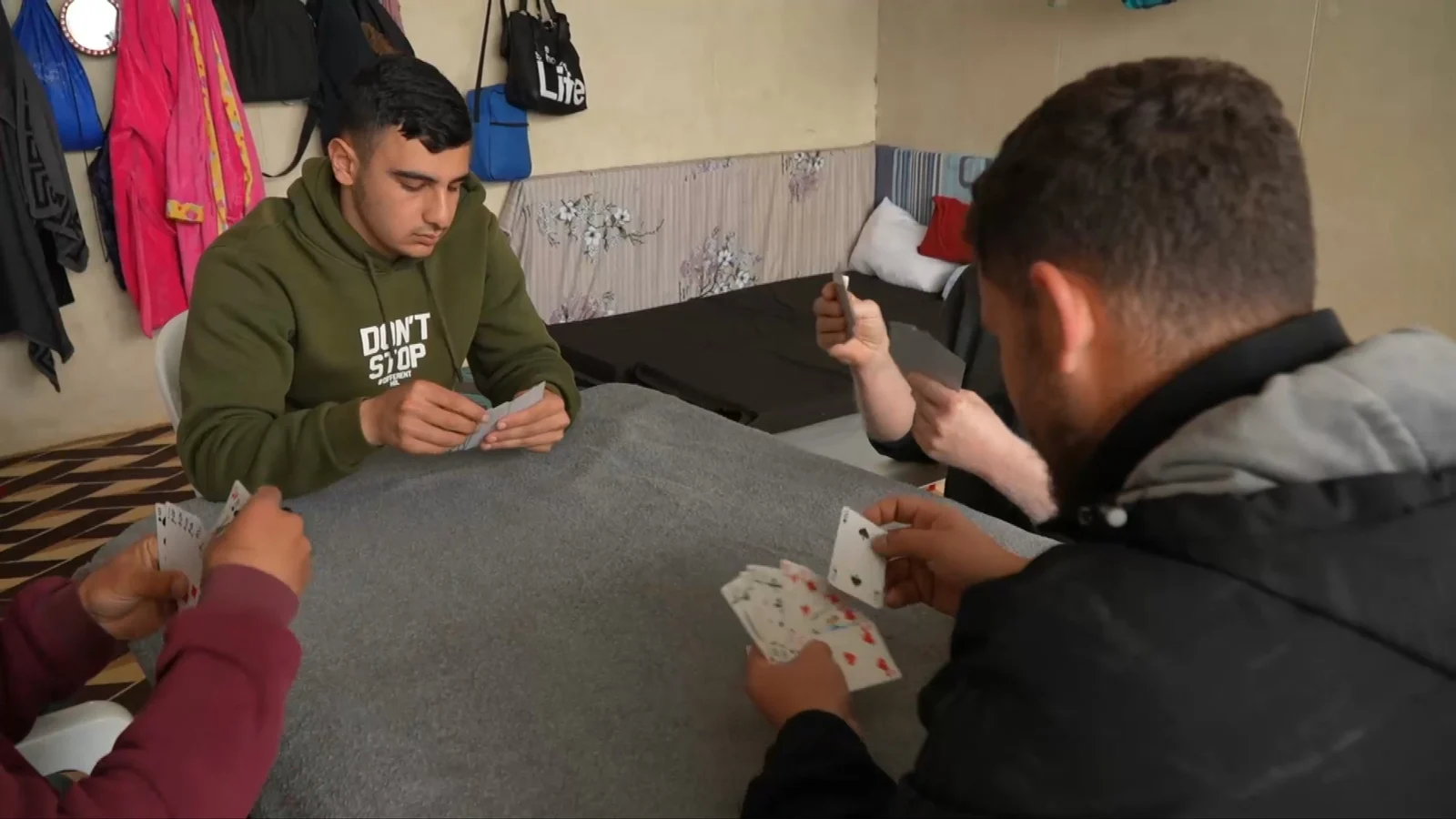
There is a rhythm to the shelter that keeps people human. In one small room a group of men play cards until dusk, the clink of plastic chips like an anchor. Elsewhere, women prepare rice over portable hobs, a scent of cumin weaving through the corridors. Children find hiding places under curtained bunks and play games that are always, somehow, too loud for the silence that follows.
Faces on Phone Screens
Nearly every face here is glued to a screen at some point. Those images—piled in galleries, messages, shared videos—are the proof of loss: homes flattened, roads turned into plumes of dust, friends and neighbors who are no longer on contact lists. “This is my village,” says Abdallah Nazzal, scrolling through a phone with trembling fingers. “They strike day and night. My friends died—about twenty.” He says the number plainly, the cadence of someone who has counted and found that it will never add back up.
It is hard to overstate what those images do to people’s sense of return. Home becomes a file folder on a device. For many, that folder is now a catalogue of evidence and mourning, not a map of a future.
Numbers that Refuse to Be Abstract
Numbers can sound dry in a newsroom. In a shelter they are weight. Israeli authorities have ordered the evacuation of roughly a fifth of Lebanon’s territory in recent weeks, displacing more than 1.2 million people—nearly one in five of Lebanon’s roughly 5.5 million population. The evacuation zone, authorities say, reaches to the Zahrani River, about 40km north of the Israeli border, while plans to maintain a “security zone” as far north as the Litani River would push some 30km into Lebanese territory.
“If implemented, that’s not merely a buffer—it’s effectively an open-ended presence inside sovereign Lebanon,” says Professor Lina Mansour, a Beirut-based political analyst. “We’re talking about the social and political ramifications of prolonged displacement, which will deepen sectarian fissures and sustain economic collapse.”
Lebanon’s social fabric was already frayed before these latest orders. Years of economic collapse, a banking crisis that began in 2019, and the strains of hosting large numbers of refugees from Syria have left infrastructure and public services brittle. Now, as more than a million people are on the move inside a country that can barely shoulder the demand for shelter, water, electricity and medical care, the humanitarian picture grows urgent.
What a Single Day Can Do
Hope arrived and was snatched away in a single sunrise. In the early hours of a recent Wednesday, reports of a US-brokered pause in fighting between Israel and Iran—and an expectation that it might smooth the way for a wider ceasefire—sent a hush of joy through the shelter. “We woke up to news of a deal. People were packing,” says Tala Hijazi, who has been living in Aintoura since 2023 and has fled twice before. “Some people went home. We thought it was over.”
Then the strikes came. That day became, by accounts from local authorities and international monitors, the war’s bloodiest in Lebanon. More than 300 people were killed as Israel launched over 100 strikes in roughly ten minutes—across the south, and reaching, for the first time in this wave of fighting, into central Beirut and coastal residential neighborhoods.
“It was a horrible day because we were happy and then suddenly sad,” Tala says. “The energy was up and then down. We just want to go back. We hope to go back. We don’t know when.”
The Long View: Cycles of Return and Flight
This shelter in Aintoura first opened during the 2006 Israel–Hezbollah war. It closed, briefly, and reopened when rockets began to fall again. For many here, displacement is less a moment than a pattern—fugue states repeating across decades.
“People tell me they feel like they’ve been fleeing their whole lives,” Omar says. “It’s not just this war. It’s the last one, and the last one, and the next one.”
The cycles have consequences beyond immediate survival. Children miss school. Small businesses never reopen. Mental health needs balloon—a fact that local NGOs warn about, even as funding contracts in the face of global crises. “We’re seeing generational trauma,” says Maya Haddad, who runs a volunteer outreach group that delivers warm meals and counseling sessions in shelters. “Kids are learning to normalize running. Parents are learning to count losses. That changes a society.”
When Borders Become Barriers
Beyond the human cost, the proposed extension of Israeli military control toward the Litani River raises thorny legal and political questions. International law experts say prolonged military presence or claims of indefinite control over a strip of another country’s territory risk being perceived—and resisted—as occupation. That fuels a wider geopolitical tinderbox in a region already brittle with alliances and rivalries.
“These are not just local disputes; they reverberate across regional dynamics,” Professor Mansour says. “What happens here affects refugee flows to Europe, humanitarian aid corridors, and the policies of global powers that watch this theater with vested interests.”
What We Lose When We Look Away
Walking the shelter feels like walking through a paused film. People are frozen in transitional frames, neither allowed to move forward nor able to look behind without flinching. The old school—chalk-scratched walls, classrooms turned into cubicles—keeps humbling reminders of what was ordinary before extraordinary things happened again and again.
“Sometimes I think of the olive trees outside my village,” Abdallah says, voice softer than the clatter of dishes in the communal kitchen. “I miss the smell of the soil. I miss a morning that wasn’t full of sirens.”
What should we, reading this from across oceans and time zones, do with that yearning? It is easy to reduce conflicts to geopolitics and casualty tallies. But here, in a converted classroom where mattresses lie in rows and children practice letters on scrap paper, the statistics are names and faces and whispered prayers.
Will the international community step in to protect safe corridors and support shelter networks? Will diplomatic talks lead to a durable ceasefire that allows the displaced to return? Or will temporary shelters become generational addresses?
There are no tidy endings yet. For now, people in Aintoura wait and move like watchful birds, ready to take flight or return, depending on the weather of politics and the unpredictability of war. They pass time with cards, with cigarettes, with shared coffee—small rituals stitched to the larger fabric of loss.
As you close this page, ask yourself: when a home is reduced to a photograph on a phone, what counts as evidence—and what counts as mercy? What would you take in your hands if you had to leave everything behind?