When Barred Doors Opened: Prisoners, Potash and the Price of Diplomacy in Belarus
There are moments when geopolitics reads like a midnight parable: a crowded cell block unlocks, a Nobel laureate steps into sunlight, and far away a boardroom quietly rearranges the levers of global trade. Last week in Minsk, those two worlds—moral witness and mercantile muscle—met in a compact, combustible bargain that has left Belarusians, diplomats and farmers around the world asking what was traded, and at what cost.
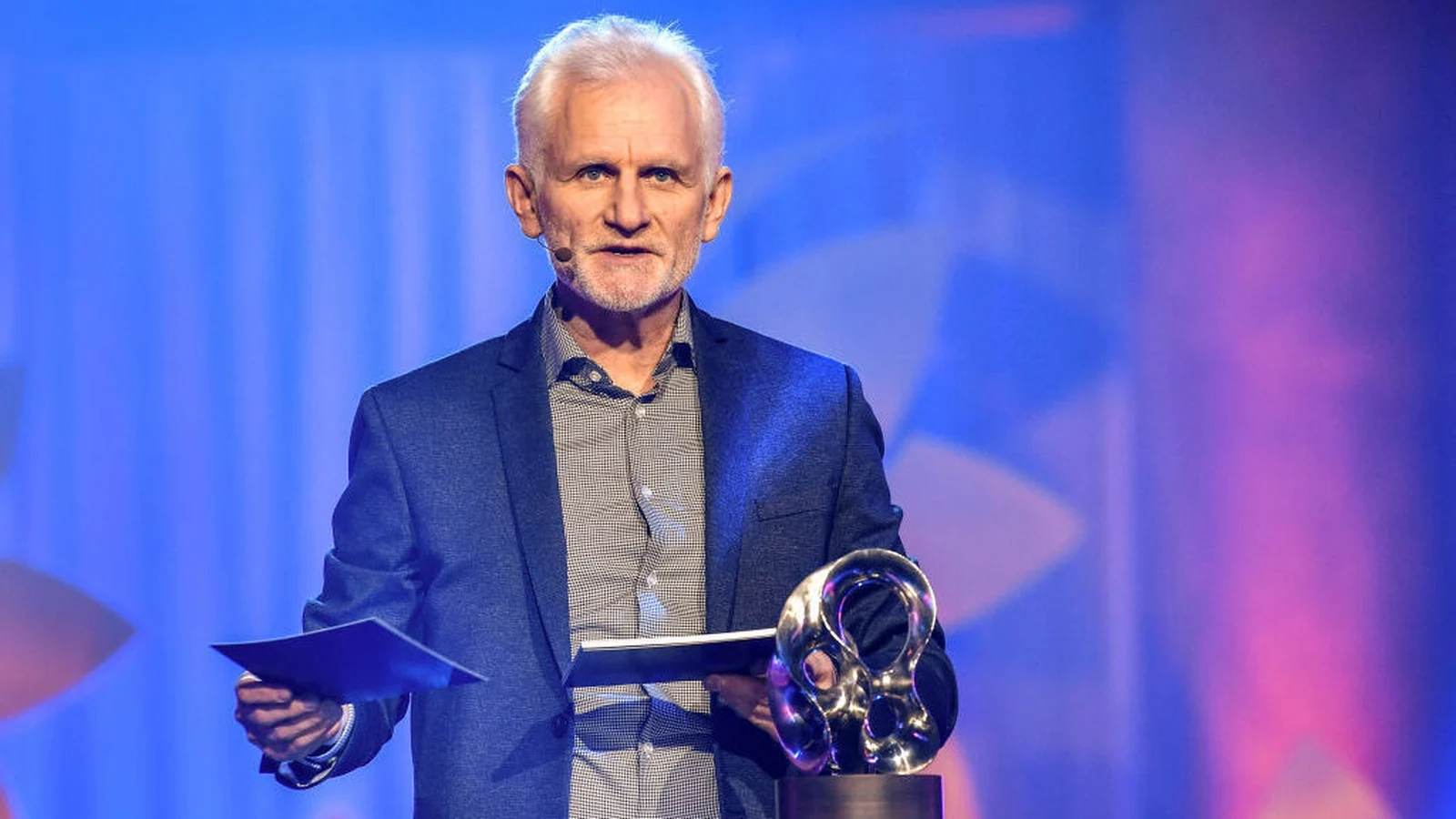
After two days of intensive talks with an envoy dispatched by President Donald Trump, Belarusian President Alexander Lukashenko ordered the release of 123 prisoners, including Ales Bialiatski, co-winner of the 2022 Nobel Peace Prize, and Maria Kalesnikava, a leading figure of the 2020 protest movement. The freed group also included five Ukrainians and at least one US citizen. For those who watched their loved ones behind bars for years, the moment was electric: hugs, tears, bewildered gratitude.
“Our fight continues,” Bialiatski said in his first on-camera remarks after his release, a line he delivered to Belsat television from Vilnius. “The Nobel Prize was a recognition, not the end of a struggle. Our aspirations remain.” He looked tired, but steady—an emblem of persistence in a place where resistance has often met with sharp reprisals.
The deal behind the headlines
The release did not occur in a vacuum. According to US officials, the United States agreed to lift sanctions on Belarusian potash in return for the prisoner exchange. Potash—an essential ingredient in modern fertilizers—sits at the intersection of food security, global trade and geopolitics. Belarus is one of the world’s major potash producers, responsible for a substantial share of global exports; supply disruptions in this market reverberate through food prices from Dakar to Delhi.
“This isn’t just a domestic story for Minsk,” said Elena Markov, a trade analyst who has tracked Eastern European fertilizer markets. “When a country that supplies a sizable portion of potash comes back into the global fold, agribusinesses and governments pay attention. The leverage is real.”
For President Volodymyr Zelensky of Ukraine, the deal had immediate human dimensions: five Ukrainian nationals were freed. “Thanks to the active role of the United States and the cooperation of our intelligence services, about a hundred people, including five Ukrainians, are now being released,” he posted on Telegram, expressing gratitude and noting continued cooperation with US partners.
Why potash mattered
To the casual observer, fertilizers and freedom might seem like unrelated threads. To the diplomats and negotiators involved, they are braided tightly. Potash is the elemental backbone of high-yield agriculture; its global market is concentrated and sensitive. For Belarus, potash exports are a major fiscal pillar—worth billions annually. For the United States, lifting a sanction on it was a calculated move to unlock a human outcome that had eluded contestation for years.
Hard choices were inevitable. Some see the exchange as a pragmatic victory: people released, families reunited, an opening to pull Lukashenko—long an ally of Vladimir Putin—away from the Kremlin’s orbit. Others saw compromise where principle should stand firm.
“Realpolitik makes for messy headlines,” said Tomasz Radziwill, an academic in Warsaw who studies Eastern European authoritarianism. “If you can save lives, should you refuse to talk? But the danger is normalising a leader who has jailed opponents and enabled aggression. There’s a thin line between engagement that changes behavior and engagement that confers legitimacy.”
Faces and stories: beyond the statistics
Walk through Vilnius this week and you will overhear layering stories—exiles smoking on a café stoop, translators organizing interviews, mothers clutching photos of sons once labelled ‘extremists’ by the state. One woman, Anna, who asked that her surname not be used, describes the phone call she received when her brother walked free.
“I thought it was a prank. When I saw him, I couldn’t stop crying. He smelled like freedom—and like too little sleep,” she said, voice wavering. “We’ve been told for years that these men and women were enemies of the state. Today we prove they were people.”
Maria Kalesnikava’s story reads like a scene out of a political thriller: when state security attempted to expel her in 2020, she famously tore up her passport in a border detention van to avoid forced exile. Her release rekindles those images of fierce, personal defiance. Viktar Babaryka, once an opposition presidential hopeful, was imprisoned in 2020; his walk into the light stirred memories of a different Belarus—one where electoral competition was not a crime.
A fractured opposition, a wary world
Even as families celebrated, many in the Belarusian opposition voiced deep skepticism of the deal. For years the West had shunned Lukashenko after a brutal crackdown on protests following the disputed 2020 election and for allowing Belarusian territory to be used as staging for Russia’s invasion of Ukraine in 2022. That isolation was meant to penalize repression. Now, by opening a channel and easing sanctions, critics warn that the West could be rewarding intimidation.
“We cannot simply trade human lives for commercial concessions and pretend nothing else is happening,” said a Belarusian activist in exile, who asked to remain anonymous for safety reasons. “This may free people, but it also lets Lukashenko script a victory.”
US officials have framed the policy as an attempt to “peel” Lukashenko away from Moscow, or at least to create space for Belarus to exercise more independent choices. Whether Minsk ultimately moves toward a more autonomous posture or simply pockets concessions while doubling down on repression is an open question.
Ripples beyond Minsk
Consider the cascade effects. Farmers in West Africa and Southeast Asia watch fertilizer prices like weather reports: a supply shock can mean the difference between bumper harvests and hunger. Meanwhile, human rights advocates and political exiles watch diplomatic moves as barometers of moral clarity. One small move in a Belarusian palace can tilt both a global commodity market and the morale of a dispersed civic movement.
So where does that leave us—the observers, voters, donors and neighbors? Is there a moral arithmetic that can balance jailed dissidents against global food needs? Can engagement be shaped to protect rights while addressing real-world shortages, or will short-term gains for some lead to longer-term empowerment for the authoritarians?
Those are not rhetorical fluff; they are the policy dilemmas that lobbyists, ministers and families will wrestle with in the coming months.
Quick facts
- Number released: 123 prisoners, including Ales Bialiatski and Maria Kalesnikava.
- Foreign nationals freed: at least five Ukrainians and one US citizen.
- Trade element: the US agreed to lift sanctions on Belarusian potash, a key fertilizer component.
- Context: sanctions were imposed after the 2020 crackdown on protests and tightened after Belarus was used as a staging area in the 2022 Russia-Ukraine conflict.
Where next?
Diplomacy is rarely neat. It is a room full of compromises, gestures and unforeseen consequences. Yet this episode also reminds us that politics involves people—parents, poets, organizers—whose lives change with a single decision. As the freed walk into new daily routines and the world adjusts to a small, consequential shift in trade policy, we should be asking sharper questions:
- Will engagement produce lasting change in Belarus, or merely temporary relief?
- How will future sanctions, humanitarian aid and international norms be calibrated to avoid empowering repression?
- Are we willing to accept such trade-offs when they affect the global supply of essentials like food?
Belarus now stands at a crossroads that feels both intimate and global: families reunited, leaders testing loyalties, markets adjusting their compasses. Whether this is the start of a thaw that nudges Minsk toward accountability—or a clever reshuffling of power—depends on decisions that will be made in capitals far from the prison gates and in kitchens in Minsk, where people will watch, measure and remember.
After all, politics is not only about who sits at the table; it’s about who can still speak when the lights go out. And in this story, for the first time in years, some voices just got louder.