A pre-dawn rupture in Liège
Before the city had fully woken, a sound tore through the fog that rolls off the Meuse: a single, sharp explosion that blew out windows across a quiet street and left a synagogue scarred at its threshold. It was 4 a.m. local time. No one was hurt. The damage, officials said, was material—but for a community that has carried both ancient memory and modern vigilance, the blow landed deep.
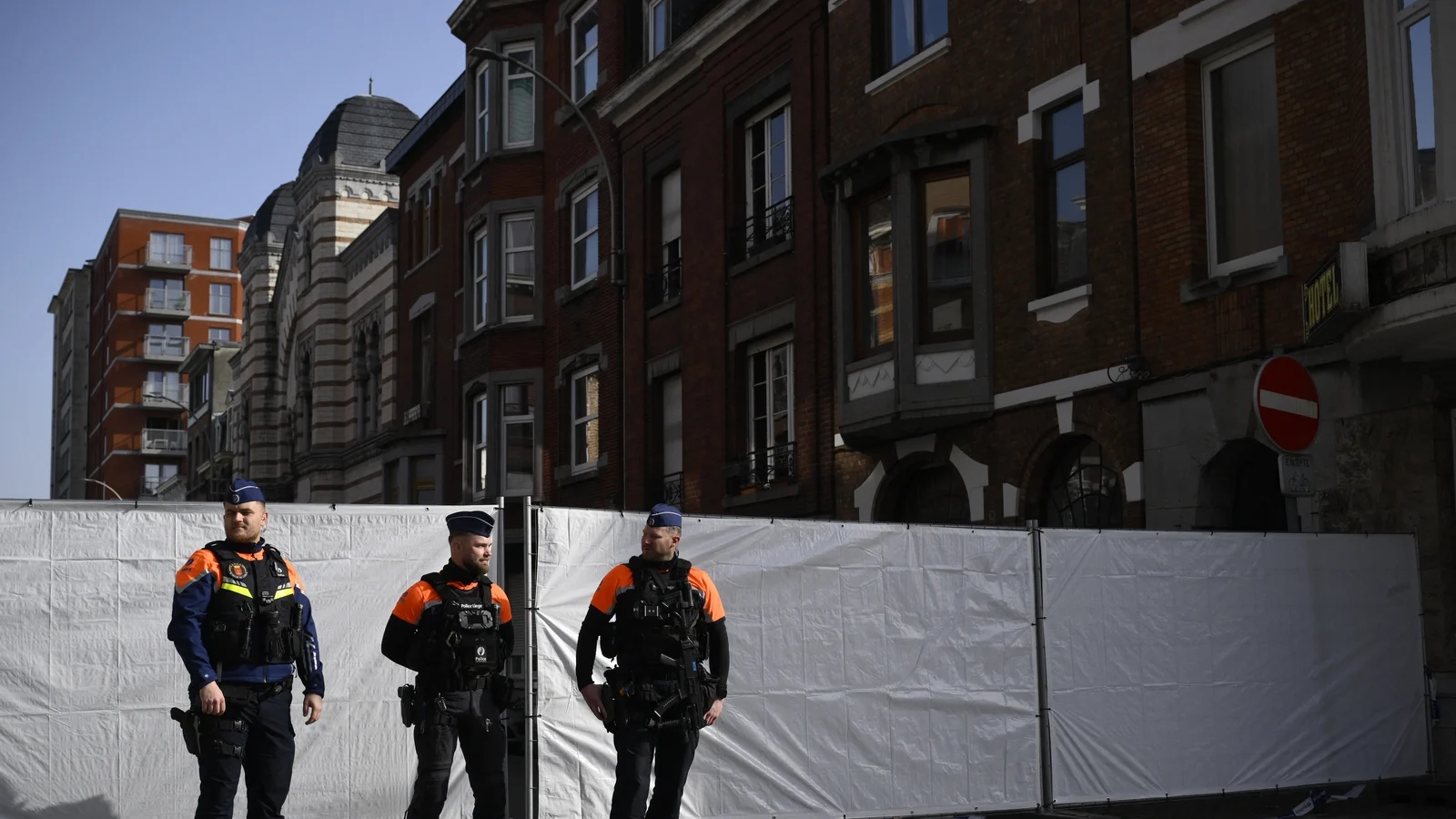
By dawn, police tape framed the scene, officers stood in small, tense knots, and a few early risers peered from behind curtains. The synagogue—an elegant building dating from 1899 that also houses a museum of Liège’s Jewish life—was marked by a scorched doorway and shattered glass. Volunteers from the community arrived with tea, blankets and a quiet, stubborn presence that felt like an answer as much as a vigil.
What happened, and who is investigating
The federal prosecutor’s office, which handles cases involving organised crime and terrorism, has taken the lead. A spokeswoman said investigators will be working through the day and that more information will be released when available. For now, police describe the incident as an explosion that caused “material damage” to nearby buildings but no physical injuries.
Bart De Wever, Belgium’s prime minister, spoke sharply online: “Anti‑Semitism is an attack on our values and our society, and we must fight it unequivocally. We stand in solidarity with the Jewish community in Liège and across the country.” Interior Minister Bernard Quintin called the blast “a despicable antisemitic act that directly targeted Belgium’s Jewish community,” and pledged stepped-up security around similar sites.
Voices on the street
“It felt like winter had suddenly stepped into our courtyard,” said Miriam Cohen, a retiree who has attended services at the Liège synagogue for decades. “We are shaken, but we will not be erased. This building holds the stories of so many families—our grandparents, our festivals, our prayers.”
Willy Demeyer, the mayor of Liège, was blunt: “We cannot allow foreign conflicts to be imported into our city.” He was referencing the wider tensions feeding into European streets—conflicts in the Middle East, and the angry echo they can create in local communities.
A bakery owner on the corner, whose windows were also dusted with debris, wiped glass from a display and said, “We heard the blast and thought about the worst. The shop will open today. People need to eat; people need to work. But we also need to stand with the neighbours.” His hands were floury. His voice was steady. The smell of warm bread cut through the faint tang of smoke nearby.
History, memory and a community’s footprint
The Liège synagogue was built at the close of the 19th century and doubles as a small museum chronicling the Jewish presence in the city. Belgium’s Jewish population is estimated at around 50,000 people, concentrated primarily in Antwerp and Brussels. Over the last decade, Jewish institutions have lived under varying degrees of heightened security—synagogues, schools and community centres sometimes ringed with police or guarded discreetly by private security personnel.
After the Hamas attack on Israel on 7 October 2023 and the subsequent wider regional conflict, Belgian authorities reported a rise in antisemitic incidents and took measures to protect sites considered at heightened risk. The memory of those months—full of protests, counter-protests and painful polarization—still hangs in the corridors of community centres and the halls of government.
Beyond the headlines: how local acts mirror global tensions
We live in an age when a conflict thousands of kilometres away can ignite anger in a neighbourhood café, on a social media feed, and, sometimes, at the door of a place of worship. That is one of the harder lessons of this morning’s blast: the world’s geopolitical fault lines do not stay distant. They seep into daily life, shaping who feels safe and who feels targeted.
“Violence blossoms where narratives are allowed to go unchecked,” said Dr. Anya Verhulst, a researcher who studies radicalisation and communal violence in Europe. “We’re seeing a dangerous mix: online echo chambers, rapid mobilization around foreign events, and an undercurrent of old prejudices. When those combine, public spaces become vulnerable.”
Facts and figures to consider
- Belgium’s Jewish population: ~50,000, primarily in Antwerp and Brussels.
- Synagogue in Liège: built in 1899; also serves as a museum of local Jewish history.
- Authorities had increased security at Jewish sites after October 2023 due to a rise in reported anti‑Semitic acts linked to the Gaza war’s fallout.
Resilience, solidarity and the work ahead
Within hours of the blast, messages of support spread across the region. Neighbouring mosque leaders called the synagogue to offer assistance. A group of high‑school students arrived with flowers and a card: “Not in our city,” it read in neat handwriting. The gestures were small but charged with meaning.
“Security makes a space for prayer to continue,” said Rabbi Samuel Levy of the nearby community. “But so does the solidarity of our neighbours. Both are necessary. We will repair the windows. We will reopen the museum. And we will keep telling our story.”
As investigators work, two urgent questions hang in the air: how to prevent these violent spillovers from happening again, and how to heal a sense of rupture within a plural city. Solutions will not be simple. They will require law enforcement and intelligence work, yes, but also education, dialogue and relentless community engagement to undercut the myths and resentments that lead to attacks.
- Practical security measures: better lighting, coordinated patrols, fast incident reporting systems.
- Community investment: more interfaith events, youth programs aimed at dialogue and mutual understanding.
- Digital accountability: platforms working with civil society to stem the spread of hateful, inciting content.
Questions for the reader
When violence touches a local shrine of memory, how should a city respond—by fortifying every door, or by opening more conversation? Which costs are we willing to accept to protect freedom of worship and speech? And what collective work can bridge the growing gap between global conflicts and neighborhood safety?
These are not rhetorical quandaries for politicians alone. They are questions communities everywhere must wrestle with as the world grows more interconnected and more combustible.
Closing scene: an ordinary morning rewritten
By mid‑morning the first forensic vans had left. The synagogue’s custodians swept up rubble and set up a temporary notice: “Services continue as usual. All are welcome.” A small knot of neighbours stood outside, exchanging coffee and tired smiles. Someone unfolded a folding chair and sat, as if to remind the city that life—prayer, commerce, conversation—goes on in public, even after a shock.
In the days to come, investigators will follow leads and authorities will make announcements. But the deeper work—repairing trust, teaching young people to separate distant conflicts from neighbours in their own street, and making space for the vulnerable to feel protected—rests with all of us.
As you read this, ask yourself: what would you do if your city were shaken? And how would you answer the call to stand, quietly or loudly, with those who are under threat? Because solidarity, like safety, begins in small acts—and sometimes with a cup of tea offered across a threshold that has just been broken.