A Royal Reminder: When a Monarch’s Health Becomes Everyone’s Wake-Up Call
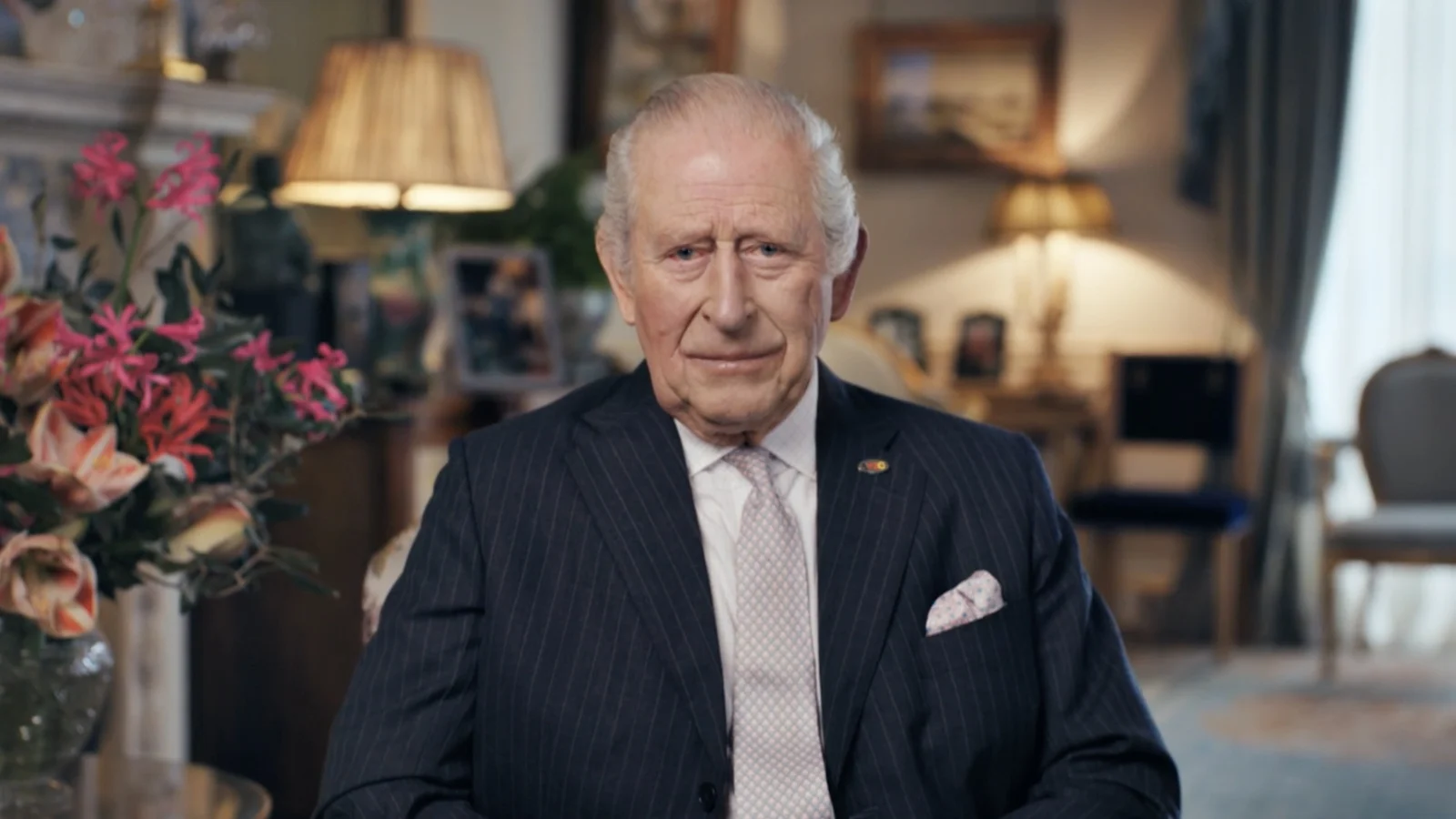
The flicker of a television screen, a familiar face framed against a simple backdrop, and a voice that has threaded through Britain’s public life for decades: when King Charles III stepped forward in a filmed message this week, what felt intimate carried weight. He spoke not as a distant figurehead but as someone who had sat in a hospital chair, received care, and emerged with a message he wanted to share—one that nudges at the quiet corners of our lives where fear, denial and hope mix.
“I’ve been having outpatient treatment,” he said, “but from the start the doctors and the early diagnosis made all the difference.” Those words—about scaled-back treatment, about the community of care that buoyed him—were brief, practical, human. They landed in living rooms and lunchrooms during Channel 4’s Stand Up To Cancer evening, an event that mixes comedy with urgent public health messages and fundraising for Cancer Research UK.
Why this matters beyond the palace gates
This isn’t just about one man’s calendar being freed from weekly clinic visits. It’s about what happens when a public figure describes, plainly, the pathway from diagnosis to active life. In Britain, health campaigns have long fought a battle against inertia: screening invitations ignored, symptoms explained away, appointments postponed. The King’s announcement—optimistic yet grounded—was a public nudge with the heft of visibility.
Globally, the numbers are stark. According to the International Agency for Research on Cancer (IARC), roughly 20 million new cancer cases are diagnosed worldwide each year and nearly 10 million people die annually from the disease. In the UK the long-standing estimate that around one in two people born after 1960 will be diagnosed with cancer during their lifetime is a statistical inevitability now becoming a lived reality for more and more families. Screening and early detection don’t eliminate risk, but they save lives—and they can, in many cases, turn acute crises into manageable chapters.
Voices from the clinic and the community
In the wards and corridors where this work is done, the response was quietly fierce with pride—and a little relief. “Seeing someone in his position speak openly about scaling back treatment because of early detection hits home,” said Sarah Malik, an oncology nurse at a London clinic. “That’s not theatre; that’s message: come in for the test, come back for the scan. It matters.”
At a support group in Sheffield, retired postman Tony Richards wiped his eyes as he talked about his own late diagnosis. “If I’d had a test earlier, I might have been in a different place now,” he said. “If the King’s message makes one person pick up the phone and book, that’s two lives changed—the patient’s and their family’s.”
Researchers who study behaviour change add nuance. Dr. Amina Patel, a behavioural epidemiologist, points out that single events—celebrity stories, high-profile announcements—can produce measurable bumps in screening uptake. “The so-called ‘celebrity health effect’ isn’t magic,” she notes. “It works when the infrastructure is ready: accessible appointments, clear information, and follow-up. The King’s words create motivation. Our job is to convert that into action.”
Screening: a small action, an outsized impact
Let’s speak plainly about what people can do. In the UK the major screening programmes include:
- Breast screening (mammography) offered to women and people with a cervix in their 50s—roughly every three years.
- Cervical screening (smear tests) beginning in the mid-20s through to mid-60s, with intervals depending on age and past results.
- Bowel cancer screening, typically for people aged 50–74, using home kits that check stool samples for signs of blood.
Uptake varies. In recent years about six in ten people invited to the NHS bowel screening programme took part, while breast and cervical screening participation has hovered around seven in ten—figures that have small but significant gaps along lines of income, geography and ethnicity. Those gaps are not inevitable. They are fixable.
Beyond numbers: cultural textures
There is a cultural texture to screening uptake that simple statistics don’t capture. In some communities, clinics double as hubs of trust; in others, medical appointments are viewed through the lens of work schedules, childcare or language barriers. A West London community health worker, Maria Eze, describes afternoons when she walks through a street market handing out leaflets and listening. “People will tell you they’re terrified,” she says. “But once you sit with them, explain the steps, show them it’s not an exam of character, they’ll sign up.”
The King’s tribute to nurses, specialists and volunteers in his message recognises this mosaic of care: it’s the surgeon and the GP, the lab tech, the driver who gets someone to an appointment, the volunteer who makes tea in a waiting room. Each part matters.
What the King’s announcement asks of us
There is a paradox baked into public health: the most effective actions are often the least dramatic. A test kit delivered in the mail. A booked appointment. A small injection of courage. The monarchy’s brush with illness turns these mundane acts into civic gestures—acts of care for oneself and for community resilience.
So ask yourself: when was the last time you opened one of those envelopes from your GP? Have you put off a smear, a mammogram, a simple stool test? If a televised message from a monarch can move you, imagine how much more you could do for a neighbour, a partner, a child. Screening is not a guarantee, but it is leverage—an opportunity to tip the balance.
Practical next steps
If you’re unsure where to start:
- Check your NHS letters and the eligible age ranges for screening where you live.
- Talk to your GP or local clinic about any symptoms, however small; many cancers are most treatable when found early.
- Ask community organisations for help booking or getting to appointments if transport or language is a barrier.
That the King has been able to reduce his treatment schedule is newsworthy—but the deeper story is one of systems, people and choices aligning. Behind every press release are nurses peering at scans, scientists analysing data, volunteers making calls. Behind every screening statistic is a person deciding to act.
What will you decide today? Will you make that call? Book that appointment? Encourage someone you love? In this quiet intersection between public life and private health, the answer can change more than one life.