A rainbow in defiance: Budapest’s Pride and the moment a city said “enough”
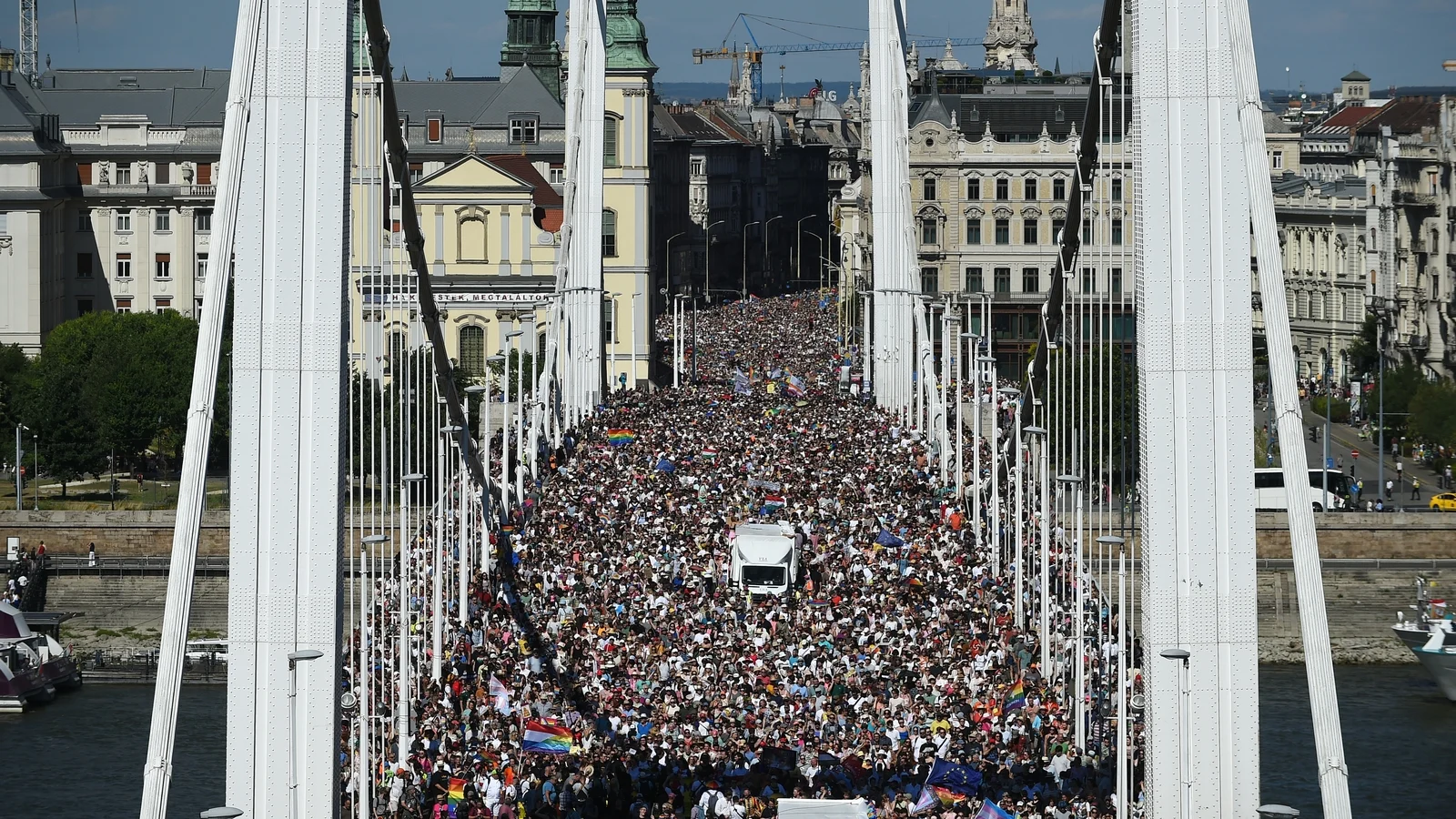
Last June, the wide avenues of Budapest filled with color as if the city itself had decided to breathe in a new way. People spilled from side streets and clambered up tram steps, carrying banners, dancing, singing. Organisers later estimated more than 200,000 people attended — a number that felt both astonishing and inevitable to anyone who had watched the months of tension that preceded the march.
It was more than a parade. It was a declaration: public joy made political, a mass refusal to let laws and threats shrink the space for human expression. For weeks, the government of Viktor Orbán had signalled its intent to stamp out Pride with legal restrictions couched in language about “protecting children.” The ruling coalition had tightened laws and folded protections into constitutional text, sending a clear message: certain identities and celebrations were unwelcome in the public square.
Budapest city hall, led by Mayor Gergely Karácsony, did something risky and intentional — it agreed to co-organise the march. The aim was to thwart those new rules and defend the right to assemble. The police, however, issued a ban. Mr Orbán warned of “legal consequences.” Still, the streets filled anyway.
The charge sheet: a trial of symbols
Weeks later, prosecutors filed charges against Mayor Karácsony, saying he “organised and led a public gathering despite a police ban” and seeking a fine. The district prosecutor’s office said it proposed a summary judgment without trial — a fast-track way to impose penalties — though it did not specify the amount requested.
Karácsony, who was questioned in August and who faced the technical possibility of up to one year in prison for organising a banned rally, answered with defiant humor. “I went from a proud suspect to a proud defendant,” he wrote on Facebook. “They don’t even want a trial… because they can’t even comprehend that here in this city, we have stood up for freedom in the face of a selfish, petty, and despicable power.”
Organisers warned attendees that, according to law, individuals could face fines up to €500 simply for joining the march. Yet, in a twist that revealed the limits of enforcement, police later announced they would not take action against participants.
The legal backdrop
For close observers, the dispute is not merely about a single parade. It sits atop years of legal changes in Hungary that rights groups say have curtailed space for LGBTQ+ people and civil society more broadly. In 2021, the government pushed through laws restricting the portrayal of homosexuality and gender identity to minors — measures that critics likened to censorship and that prompted condemnation from Brussels and human-rights organisations across Europe.
“When laws are used to police love, the law itself loses legitimacy,” said Éva Horváth, a legal scholar at a Budapest university. “This is not just administrative nitpicking; it is about whether a democratic society allows difference to be seen.”
Voices from the crowd: why people came
Walking the route, you heard a thousand reasons for why people turned out: solidarity, defiance, the desire to celebrate identity in public without apology. “My son is gay,” said Anna, a 56-year-old schoolteacher who held a rainbow flag tied to a walking stick. “I came because we have to show him we are with him. When the state threatens his dignity, we answer with presence.”
There were others, too. A young man with a painted face told me he had never seen such a turnout in his life. “It felt like the city was finally ours,” he said, voice raw with excitement. “We are not invisible anymore.”
Volunteers explained they had coordinated logistics in secret at times, worried about permits and police moves, yet buoyed by a broader international atmosphere. “People here watch what happens in other parts of Europe and feel both inspired and vulnerable,” said Márk, who organised marshals for the march. “You feel the pressure of a government that wants to make you afraid, and then you realise fear won’t stop us.”
Why this matters beyond Budapest
Ask yourself: when a city official risks legal peril to defend a parade, what does that say about the state of civic life? This is not just a Hungarian story. Across the continent and around the world, debates over free assembly, minority rights, and the power of law to shape social norms are playing out in similar, sometimes subtler, ways.
For the European Union — which has repeatedly raised concerns about Hungary’s democratic backsliding — the incident is another test. Can supranational institutions protect rights when member states use national laws to curtail them? For civic movements, it is an instructive example of how local authorities can act as a bulwark against centralised power.
“Cities often become frontline defenders of pluralism,” said Dr. Lucien Moreau, a political scientist specialising in urban governance. “When national governments pull centre-stage toward illiberalism, municipal leadership can preserve democratic practices. That is what happened in Budapest: the mayor and city hall chose to interpret their mandate as protecting citizens’ rights.”
Numbers that matter
- Organisers’ estimate of attendees: more than 200,000 people.
- Fines individuals could face for attending (under the contested rules): up to €500.
- Potential prison time for organising a banned rally: up to one year.
What happens next — and what it reveals
Prosecutors’ move to seek a fine without a full trial speaks to an administrative route that can be quicker and less visible than a drawn-out court case. Critics worry such mechanisms can be wielded to intimidate political opponents and civic actors without the public scrutiny of a trial.
“The aim is not always to win in court,” said Júlia Szabó, a human-rights campaigner. “The aim can be to make the cost of dissent higher, to drain activists emotionally and financially.”
And yet, cracks show: the police declaration that they would not act against participants suggests that state power is not monolithic. There are pockets of resistance within institutions, and there remain people each day choosing to show up.
Final thoughts: the hard work of visibility
Standing among the crowd that day, it was hard not to think about the paradox of visibility. To be seen can be both liberating and risky. The marchers chose to be visible because invisibility had proven costly: erasure, stigma, laws passed in quiet votes.
“Visibility is a weapon,” said an older man who had marched decades ago and still attends now. “We wield it not to hurt others but to refuse to be erased.”
Whatever the legal outcome for Mayor Karácsony, the scene in Budapest last June will linger as evidence that civic bravery still matters. It raises a question for all of us — not just Hungarians, not just Europeans: when laws seek to redraw the boundaries of belonging, what will we do to redraw them back?