On the Brink: Bulgaria’s Leap into the Euro and the Uneasy Calm Along the Danube
There is a quiet energy in the air in Sofia this winter — not the celebratory kind you might expect when a country takes another step deeper into Europe, but something more complicated: a mixture of pride, nerves and a simmering doubt that you can taste in the morning market stalls and hear in the cafes that line Vitosha Boulevard.
Bulgaria is preparing to swap the lev for the euro, joining a monetary club that began in 2002 and has slowly grown to include nations across the continent. If all goes to plan, the country will become the next member of the euro area — a geopolitical and economic milestone many politicians hail as a modernization rite of passage, while others warn it could be a leap into new vulnerabilities.
Why this matters — and why it feels so personal
To understand why this change matters on the ground you need to stand in a village shop in the northwest, or sit in a small Sofia restaurant whose owner balances pride in national heritage against the daily arithmetic of rent and suppliers. “My customers ask me if onions will cost more tomorrow,” says Bilyana Nikolova, who runs a groceries counter in Chuprene, a tiny community near the Serbian border. “They’ve heard stories from friends abroad that prices jump when the euro arrives.”
Her worry is not idiosyncratic. Polls conducted over the past year show substantial ambivalence: nearly half of Bulgarians say they don’t want the euro, according to an EU survey. That reticence grows where incomes are lower and memories of past economic shocks — especially the hyperinflation of the 1990s — remain vivid.
“People remember losing value in their pockets,” explains Boryana Dimitrova of Alpha Research, a polling institute that has followed public sentiment around the changeover. “When a policy affects the everyday — the bread, the bills, the bus ticket — it becomes political overnight. If something goes wrong, opponents will use it as proof that Brussels lost touch.”
Promises on the table
Proponents at home and abroad point to clear advantages. The European Central Bank and international economists argue that single-currency membership can reduce transaction costs, lower borrowing rates, and promote trade. Christine Lagarde, president of the European Central Bank, told Bulgarian audiences in recent months that the gains are “substantial” — smoother commerce, cheaper finance for businesses, and steadier prices among them.
For small and medium-sized enterprises, the arithmetic is stark: analysts estimate up to roughly €500 million saved annually in reduced exchange fees and banking costs. In tourism — a key sector that accounted for about 8% of national output this year — having the euro could make Bulgaria a simpler, less costly destination for millions of European travelers.
“Being inside the decision-making room matters,” says Georgi Angelov, an economist with the Open Society Institute in Sofia. “We have had our currency effectively pegged to the euro for decades through a currency board. Today we trade stability for representation. We will be part of the conversation at the ECB table rather than just following its notes.”
Fear, faith, and politics
The debate is never purely economic. Bulgaria’s politics are fragile; in recent years the country has seen wave after wave of protests against corruption, which toppled a conservative government and pushed the nation toward its eighth election in five years. In such an atmosphere, any economic hiccup could be amplified into a political crisis.
“The adoption will be politicised,” Dimitrova warns. “If prices spike or if there are perceived winners and losers, anti-EU forces will use it as fuel.”
Some of those forces are explicit in their messaging. Far-right and pro-Russia elements have organized ‘save the lev’ campaigns, mobilizing rural communities and older voters with a mix of nostalgia and economic fear. Their rallies often feature local grievances: pensions that feel small, wages that haven’t kept pace with inflation, the sense of being left behind.
“This isn’t only about money,” says Maria K., a teacher from the Rhodope mountains who asked that her surname not be used. “It’s about control. People worry about losing the little autonomy they feel they have after years of foreign influence, sanctions, and distant decisions.”
Numbers that matter
Context helps. Bulgaria has been an EU member since 2007 and joined the ERM II “waiting room” for the euro in 2020. Its lev has been effectively pegged to Western currency standards ever since the chaotic 1990s, when the country’s economy suffered hyperinflation and dramatic currency swings. That experience made fiscal stability a matter of national trauma and policy obsession.
On the inflation front, data show consumers are already squeezed: food prices were up around 5% year-on-year in November, according to the national statistics office — more than twice the eurozone average. That is one reason why the government has created oversight bodies to monitor and limit “unjustified” price hikes during the transition.
Yet history of prior euro entries suggests that any price bump from switching currencies is usually small and short-lived — studies of earlier changeovers have found increases in the range of 0.2 to 0.4 percentage points. The tricky part is perception: for a family buying milk and bread every week, even a tiny percentage feels large.
Coins as culture: Bulgaria’s new small-money portraits
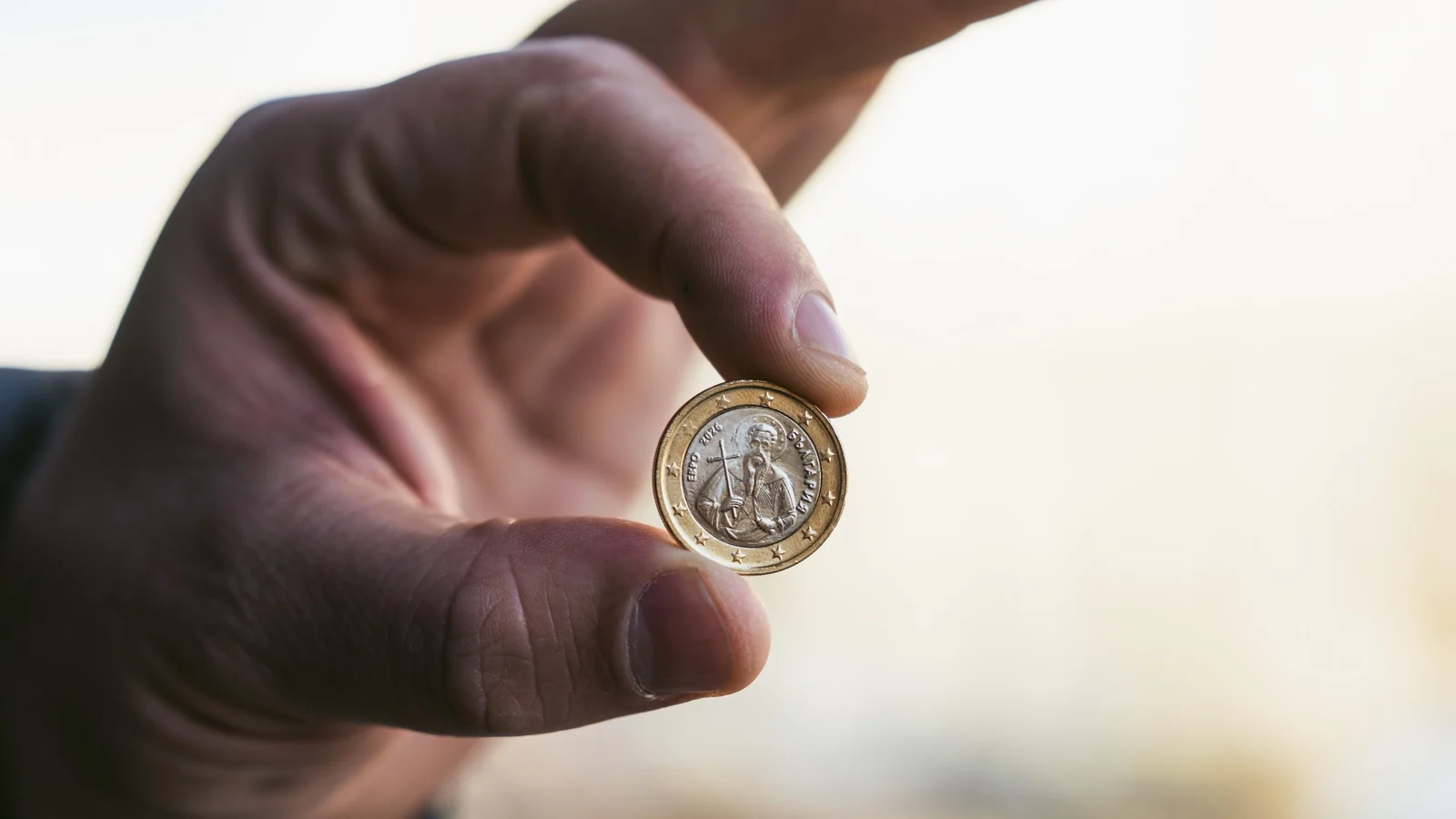
There is poetry in the detail. The images chosen for Bulgaria’s euro coins are a deliberate act of storytelling: the Madara Rider — an eighth-century cliff relief of a horseman triumphing over a lion — will appear on the smaller cent denominations, while the €1 and €2 coins will bear the figures of Saint John of Rila and Paisius of Hilendar, respectively. The edge of one coin carries the inscription “God protect Bulgaria.”
“There is comfort in symbols,” says Dr. Elena Popova, an art historian who works with cultural heritage projects. “When your money carries your myths, you feel continuity. The choice of iconography is an embrace: the state says, we join Europe, but we bring our story with us.”
What’s at stake for the world
Bulgaria’s move is a small story with big echoes. Across Europe, the eurozone’s gradual expansion raises questions about monetary sovereignty, regional inequality, and the political cohesion of the bloc. For the Balkans, membership signals deeper Western alignment, a message particularly resonant given the region’s historic tug-of-war between Brussels and Moscow.
Will joining the euro steady Bulgaria’s economy and curb Russian economic pressure? Can Brussels and Sofia safeguard vulnerable households during the conversion? Will a country still wrestling with corruption win the political stability it needs to reap long-term benefits?
These questions are not unique to Bulgaria. They resonate in Madrid and Malta, Tallinn and Zagreb—everywhere a currency ties people together while asking them to share the risks and rewards.
Final thoughts
On market day, the vendor next to Bilyana sells fresh peppers and jars of homemade lyutenitsa. He motions toward a little boy counting coins into his pocket and says, half-jokingly, “Let him save in euros — maybe he will dream bigger.”
Perhaps that is the simplest way to think of this moment: a bet on the future, balanced on the everyday ledger of a nation still finding its footing. Will the euro lift Bulgaria’s long-term prospects? Or will the transition become another chapter in a story of political churn and economic anxiety? Only time will tell, but the people of Bulgaria will feel the consequences in their shopping baskets, their travel plans, and the stories they tell their children.
What would you choose if it were your currency on the line — stability and shared rules, or the comfort of something known and local? The answer may reveal more about how we measure progress than any headline ever could.
- Estimated tourism share of GDP: ~8%
- Reported food price inflation (Nov): ~5% year-on-year
- Estimated SME savings from euro adoption: ~€500 million annually in reduced exchange costs
- Public sentiment (EU poll): roughly 49% opposed