Neon, Dust and the Echo of Explosions: Poipet’s Fragile Crossroads
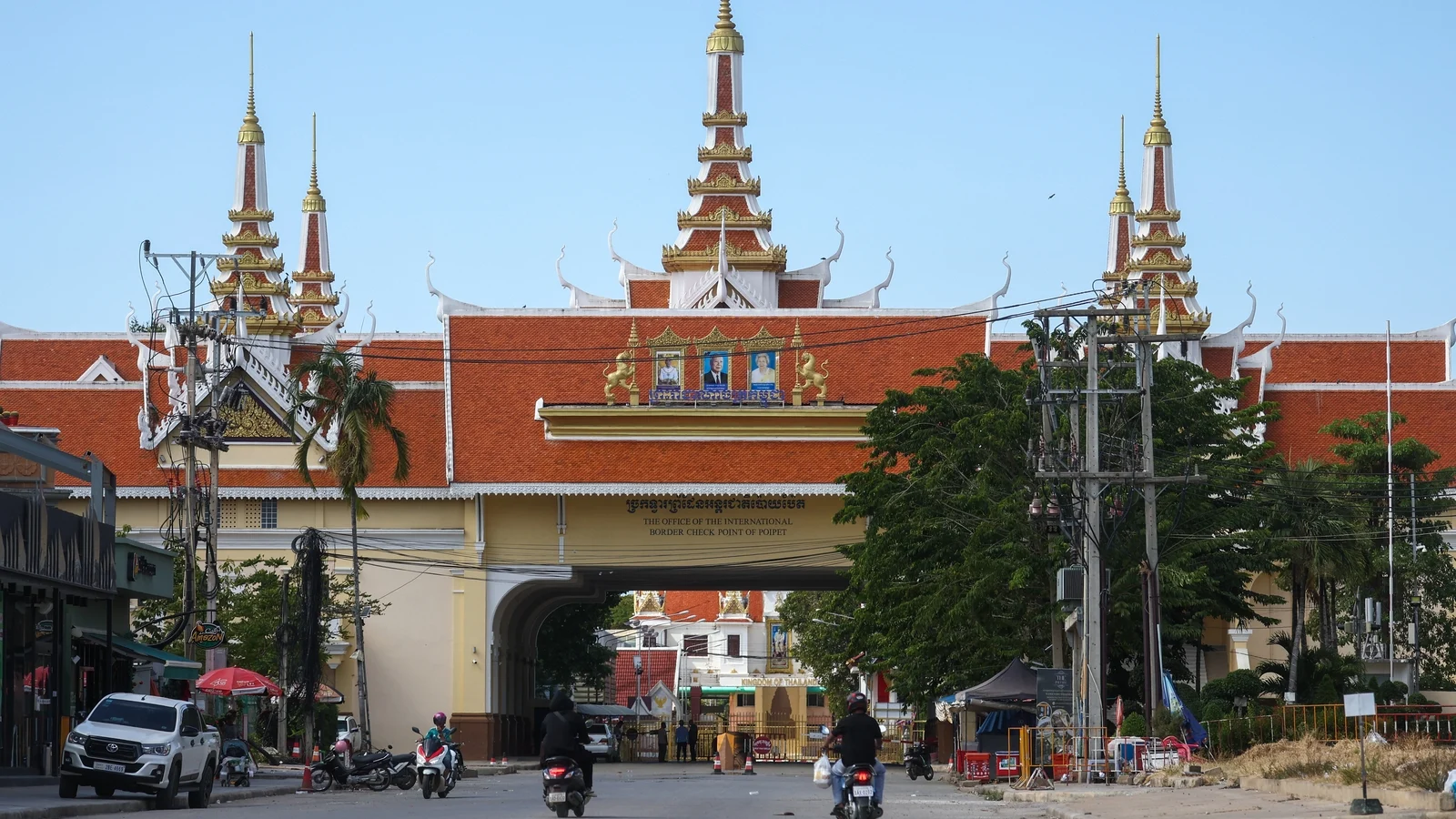
The neon never looked so fragile. In Poipet, the casino lights have long been a promise — a glittering seam where Cambodian vendors, Thai gamblers and cross-border workers stitched livelihoods together.
On a morning that began with the usual clatter of tuk-tuks and a breakfast of morning coffee and sticky rice, the town became a headline: Cambodia accused Thailand of bombing Poipet, one of the biggest land crossings between the two countries.
“We thought the sound was thunder,” says Sophea, a 38-year-old dealer who has dealt cards in the same smoky room for a decade. “Then people ran. The chandeliers shook. I told myself, not here, not now.”
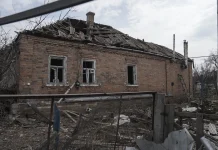
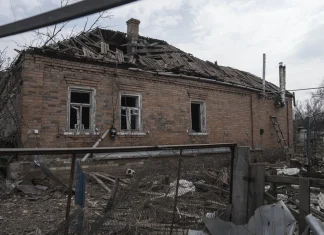
Cambodia’s defence ministry said two bombs were dropped in Poipet Municipality at around 11:00 local time. Thailand has not publicly confirmed any air strike on the town. In the fog of competing statements, ordinary people are left counting losses, both human and economic — and wondering how quickly a place that traffics in chance can be undone by an act of war.
Numbers on the Table
Conflict along the roughly 800-kilometre (about 500-mile) Cambodia–Thailand borderline has flared repeatedly in recent years, often over colonial-era maps and disputed clusters of temple ruins that sit like reminders of older sovereignties. This month’s renewed fighting has been particularly brutal: at least 21 people killed on the Thai side and 17 on the Cambodian side, according to officials cited by both governments, and an estimated 800,000 people displaced — families packing what they can carry, boarding buses, sleeping in schools or with relatives.
The war of numbers continues off the battlefield too. Cambodia’s interior ministry reported that at least four casinos in border provinces have been damaged in recent strikes, while Thai authorities say between 5,000 and 6,000 Thai nationals remained stranded in Poipet after land crossings were closed.
“We closed the border because people were in harm’s way,” a Cambodian interior ministry official told journalists. “Air travel remains open for those who can afford it, but for many the road is life or death.” The closures have choked everyday commerce — buses halted, truck convoys rerouted, children unable to cross for school.
Weapons and Scenes
The fighting has not been limited to small arms. Local witnesses and official accounts describe artillery barrages, armoured vehicles, drones and jet aircraft operating near the frontier — instruments that amplify destruction and deepen fear. In Poipet’s alleys, a casino owner who asked to be identified only as Mr. Lim said, “The sound is not like fireworks. It’s a roar. The windows shattered. We closed our doors, and everyone just waited.”
Diplomacy in Overdrive
When borders flare, so do diplomatic phone lines. In recent weeks, Washington, Beijing and Kuala Lumpur have tried to pull the two capitals back from the brink. China announced it would send its special envoy for Asian affairs on a shuttle-diplomacy mission to the region in the days after the latest escalation. ASEAN foreign ministers have scheduled emergency talks in Malaysia, where leaders hope to stitch together a ceasefire.
“Our duty is to present the facts, but more important is to press upon them it is imperative they secure peace,” Malaysia’s prime minister said in a televised briefing, urging an immediate cessation of frontline offensives.
European diplomats have also signalled support: the European Commission offered satellite imagery and monitoring help while urging an immediate ceasefire. “The conflict must not be allowed to spiral,” a Brussels official said. “We can provide a high-resolution view from space, but only the parties on the ground can choose to lay down their weapons.”
Memory and Misunderstanding
The heart of this confrontation is not new. The border follows lines drawn under colonial rule, and for decades pockets of territory have become ambiguous, leading to skirmishes that quickly feel existential. Ancient temple ruins dot the frontier — places of worship, tourism and contested identity. When the artillery begins, the stones that once attracted pilgrims now serve as contested markers.
“These temples are like photographs from our grandparents’ albums,” says Dara, a community elder who remembers border life before casinos transformed Poipet. “They connect us to the land. Now they are part of a map that others argue over.”
The Human Cost
Beyond the statistics and the statecraft, the displacement numbers tell the most human story. Schools converted to shelters; children who once crossed the border daily now huddle with stuffed toys and ration packs. A mother in her sixties, who makes and sells amok curry by the roadside, wrapped her blanket tighter and said, “War took the customers, but it also took our sleep. We live by the border. Leaving is like uprooting the tree that feeds you.”
There are also economic ripples. Poipet’s casinos draw patrons from Thailand and beyond. The industry supports hotels, tuk-tuk drivers, garment workers, and street vendors. Damage to four casinos alone represents not just physical destruction, but a blow to an already fragile local economy still reeling from pandemic downturns and commodity swings.
Voices from the Ground
“If they wanted to hurt the gambling, they succeeded,” says Rattanak, a tuk-tuk driver who depends on casino tourists to cover his family’s rent. “We survive on small amounts. Now we don’t know when the bells will ring again.”
An international relations scholar interviewed in Phnom Penh described the current spiral as a worrying sign of militarized nationalism. “Border disputes can be rituals of sovereignty,” she said. “But when modern weapons enter these rituals, they stop being performances and become tragedies.”
What Now? Questions for Us All
Is this a localized flare-up that diplomacy can quickly cool, or the start of a longer period of instability in a region that has otherwise seen impressive economic growth? Can external mediators help de-escalate without appearing to infringe on sovereignty? And for the people of Poipet and the border provinces, how long until markets reopen and normal life returns — if ever?
The answers will come slowly, if at all. For now, people in border towns are threading the needle between fear and resilience, bargaining at market stalls with one eye on their wallets and the other on the horizon. They hope — as people everywhere caught between history and politics hope — that reason will return and the lights will shine on again, not as a mirage but as livelihood.
Where We Go From Here
What readers can take from Poipet’s story is less about which government shoulders blame and more about the delicate human ecosystems that war imperils: cross-border families, small businesses, cultural sites, and the daily acts of trust that sustain life. The international community can offer shuttle diplomacy, satellite images and statements; the ultimate restoration of peace will depend on whether leaders find the political will to step back from the brink.
As Sophea folded a deck of damaged cards and headed out into a town that smelled of fried noodles and diesel, she sighed and said, “People here always find a way to laugh. Today it’s quieter. But laughter will come back. We just need the guns to stop first.”