The River and the Chessboard: China’s Quiet Gambit as War Smoke Rises
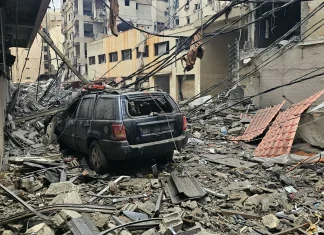
There is a photograph I keep returning to in my mind: a narrow river after a storm, the current thick and slow, leaves and debris coasting past as if on a conveyor belt. In Sun Tzu’s age, sages likened victory to waiting by that very river. Today, as rockets arc over the Persian skyline and headlines stutter from one crisis to the next, another kind of patience plays out on a global stage—not on trenches or columns of tanks, but in factories, labs, and ministries of trade.
Across Beijing’s broad avenues and in the boardrooms of its tech giants, the hum of ambition is unmistakable. While the world watches explosions and embassies, China is drafting blueprints for decades—blueprints that aspire to shape the architecture of technology, energy and supply chains. What looks like restraint up close may be, in a larger sense, a deliberate strategy.
Not quite isolation, not quite alliance
China is not the Kremlin in a bunker or an isolated autarky. Its global ties are deep and messy, interwoven with the markets of the Gulf, the factories of Southeast Asia, and the research universities of Europe and the United States.
Ask a Beijing economist and she’ll tell you the same thing: “We cannot sprint and fight at the same time,” says Dr. Liu Meihan, who advises several state-owned enterprises. “The priority is to secure technology, supply and energy. Military adventurism is not our comparative advantage.”
This is not pacifism so much as calculus. Economic levers—tariffs, export controls, investment deals—offer control with fewer of the unpredictable consequences of open conflict. As one Brussels-based analyst put it, “Economic coercion is more surgical than war.”
Where the chips and the oil meet
Look beyond the missiles and you’ll see the chess pieces: artificial intelligence labs, quantum computing hubs, wind farms, electric vehicle factories, and ports—vast, humming ports. Beijing’s latest five-year plan is not a poem; it is an industrial manifesto. Priority sectors include AI, aerospace, defence-related technologies, green energy, quantum computing, critical minerals and robotics.
Numbers help anchor the story. A recent tracker from the Australian Strategic Policy Institute found China leading in 66 of 74 critical technology categories, while the United States led in eight. Two decades ago the balance was the other way around: the US led in 60 of 64. The trajectory is stark and fast.
Meanwhile, think of oil. The Strait of Hormuz—the narrow throat between the Persian Gulf and the Gulf of Oman—handles roughly a fifth of the world’s seaborne oil. For Beijing, stability in these waters is not abstract geopolitics; it is a supply-chain constraint. Before the latest round of hostilities, Iran sent around 90% of its export crude to China, often at discounted prices, translated into energy security for Beijing and investment dollars for Tehran.
Beijing’s investments, and the price of calm
China’s presence in the Middle East stretches far beyond crude. From 2019 to 2024, mainland firms invested about $89 billion in the region—money poured into ports, desalination plants, refineries and renewable projects. The Belt and Road has left a lattice of Chinese-made infrastructure and contracts across the Gulf.
On the ground, the consequences are real. “When the flights were delayed last month, the whole supply chain in the port slowed,” says Ahmed al-Mazri, a logistics supervisor at a Kuwaiti terminal. “Chinese projects bring work, but we also feel the fragility.”
For Beijing, the calculus is clear: a chaotic Middle East would shrink returns, imperil citizens’ livelihoods tied to trade routes, and undercut soft power gains among Global South partners. So diplomatic quiet is being poured into the breach. China dispatched its special envoy to the region; Tehran offered apologies to Gulf neighbours for cross-border strikes; and, in capitals from Riyadh to Abu Dhabi, officials spoke of de-escalation rather than escalation.
Balancing power: hard force vs. patient strategy
There is a part of the world where hard power still writes the short-term rules. The United States has shown it can project military force quickly and decisively. That capacity—that willingness to act—resonates in Beijing as both a warning and a challenge.
“We don’t want Beijing to mistake our patience for passivity,” a former US defence official told me on condition of anonymity. “But we also can’t waste our strategic energy in endless foreign commitments. There’s a tug-of-war here between presence and priority.”
Beijing watches both the strikes and the speeches, cataloguing implications. Is the US preparing to tidy this theatre before pivoting fully to the Indo-Pacific? Will a demonstration of force be accompanied by a withdrawal of attention—and opportunity—for China? These are not idle questions for policymakers in Beijing, Washington or the Gulf.
At the summit table: trade, Taiwan, and the unspoken bargain
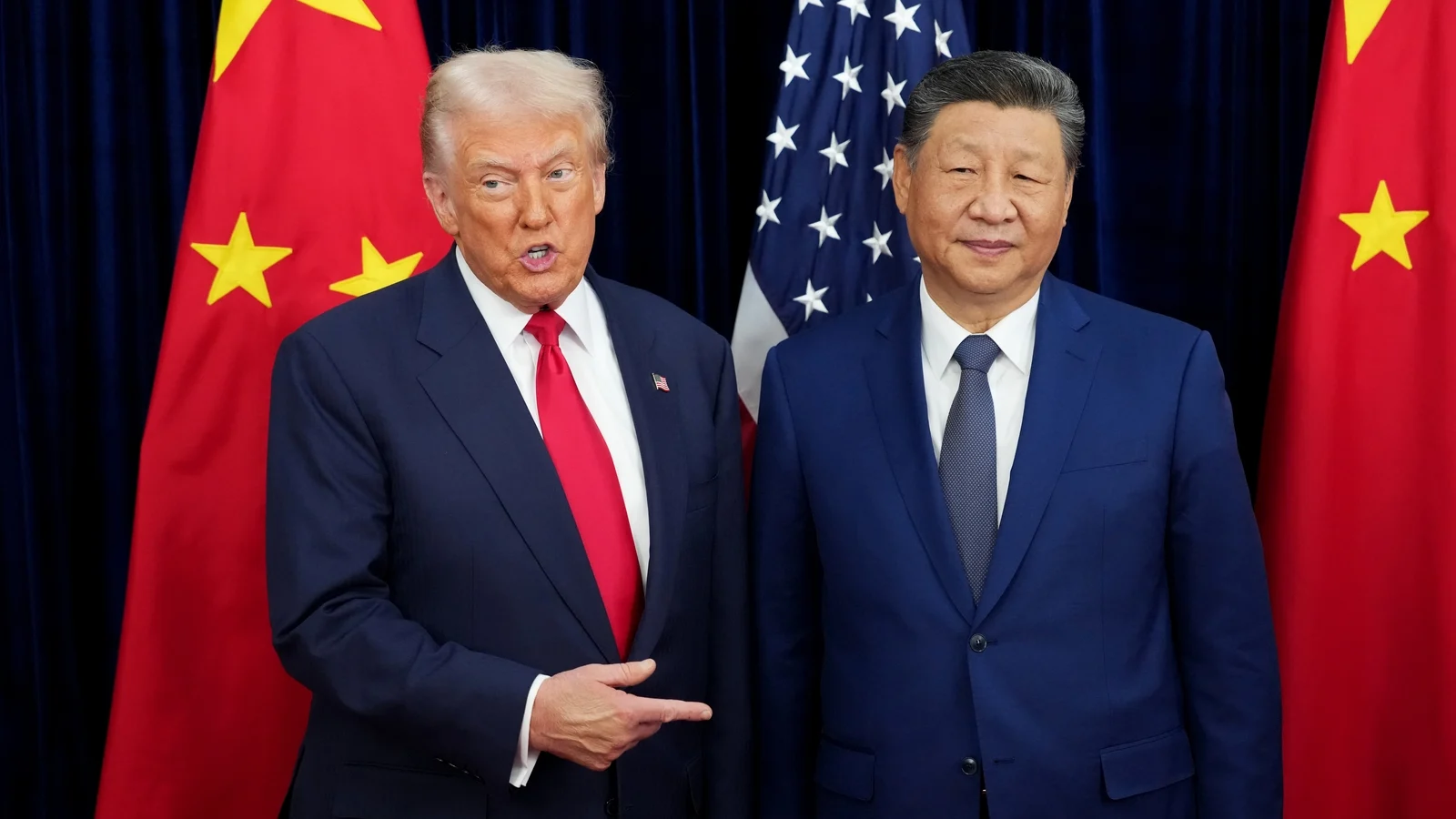
All of this will be tested when leaders meet across the polished wood of a summit table. Trade talks, tariffs, and technology probes will dominate the conversation. Taiwan will be an undercurrent—perhaps the principal one. For China, assurance about its claimed island is existential; for partners like Japan, South Korea and Taiwan itself, American credibility is the guarantor of regional stability.
Could the world be carved into spheres of influence—a tacit bargain that trades intervention for tolerance? It’s a thought that stirs discomfort in democracies around the world, and a tempting shortcut for realists who prefer clear lines to messy pluralism.
“The danger is not just in any single deal,” says Professor Naomi Singh, an international-relations scholar in Delhi. “It’s in normalizing the idea that power is parceled out, and that smaller states must choose a sponsor to survive.”
What does this mean for the global South?
For nations in Africa, Latin America and Asia, China’s patient ascent feels like an invitation: capital, roads, and high-tech partnerships. But it brings dependency risks, potential market floods from cheap manufactured goods, and the erosion of bargaining power.
Local voices are ambivalent. “The desalination plant changed our water security,” says Fatemeh, a schoolteacher near a Gulf city. “But the contracts are long-term and opaque. Who benefits when politics shifts?”
So where does that leave the reader—us, watching the river? Do we treat this as a tale of two superpowers locked in an arms-and-tech race? Or as a much larger story about how the rules of the international order are rewritten when economic might trumps the old certainties of military supremacy?
Perhaps the truest answer is both. The smoke of conflict clarifies the choices we face: to invest in durable institutions that protect smaller states, to build resilient supply chains that aren’t hostage to a single corridor, and to insist that the logic of power be tempered by the logic of law.
So the next time you see a photograph of a missile’s contrail or a summit handshake, listen for the quieter sounds—the hum of factory floors, the clack of keyboard keys in AI labs, the distant drone of construction cranes. Those sounds are the new front lines. They will define the century, even as the old ones burn.