In the hush of Chappaqua: a small town thrust into a national reckoning
On an October morning that felt more like a scene from a political novel than the peaceful suburb it usually is, the Hudson Valley town of Chappaqua woke to an unusual kind of attention. News vans lined the maples, hot coffee steamed from insulated cups, and a procession of reporters threaded their way along narrow streets toward the unassuming address where a former secretary of state quietly sat for hours of questioning.
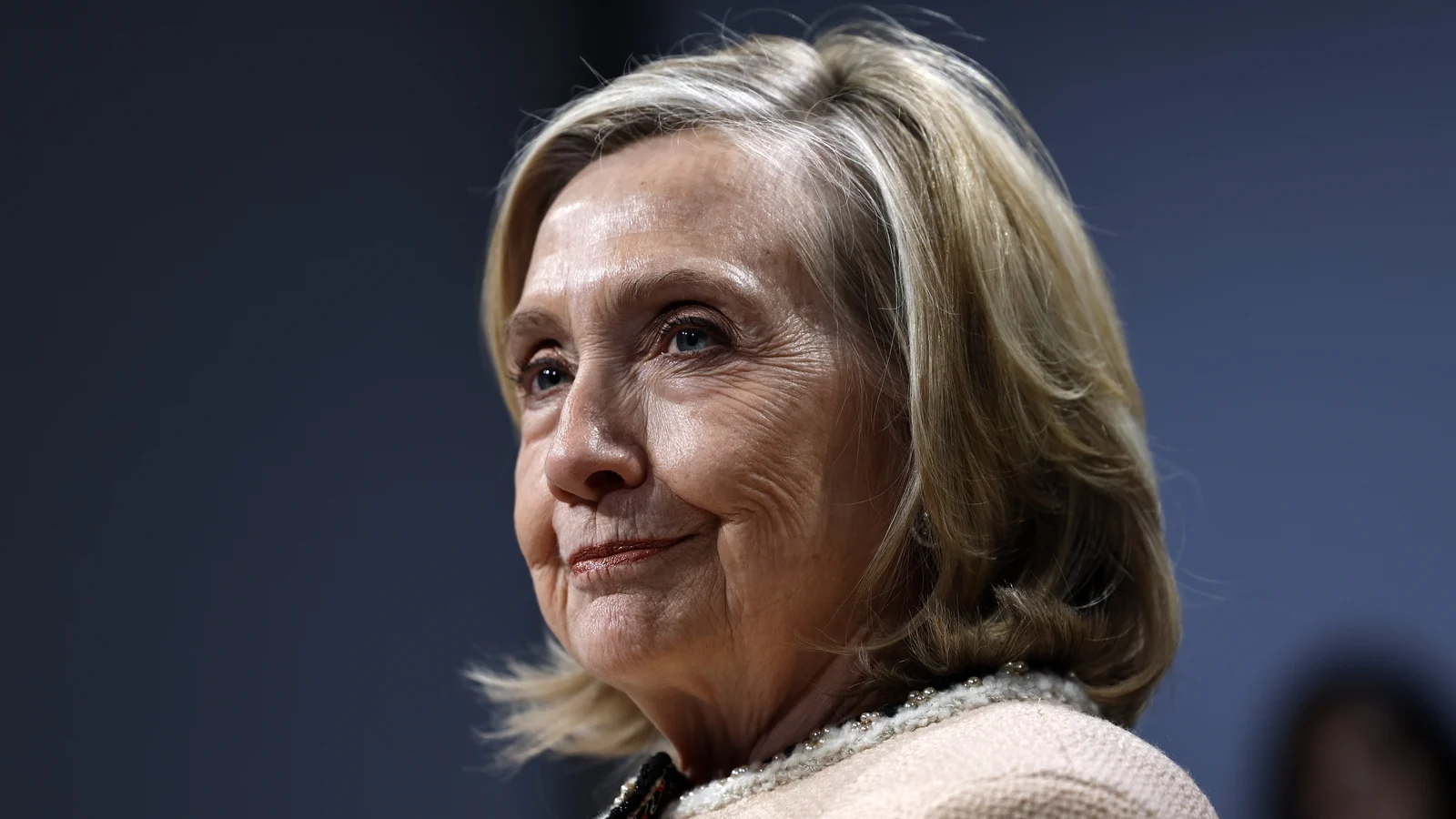
Hillary Clinton’s testimony, given behind closed doors to the House Oversight Committee, landed like a stone in a still pond — ripples that reached Washington power brokers, survivors’ advocates, and ordinary neighbors who have tilled the same soil for decades. The subject: Jeffrey Epstein, the disgraced financier who died in a Manhattan jail cell in 2019 while awaiting federal sex-trafficking charges, and the long, tangled web of connections that stitched him to a constellation of the powerful.
The testimony and the theatre
Clinton’s opening statement, shared publicly ahead of the secret session, was direct. “I had no idea about their criminal activities. I do not recall ever encountering Mr. Epstein,” she wrote. That line — simple, declarative — was the fulcrum of an afternoon of probing. Republicans on the Oversight Committee said they were trying to get at the facts: any ties between the Clintons and Epstein, whether Epstein’s wealth and access intersected with philanthropic work, and if Ghislaine Maxwell — Epstein’s convicted co-conspirator — ever served as a bridge between them.
“No one is accusing at this moment the Clintons of any wrongdoing,” Oversight Chairman James Comer of Kentucky told reporters before the deposition. His goal, he said, is to “understand many things about Epstein” — a phrase that has become shorthand for a sprawling, months-long inquiry into alliances and allegations that crossed continents and decades.
The hearing itself was punctuated by moments that felt almost theatrical. A photograph of Clinton at the table — captured, leaked, and circulated on social media — briefly halted proceedings and raised questions about committee protocol and the intoxicating role of online influencers in real-time political news. Conservative influencer Benny Johnson posted the image; he later said it had been taken by Republican Representative Lauren Boebert. The episode underscored how modern congressional oversight is performed on a stage built of smartphones and followers.
What’s next: a former president takes the stand
Bill Clinton is slated to testify the following day, a development that would mark the first time a former U.S. president has been compelled to give evidence before Congress. That historical weight has not been lost on locals, who woke to television lights and an influx of cable networks but also to the surreal idea that their quiet streets had become a locus for constitutional drama.
“I walked out to get my dry cleaning and thought, ‘What is happening to our little town?’” said Mary Lou Hernandez, who has lived across from the train station for 34 years. “You can’t help but feel the gravity of it all — and the exhaustion. This subject has consumed a lot of people’s lives.”
The facts the committee is pursuing
The committee’s line of inquiry is relatively straightforward on paper: trace contact, financial ties, and potential facilitation. Chairman Comer has pointed to evidence that Epstein visited the White House 17 times while Bill Clinton was in office. The former president has acknowledged flying on Epstein’s private plane several times in the early 2000s and has said he regrets those associations.
Donald Trump’s name also figures prominently in the background. Trump socialized with Epstein in the 1990s and 2000s, and has said he severed ties before Epstein’s 2008 conviction for soliciting prostitution from a minor. In recent months, the Justice Department has released more than three million pages of Epstein-related documents — a trove meant to bring transparency to victims, researchers, and journalists alike. Those filings have linked Epstein to a long list of business and political leaders around the globe and have spurred criminal inquiries abroad, including high-profile probes into members of European royalty.
What the law and history tell us
Ghislaine Maxwell remains the only person convicted in connection with Epstein. In December 2021 she was found guilty of sex trafficking and related charges and, in June 2022, she was sentenced to 20 years in prison. Maxwell invoked her Fifth Amendment rights before the Oversight Committee when she appeared via videolink earlier this month. Her decision to remain silent has left a satisfier of legal closure dangling for many survivors and investigators.
“Legal closure is never neat,” said Dr. Aisha Rahman, a law professor who studies institutional accountability. “What witnesses and documents can do is fill in the texture of how networks of privilege enable abuse. That matters to survivors and to democracy.”
Voices in the town and beyond
Reactions in Chappaqua ran the gamut. A diner-owner, Tom Kline, shrugged and said, “I’m more worried about the economy than who hung out with who in the 90s,” while a teacher, Mei Lin, pointed to a deeper unease. “For survivors, this is not nostalgia,” she said. “They want answers, and they want systems to change so this doesn’t happen again.”
Some Democrats on the committee say Republicans’ fixation on the Clintons smacks of partisan theater. Representative Robert Garcia of California argued publicly that President Trump and others with ties to Epstein — including business figures whose names have surfaced in the document releases — should also testify. The tug-of-war across party lines has turned the investigation into a mirror reflecting larger trends: the national appetite for accountability, the weaponization of oversight, and the fast, often messy confluence of politics and public conscience.
Why this still matters
Why do these hearings matter beyond spectacle? Because they force a reckoning about power. Epstein’s crimes were brutal and systemic, involving recruitment, coercion, and networks that blurred private and public life. The documents released to date — millions of pages — are both a record and a warning. They show how wealth and access can be used to shield wrongdoing, and how difficult it is for victims to break through institutional defenses.
“We have to ask the hard questions,” said survivor advocate Lauren McKay. “Not just who sat in the same room, or flew on the same plane, but how institutions enabled impunity. That’s where policy change must come.”
Questions for the reader
As you read this, consider: what does accountability look like in an era where power can be invisible, money can buy access, and social media can both reveal and obscure truth? How should democracies balance transparency with the rights of individuals? And perhaps most importantly, how do we center survivors in conversations that so often default to the interests of the powerful?
Chappaqua will go back to its regular rhythms — the commuter trains, the school buses, the corner bakery — but the shadow from these depositions will likely linger. Not because of the headlines, but because each disclosure, each testimony, nudges a public conversation forward about responsibility, privilege, and the structures that allow abuse to persist. That, more than the spectacle, is the real story.