When the Street Became a Camera: A Night in Minneapolis That Broke Something Else
It was the kind of cold that sharpens sound—the kind of evening in Minneapolis where breath fogs and voices cut clean through the air. Neighbors gathered under sodium streetlights, coats zipped, scarves pulled over faces, watching a scene that would be replayed in living rooms and newsrooms for days.
What began as another night of protests against a sweeping federal immigration enforcement operation turned, in a matter of minutes, into an anguished question for the city: who can we trust to tell the truth when bullets are fired and a man lies still on the asphalt?
The moment that changed everything
By several accounts circulating online and among witnesses, a 37-year-old man—identified in media reports as Alex Pretti, a nurse at the Veterans Affairs hospital in Minneapolis—stood in the street and filmed masked federal agents with his cellphone. Bystander video verified by multiple outlets shows agents deploying pepper spray and, moments later, wrestling the man to the ground. As fellow protesters shouted and tried to intervene, one of the agents drew a weapon. Shots followed. The man’s body was left in the road.
“I saw them pin him down like it was nothing. He wasn’t resisting, he was trying to shield someone from the spray,” said Mara Jensen, a neighbor who recorded part of the scene on her phone. “Then the shots. I still hear those bangs in my sleep.”
The federal Department of Homeland Security and Border Patrol officials said an agent fired in self-defense after a man with a handgun resisted attempts to disarm him. Local leaders, prosecutors and many eyewitnesses say they have serious doubts about that account. Video fragments—shocking, grainy, immediate—appear to show the man being subdued before the shots were fired.
How the city reacted
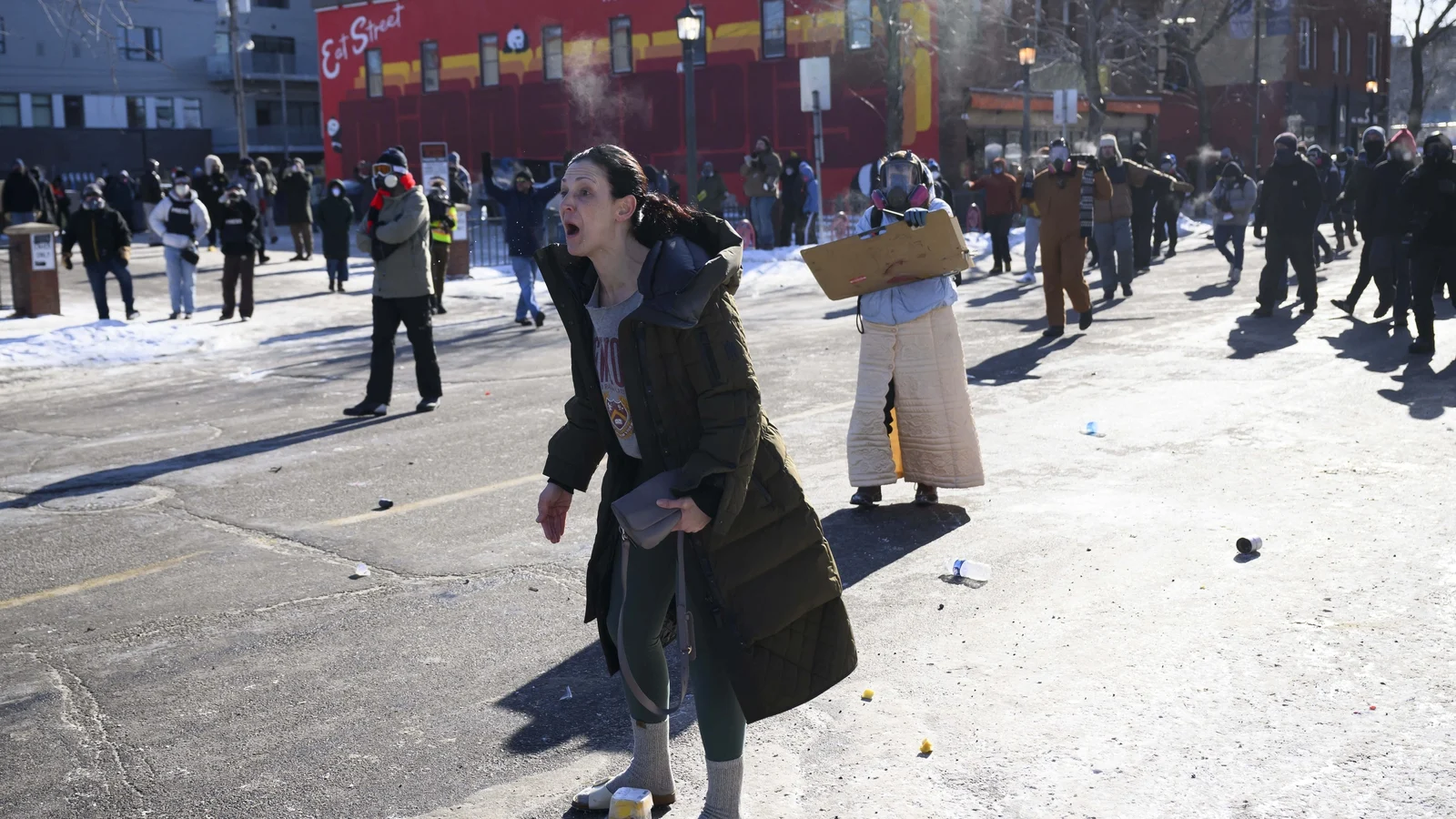
Within hours, hundreds of people poured into the neighborhood where the shooting occurred. Tear gas and flashbang grenades were used as federal agents, many masked and heavily equipped, tried to clear the area. Police and state troopers arrived to manage the swelling crowd. Tempers flared. So did grief.
“Please do not destroy our city,” pleaded Minneapolis Police Chief Brian O’Hara in a public appeal, an exhortation that felt both urgent and fragile. Yet the anger in the crowd was palpable. “How many more residents, how many more Americans need to die or get badly hurt for this operation to end?” asked Minneapolis Mayor Jacob Frey at a press conference—phrasing that landed like a curse and an invocation.
The Minnesota governor, too, voiced outrage. “I’ve seen the video from several angles and it’s sickening,” Governor Tim Walz said, calling for the state to lead the investigation because federal agents blocked state investigators from securing the scene.
A pattern of pain
This shooting did not happen in a vacuum. It came after weeks and months of mounting tension in the city over the presence of federal immigration enforcement teams. Only a day earlier, more than 10,000 people had taken to the frigid streets to protest what many see as a crackdown that treats neighborhoods as battlefields. Residents had already been shaken by related incidents: another US citizen shot by federal agents on 7 January; the highly visible detention of a man taken from his home in his underwear; even the detention of children, including a five‑year‑old boy.
“It feels like a city under occupation,” said Jamal Ortiz, a community organizer in the Powderhorn neighborhood. “People are terrified. Parents keep their kids inside. When you bring that kind of force into residential areas, you erode trust—not just in one agency, but in the idea of public safety.”
Questions that demand answers
Who fired? Under what authority were federal agents operating in Minneapolis neighborhoods? Why was the state barred from investigating the scene? Those questions have consumed community leaders and legal experts.
Drew Evans, head of the Minnesota Bureau of Criminal Apprehension, told reporters that federal agents blocked his team’s attempts to begin an inquiry at the scene—an allegation that widened the rift between state and federal officials. The federal government has been stern about the autonomy of its operations; city and state leaders have become increasingly vocal about the consequences.
“When layers of government start pointing guns at each other’s citizens and preventing routine oversight, we’re no longer talking about law enforcement—we’re talking about governance by force,” said Aisha Rahman, a civil liberties attorney who has represented protestors in Minneapolis. “Transparency is the only thing that can begin to heal this.”
Details matter
Some facts are clear. A man is dead. Videos exist that track parts of the confrontation. Hundreds protested afterward, and the protest response caused cultural institutions and events to pause—the Minneapolis Institute of Art closed for the day and an NBA game featuring the Timberwolves was postponed.
Other details remain disputed. Authorities say the agent acted in self-defense; local leaders and many witnesses say the footage contradicts that narrative. The identity of the shooter, the timeline of the alleged weapon’s appearance, and the precise sequence of restraint and discharge are all under scrutiny.
Voices from the ground
On the sidewalks, neighbors pressed warmth into their words. A college student named Lena pulled her hood close and said, “You learn to live with helicopters and sirens here. But when someone who has nothing to do with a raid—someone who’s a nurse, who’s a neighbor—ends up dead in the street, it’s a different kind of fear.”
A VA hospital colleague of the man who was killed told a reporter, on the condition of anonymity: “He loved his patients. He’d bring them cookies. He believed in healing people—not in taking up arms against anyone.”
Meanwhile, a former Border Patrol supervisor, speaking as an independent analyst, cautioned: “We need to avoid rush to judgment. Officers sometimes make split-second decisions in chaotic environments. That said, that’s why we have oversight and a chain of custody. If the scene was interfered with, that’s a problem.”
Why this matters beyond Minneapolis
This incident taps into broader national debates: the expansion of federal enforcement into cities, the power dynamics between local and national authorities, and the growing use of militarized tactics in public safety operations. Across the United States, questions about accountability for federal law enforcement have become increasingly urgent.
Consider the human cost. Trust in institutions, once frayed, is slow to mend. A June 2024 national survey from a major polling firm found that public confidence in federal law enforcement agencies had dipped meaningfully in urban communities—especially in places that had seen armed federal operations on local streets. When trust is low, cooperation falls, and so does the effectiveness of policing.
What comes next?
Investigations will continue. Local officials have demanded the federal operation be halted; federal leaders have defended their agents. The state said it would take charge of the probe after the federal team stepped back from the scene, but the path to a transparent, independent review is contested.
There are no easy answers. There are only choices: to deflect and double down, or to open gates of accountability and conversation. Minneapolis stands at such a juncture.
An invitation to reflect
How much force is acceptable in the name of immigration enforcement? Who gets to decide when a neighborhood becomes an operational zone? And when video—raw, fragmented, viral—becomes the most powerful evidence, how do we ensure it is paired with rigorous, neutral inquiry?
If you lived in that neighborhood tonight, what would you want the investigators to see? If you were an official, what would you do differently?
We can do more than demand answers. We can insist on systems that make answers possible: independent oversight, clear rules for federal-local coordination, and the kind of community engagement that treats residents as partners rather than obstacles. Until then, another winter will pass over Minneapolis, and the question will remain: who will bear witness—and who will be believed?