Smoke Over the City: Beirut at a Pause that Feels Like Nothing
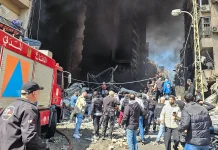
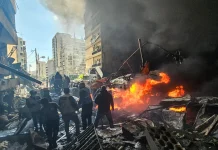
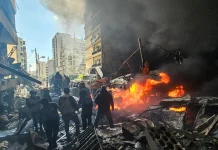
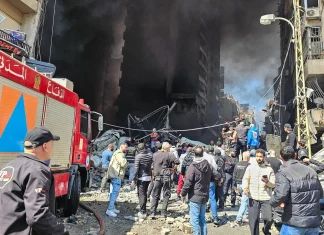
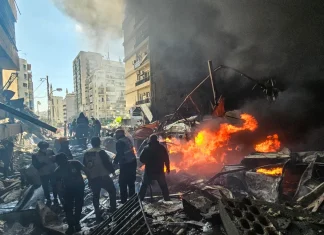
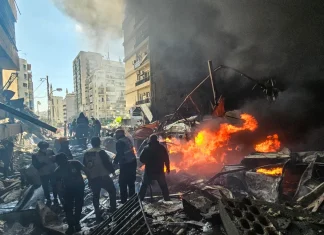
The smoke hangs low over Beirut like a bad memory that won’t leave. It curls from rooftops, drifts past minarets and cranes, and carries the sharp, metallic tang of a city under siege. Walking from the airport into town, the hum of drones starts before the trees become visible — a steel lullaby that has been the city’s constant for six long weeks.
“You know it’s real when the sound follows you into your dreams,” said Fatima, a 42-year-old shopkeeper in the southern suburbs, as she wrapped a scarf around her head against the dust. “We sleep with the windows shut and wake to sirens. My nephew hasn’t left the house in a month.”
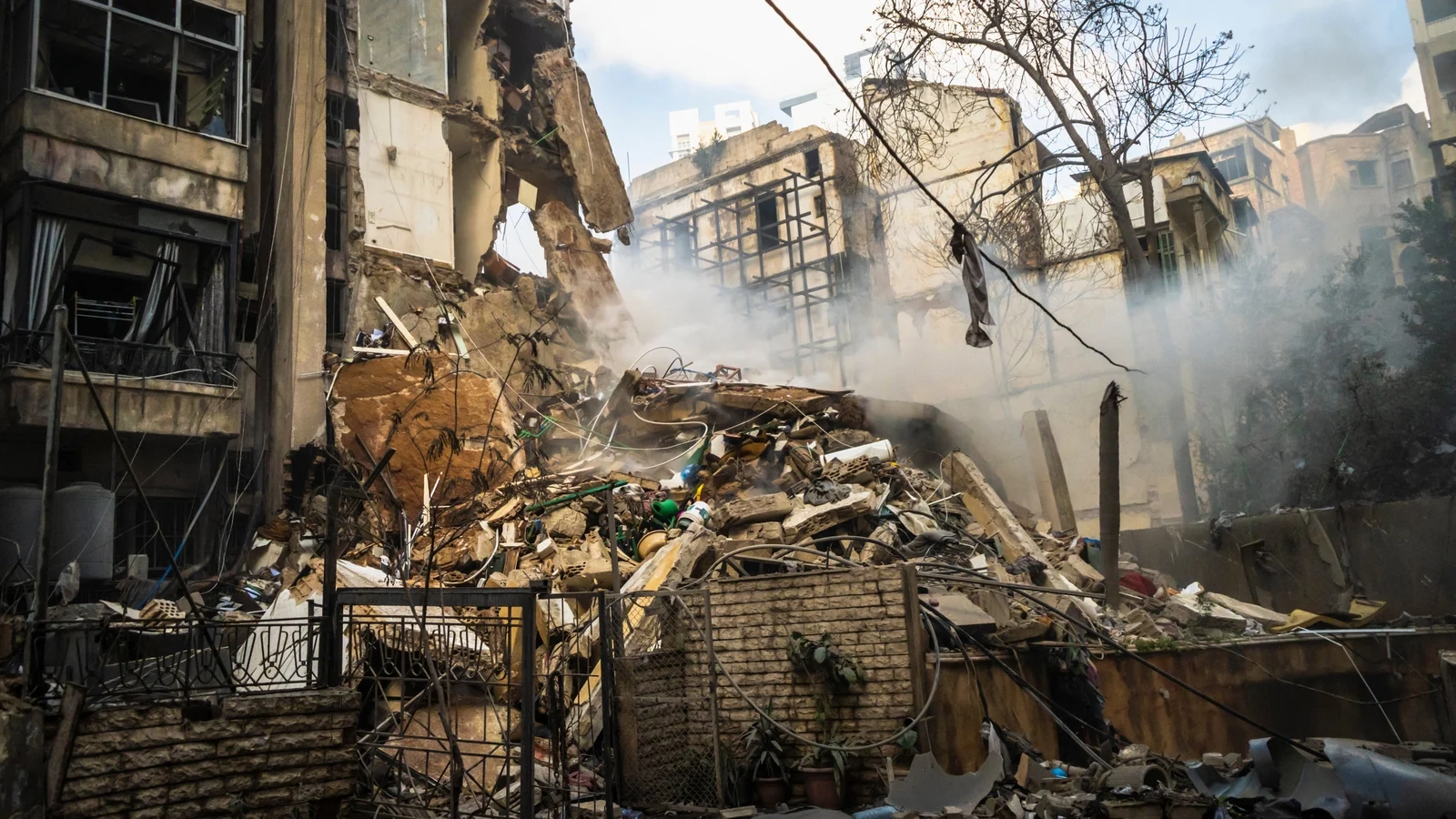
There is a ceasefire on paper — one negotiated between Washington and Tehran — but in Beirut, paper is not protection. Here the war has taken on its own tempo: sudden strikes that carve open neighborhoods, bridges and villages wiped from maps, and apartment blocks reduced to jagged skeletons of concrete and rebar.
Numbers That Don’t Explain the Noise
Official figures are grim and growing. Lebanese civil defence teams say more than 1,600 people have been killed since March, including over 100 children. Over a million people — roughly one in six of the country’s population — have been uprooted, many now crowded into relatives’ homes or makeshift shelters.
And then there was “the day” — the bloodiest 24 hours of the conflict in Lebanon, when rescue workers said more than 250 people lost their lives, more than 1,000 were wounded, and whole neighborhoods were flattened overnight. “We scrambled ambulances like leaves in a storm,” a civil defence officer told me, voice thick with exhaustion. “There weren’t enough hands.”
Numbers are blunt instruments. They count bodies and buses and buildings, but they don’t tell you that the bakery on the corner of my street kept its oven running for hours to feed sheltering families, or that Tyre — one of the oldest continuously inhabited cities on Earth — was ordered emptied by a notice that felt like exile.
What’s Collapsing, and What’s at Stake
- Human toll: 1,600+ dead and 1,000+ wounded in recent weeks (civil defence figures).
- Displacement: over one million people internally displaced — a humanitarian crisis in a country already strained by economic collapse.
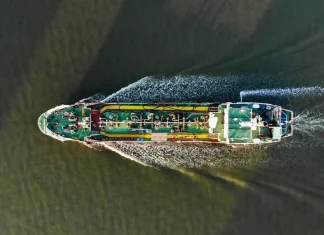
- Geopolitics: the Strait of Hormuz closed, affecting global oil markets — roughly one-fifth of seaborne crude transits this waterway.
- Territorial ambitions: talk of a new de facto border at the Litani River raises fears of permanent change to Lebanon’s map.
A Region Quaking: From Hormuz to Beirut
On the wider stage, the last six weeks have felt like a different kind of Earthquake. A war between the United States and Iran spilled into every other conversation: economies shuddered, shipping lanes were threatened, and world leaders scrambled for the diplomatic exit ramp. Iran’s closure of the Strait of Hormuz — a choke-point through which an estimated 15-20% of global seaborne oil flows — sent markets into fits and made the war a global economic story as much as a regional one.
“The Hum— the noise from drones — that sound is Beirut’s new weather,” observed Dr. Lina Haddad, a Beirut-based analyst who’s spent decades studying urban conflict. “But the war we’re living in here is not only between Israel and Hezbollah. It’s a spillover of a much larger contest between capitals: Washington, Tehran, and Tel Aviv. The lines are blurred and the civilians pay for that blur.”
Borderlines, Buffer Zones, and the Litani
On the ground, the strategic conversation has taken a tangible form. Israeli forces have been pressing north, creating what they call a “security zone” that stretches to the Litani River — roughly 30 kilometres north of the internationally recognized border. For residents of southern Lebanon, that zone is not a buffer; it is a cordon that severs families from fields, towns from schools, and entire communities from their livelihoods.
“They tell us it’s for security,” said Hassan, a farmer from a village near the Litani, who said he watched tractors and olive trees go up in smoke. “Security for some, not for us. They have maps with new names. They don’t see that behind every plot of land is a family.”
Within Israel, the debate is raw. Some ministers and settler groups have publicly floated maps of southern Lebanon with Hebrew place names. Finance Minister Bezalel Smotrich has been reported as saying, “The new Israeli border must be the Litani.” That kind of rhetoric hints at ambitions that extend beyond temporary buffers, and it terrifies many Lebanese who remember older conflicts and long evacuations.
When Allies Disagree
For weeks Israel and the United States marched toward a common objective; then details started to bite. In a White House meeting earlier in the year, Israeli leaders had urged a broad campaign to dismantle Iran’s strategic capabilities. Washington’s calculus, however, shifted toward a negotiated pause.
“We went into this with different finishing lines,” said an anonymous Western diplomat who has been tracking the talks. “Washington wants de-escalation that stabilizes oil and markets. Israel wants a long-term reset on its northern border. Those aren’t the same thing.”
The ceasefire that exists now was anchored, in part, in Iran’s own 10-point framework — demands that include formal roles for Iranian forces in Hormuz and limits on sanctions. That anchoring has yielded both relief and anxiety: the strait is reportedly set to reopen under arrangements that give Tehran a recognized hand in managing passage, while Tehran’s nuclear advances — including an estimated several hundred kilograms of enriched uranium stockpile — remain politically charged issues.
On the Ground, the Pause Is Fragile
In Beirut’s south, resilience looks like a communal pot kept warm on a rooftop, like a school being used as a clinic, like the way neighbors barter for bottled water. International aid groups have mobilized, but logistical challenges and damaged infrastructure make any response slow. The United Nations has warned that Lebanon faces the combined shocks of conflict, displacement, and a collapsing public service network.
“We are not just rebuilding buildings. We are trying to rebuild trust,” said Miriam Khalil, who coordinates emergency response in a Beirut shelter. “People need to know they can plant their tomatoes again, send their children to school, get a doctor. Until that’s possible, every ceasefire feels temporary.”
What Comes Next?
So where does that leave us? Negotiators are due to convene in Pakistan, with talks framed, at least initially, by Tehran’s terms. Experts worry that the gap between what Iran is asking and what Washington will accept is vast enough to swallow the fragile calm.
“There are few easy exits,” said Maj. Gen. (ret.) Amos Feldman, a former military strategist. “At best we’ll see an extended pause and a geopolitical stalemate. At worst, miscalculation brings a return to open hostilities. The people who will pay are the civilians.”
What does justice look like in a place where borders are imagined on maps by distant politicians and where the echoes of drones are louder than any law? How do we hold accountable those who choose geography over people? These are the questions that Beirut — and the region — will grapple with long after the headlines move on.
For now, Beirut waits. The smoke keeps rising, the drones keep passing, and people keep counting — not just the dead and displaced, but the days until normal sounds like a possibility, and not a fantasy. Will the ceasefire mature into peace? Or will it harden into another temporary arrangement that paper cannot protect?
We owe those who live under the hum an answer that is more than line items and summit photos. Until then, the city breathes on — strained, stubborn, and painfully alive.