The Day Greenland Stepped Into the Global Spotlight
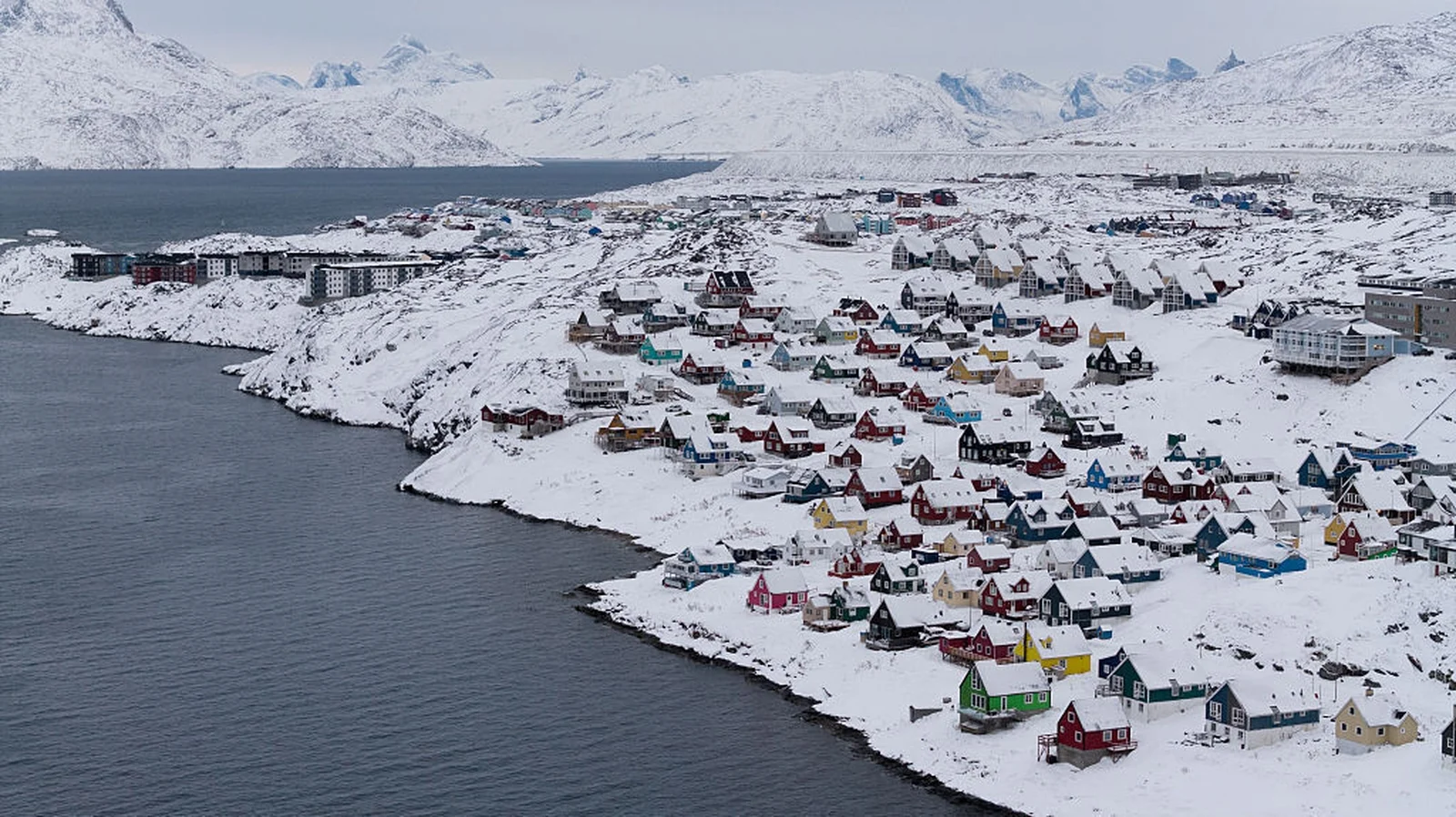
There is a hush over Nuuk that feels almost ceremonial: the soft clack of boots on wet pavement, the distant creak of a fishing trawler, and the plume of warm breath in arctic air. For decades, Greenland’s vast white silence has been its shield; now that silence is breaking up into a conversation the world can no longer ignore.
Diplomatic channels are warming up, Danish officials say. Meetings between Denmark, Greenland and the United States to redraw — or at least clarify — the terms of American military access to the Arctic are expected to begin soon. But the Danish foreign minister when I spoke with him in Copenhagen insisted on one thing: these talks must be removed from the fevered glare of headlines.
“We will start those discussions quickly,” he told me, rubbing his temples. “But we will not send them live on social media. This isn’t about spectacle. It’s about security.”
Why Greenland?
Ask a schoolchild in Nuuk or a diplomat in Brussels and you’ll get the same short answer: geography. Greenland is the world’s largest island — roughly 2.16 million square kilometers — three quarters of it a humming white fortress of ice. It sits like a gatekeeper between North America, Europe and the Arctic Ocean; its northern bays and airstrips, historically sparse and strategically brittle, have in recent years become linchpins of global strategy.
Beyond the maps are deeper stakes. Greenland’s surface is 80% ice sheet; its population is small — roughly 56,000 people, most of them Inuit — and clustered along the coasts. Yet beneath the ice and gravel lie minerals and metals that the renewable and defense industries covet: rare earths, uranium and other “critical minerals” that global supply chains have taxed and fought over.
Climate change speeds the shift. The Arctic is warming at approximately four times the global average, opening stretches of ocean that once were impassable and exposing resources once locked beneath centuries of ice. Shipping lanes shorten, seasonal windowing expands, and the geostrategic calculus rewrites itself.
On the Ground in Nuuk: “Sovereignty Is a Red Line”
I met a small-group of local leaders in a community hall whose walls were papered with photographs of seals, family gatherings, and hunting trips. Jens-Frederik Nielsen — Greenland’s prime minister — was direct. “We’ve been part of Denmark’s kingdom for many years,” he said, folding his hands. “But this island has a people. We will discuss partnership, we will discuss security, but sovereignty is a red line.”
He’s not alone in that view. A fisherman I met in Ilulissat, bundled in a patched parka, shook his head when I mentioned talk of “total access.”
“You don’t just come and take a place where my grandparents charted the coast,” he said, voice steady. “We know the seas. We know the storms. This is not a parking lot.”
Those words reveal two realities at once: pride in local identity and anxiety about being a pawn in a bigger game. Greenlanders I spoke with — teachers, shopkeepers, hunters — share a desire for economic opportunity. They also want respect for local governance and rights over land and resources.
Washington’s Calculus
From the U.S. perspective, the Arctic is no longer peripheral. Military planners point to the island’s northern bases — most notably the airfield at Pituffik, known to many by the name of its American custodian, Thule — as vital nodes for early-warning systems, satellite tracking and transatlantic reach.
A U.S. official, speaking on background, described the approach bluntly: “We need assured access to key facilities. We’re not looking to erase sovereignty. We’re looking for long-term, predictable partnerships that keep the Arctic secure.”
That language sounds reasonable, yet the heat in public rhetoric has stoked fear. The president’s aides have at times spoken of “lasting access,” language that, stripped of diplomatic nuance, can sound dangerously absolute. That’s why Danish officials have insisted the island’s status under international law is not on the table.
Allies, Adversaries, and the New Arctic Order
In Brussels and across European capitals, leaders are recalibrating. The European Union has acknowledged a need to reinforce the Arctic’s security architecture and to invest more in Greenland’s economy. Officials say the EU plans to increase financial support to the island and to coordinate defense investments with partners such as Canada, Norway and Iceland.
“We underestimated how quickly the Arctic would matter to the 21st-century security environment,” an EU foreign policy advisor told me. “Now we must catch up — but must do so with diplomacy and respect for local choice.”
But this isn’t simply a transatlantic quarrel. Moscow and Beijing’s growing activity in the High North provides urgency. Russia has modernized northern bases and naval capacity, and Chinese companies have invested in ports and mining projects across the Arctic rim. That combination — Russian military posture and Chinese economic reach — has European and American planners uneasy.
What’s on the Table
- Updated military access agreements for existing bases, with clearer operational rules;
- Proposed restrictions on certain foreign investments in strategic sectors;
- Financial packages to boost local infrastructure and resilience in Greenlandic communities;
- Cooperation on search-and-rescue, environmental monitoring and ice forecasting.
Any such package faces a delicate political tightrope: balancing defense imperatives with local sovereignty and environmental stewardship.
Voices from the Arctic Frontline
“We want partners, not proprietors,” said Aqqaluk Petersen, a young mayor from a fishing town near the Jakobshavn glacier. “Investment could mean jobs and better hospitals. But if decisions are taken in rooms where no Greenlandic voice sits, then there will be resistance.”
A retired U.S. military planner I met in Copenhagen put it more plainly: “Long-term presence requires a long-term consent. You can’t bolt strategy onto a community and call it security.”
Why This Matters to You
If you live in London, Shanghai or Minneapolis, Greenland might still seem “far away.” But the island’s fate is tied to global concerns: rising seas driven by melting ice, the security of maritime trade routes, and the supply chains for the technologies that power daily life — smartphones, electric cars, wind turbines. Who controls access to these resources, and under what rules, will ripple across economies and ecosystems.
So let me ask: do we want brittle deals struck in flashpoints of political theater, or carefully negotiated frameworks that sit on respect, environmental safeguards and local consent?
What Comes Next
Diplomats will meet. Military planners will run options on maps. Greenlanders will push for terms that protect home and culture. European capitals will hedge, seeking both transatlantic cooperation and an independent strategic posture. It will be messy, and it will take time.
But perhaps that messiness is healthy — an opportunity to craft something better than a headline-grabbing tantrum. If Arctic security is the problem, then the solution must be strategic, rooted in law, and attentive to the people who live where the ice meets the sea.
“We are at the beginning of a conversation,” Jens-Frederik Nielsen told me as we left the hall. “If the world wants Greenland as an asset, it must treat Greenland as a partner.”
That is a simple demand, and perhaps the most difficult to grant: behind sovereignty and strategy lies a human ledger — a ledger of homes, livelihoods and futures. Will global powers write the next chapter with humility and patience? Or will they repeat old mistakes and assume might alone rewrites right?
For everyone watching: this is not just a negotiation over turf. It’s a test of how the world makes rules in an era where climate change redraws maps faster than diplomacy can. Greenland’s silence is over. The question for the rest of us: will we listen?