Bombed Playground: A Kindergarten, a Hospital — and a Country Unraveling
There are sights that refuse to leave you: a tiny shoe on scorched earth, crayons melted into the dirt, a stroller turned on its side like a blown-over toy. In Kalogi, a town in Sudan’s South Kordofan, those images are now seared into the memories of people who once woke to the call to prayer and the clatter of market life, not the whine of paramilitary drones.
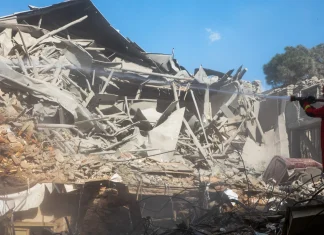
On a dry Thursday, according to local officials reachable only through a fragile Starlink link, three strikes ripped through Kalogi. First the kindergarten, then the hospital, and then — mercilessly — a third strike as family members and neighbours rushed in to pull children from the rubble. The head of the local administrative unit, Essam al-Din al-Sayed, told reporters the pattern bore the mark of an attack meant to inflict maximum human suffering.
Numbers that don’t add up — and the silence that grows between them
In the fog of war, figures become battlegrounds of their own. UNICEF’s office in Sudan reported that more than 10 children between the ages of five and seven were killed. The foreign ministry aligned with the army released a much higher toll: 79 dead, including 43 children. Independent verification remains agonizingly difficult — communications are sporadic, humanitarian access is tightly restricted, and security is far from assured.
“Killing children in their school is a horrific violation of children’s rights,” said Sheldon Yett, UNICEF’s Representative for Sudan, in a statement that echoed around humanitarian circles. “All parties must stop attacks on civilians and allow unfettered access for aid.”
There is a grim arithmetic at play: since the conflict erupted in April 2023, tens of thousands have died and nearly 12 million people — roughly a quarter of Sudan’s population — have been forced from their homes. In just the past month, the United Nations says more than 40,000 people fled Kordofan alone as fighting intensified. These are not abstract statistics. They are children who no longer go to school, farmers who no longer sow, markets that lie empty at dawn.
Who attacked Kalogi — and why this region?
Local officials blamed the Rapid Support Forces (RSF), the powerful paramilitary group that has been at the centre of Sudan’s catastrophe, and its ally, the Sudan People’s Liberation Movement-North (SPLM-N) faction led by Abdelaziz al-Hilu. The RSF, which has been waging an offensive across western Sudan in recent months, seized El-Fasher in October — the army’s last big foothold in Darfur — and appears to be pushing eastward into the oil-bearing Kordofan states.
Military analysts say the RSF’s strategy is to sever the army’s defensive arc around central Sudan and to position itself to contest major cities, including Khartoum. “Control of these towns chokes off supply lines,” said one regional analyst who monitors military movements in Sudan. “It’s about logistics, but also symbolism: seize the towns and you seize legitimacy in the eyes of some locals.”
Oil, alliances, and the geopolitics of a collapsed state
Kordofan’s soil is not just sand and seed; it is economically strategic. Oil fields dot the wider region, and whoever controls transport routes and pumping stations wields leverage far beyond the town square. International mediators — the United States, Saudi Arabia, the United Arab Emirates and Egypt — offered a truce plan that the RSF said it would accept in November. Yet even with diplomatic manoeuvring, there has been little on-the-ground de-escalation.
“There is no sign of de-escalation,” UN human rights chief Volker Türk warned, noting “clear preparations for intensified hostilities” that threaten an already long-suffering people. The lament is not merely about broken ceasefires. It is about a broader failure of international systems to protect civilians when formal governance collapses and irregular forces carve up territory.
At the heart of Kalogi: faces, voices, and the ragged courage of survival
Amina, who taught at the kindergarten hit in the first strike, speaks in a voice threaded with disbelief and raw grief. “They were coloring,” she says. “One little boy asked me if the planes were angels. I told him they were not. The next minute the roof came down.” She pauses, and a long silence fills the line. “We have no hospitals left that we trust.”
Dr. Mustafa — a surgeon who asked to be identified by his first name only — recounted hauling children into a tent outside a shattered hospital ward. “We had four stretchers and a bucket of antiseptic,” he said. “We worked until our hands trembled. We tried to stop the bleeding, to stop the sound of crying. What we couldn’t stop was the fear in the mothers’ eyes.”
These are the testimonies that anchor the wider geopolitical narrative in human terms. They remind us that war is not a chess game of generals, but a daily grind of survival, where civilians watch passports burn and recipes are shared to stretch a bag of grain over a family of seven.
What this means for humanitarian aid — and for the wider region
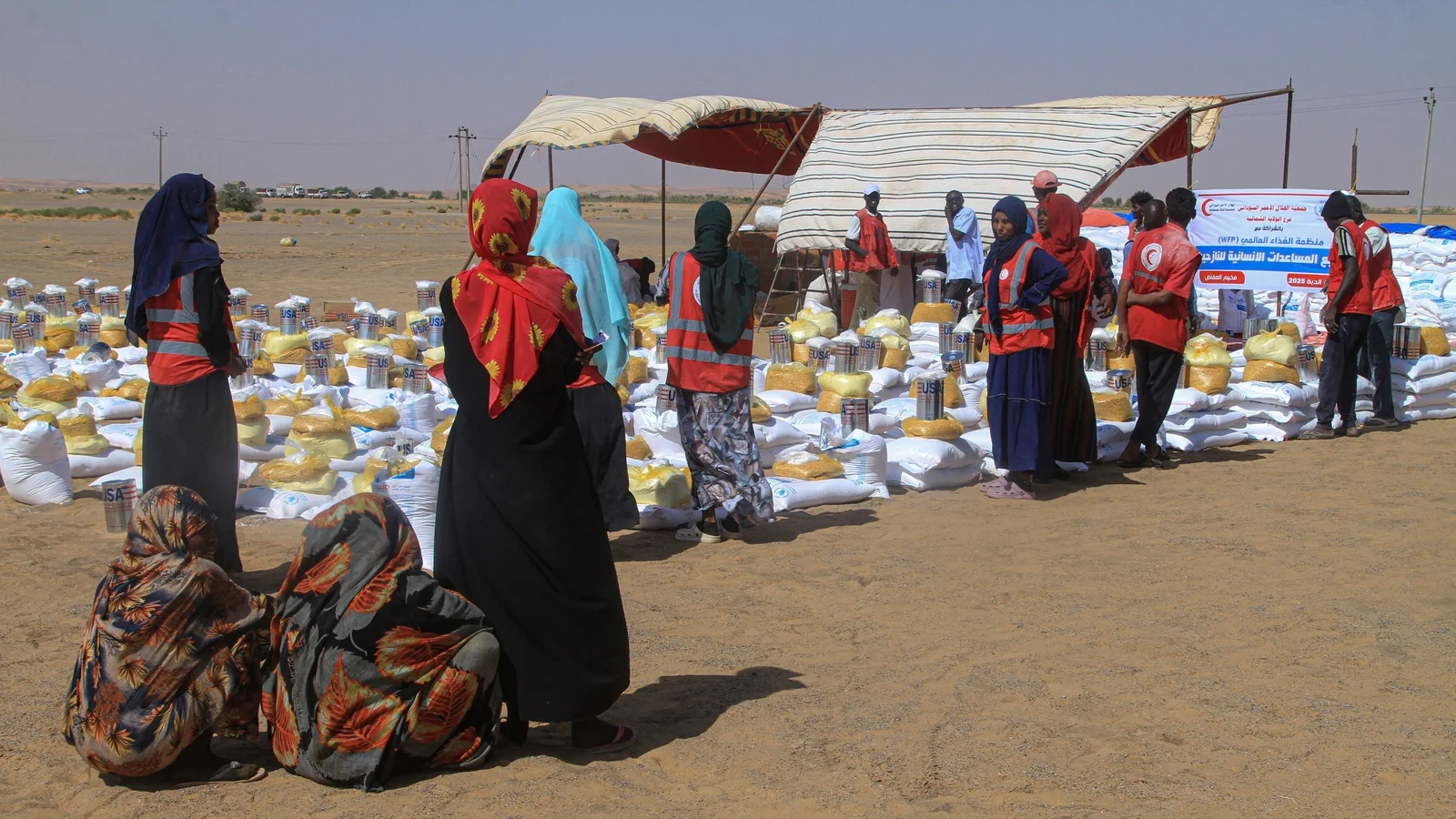
Humanitarian agencies are sounding the alarm. Blocked roads, denied visas, and insecurity make it near impossible to reach many enclaves around Sudan. Aid workers say the destruction of medical facilities and schools multiplies suffering in ways that will last for generations: untreated injuries lead to disability; missed education becomes a permanent scar.
“Once a school is bombed, children stop learning — and the social fabric frays,” said a humanitarian coordinator who has worked in Sudan for nearly a decade. “You don’t just rebuild walls. You try to rebuild trust.”
- Nearly 12 million people internally displaced or forced to flee since April 2023 (UN estimates)
- More than 40,000 people fled Kordofan in the past month alone (UN)
- Tens of thousands killed since the conflict began (various humanitarian sources)
Beyond Kalogi: a warning from history
When violence repeatedly strikes schools and hospitals, it is not accidental. Targeting civilian infrastructure has become a hallmark of some modern conflicts. It is strategic cruelty: break the social institutions and you break the community. The international community’s attempts at mediation, fragile and halting, face the harder task of not just stopping guns but restoring institutions.
Is that even possible when entire cities have been reshaped by displacement and trauma? How do you reconstruct a classroom where a child died clutching a math book? These are questions that transcend Kalogi and speak to conflicts from Syria to Ethiopia, from Yemen to parts of the Sahel.
What we can watch for — and what we must demand
Keep an eye on three things: humanitarian access (are aid convoys allowed in?), independent verification (can reporters and watchdogs enter to confirm claims?), and the care of survivors (are hospitals resupplied, are children offered psychosocial support?). If these fail, then the numbers we are seeing today will be the quiet prelude to a deeper collapse of social life in affected regions.
We are watching lives being unmade in real time. The question for readers — and for the world — is whether we will let these events pass as distant tragedies or whether we will demand stronger protections for civilians, better mediation, and swift aid corridors so that no child dies alone under a sky once known for its morning call to prayer and the tender chaos of playground laughter.
In Kalogi, neighbors gather to bury the dead, to barter for disinfectant and to sort through what remains. They are telling the same story told across war zones: in rubble, small acts of compassion persist. As one local elder put it between sips of sweet tea, “We are broken, yes. But our hands still reach out to each other.” What will our hands reach out to do?